

Skyroot to launch Vikram-1, India’s first privately developed orbital rocket, on July 18
The launch of Skyroot Aerospace's Vikram-1 rocket from Sriharikota is a milestone that could redefine India's commercial space-tech capabilities.
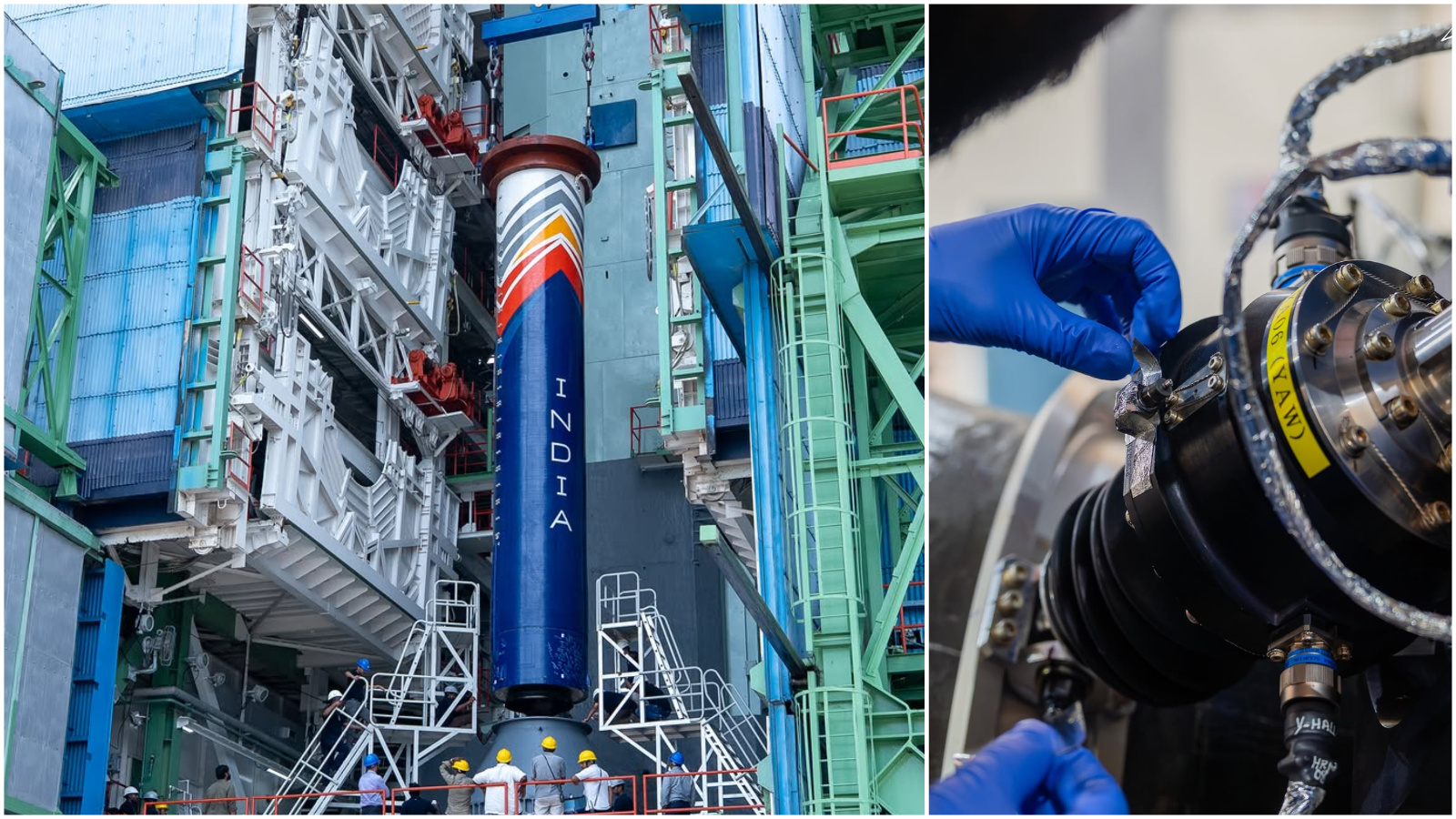
Indian space-tech startup Skyroot Aerospace will attempt the first orbital launch of its indigenously developed rocket, Vikram-1, on Saturday, July 18, at 11.30 am, from the country’s premier spaceport at the Satish Dhawan Space Centre in Sriharikota. The mission, named ‘Aagaman’, meaning ‘arrival’, marks a milestone for India’s private space sector: the nation’s first-ever attempt to place a payload into orbit using a completely privately developed launch vehicle.
All necessary airspace and maritime notices have been issued establishing restricted zones during the launch window, according to the company.
“We have done everything that could be done to test Vikram-1 on the ground. On July 18, we are eager to see how Vikram-1 performs in a real flight environment for the first time,” said Pawan Kumar Chandna, co-founder and CEO of the company.
“This is our first test flight, and we will be getting valuable data from it. This will be foundational to Skyroot’s aspirations of establishing launch cadence. We are excited to see this through,” he added.
Even in its first flight, Vikram-1 will carry several technology demonstrations from the Indian earth-observation nanosatellite maker Grahaa Space, Indian space debris removal company Cosmoserve, space component developer DCubed, and its own SCOPE satellite, which will collect important flight data. Aside from this, Vikram-1 will also carry a diamond art piece called Cosmic Bloom from Cosmos Diamonds and a micro-art piece.
“This test flight will show us how every technology we have developed over the years performs in real-world conditions. With the in-flight data gathered from this mission, we will return to the shop floor to learn, improve, and build further. This test flight is the first step towards creating a reliable, on-demand launch company for the world from India,” said Naga Bharath Daka, co-founder and COO of the company.
Named in honour of Dr Vikram Sarabhai, the father of India’s space programme, the launcher stands seven storeys tall. It is engineered to deliver small satellites weighing up to 350 kg to Low Earth Orbit (LEO). For this launch, it is targeting a 450 km orbit at a 60-degree inclination.
Alongside Skyroot’s Vikram-1, Indian Space Research Organisation (Isro)’s own Small Satellite Launch Vehicle (SSLV) and Agnikul’s under-development rockets are set to expand India’s capability to launch satellites in this region of space. This is significant given the increasing number of companies developing small satellites intended for low Earth orbit, such as the fleets by internet providers Starlink and OneWeb.
So far, two Indian launch vehicle developers, including Skyroot, have demonstrated sub-orbital flights — vehicles that take a satellite to outer space but lack sufficient velocity to put it into orbit.
In addition, the technology for Isro’s SSLV has also been shared with the industry, which will take it over and offer launches privately to Indian as well as global space players. The technology for Isro’s workhorse PSLV has also been shared with an industry consortium, with its first flight likely this year.
The space agency is also working to share the technology for its heavier LVM III with private players, enabling them to manufacture it for Isro and provide launch services to other global players.
Indian space-tech startup Skyroot Aerospace will attempt the first orbital launch of its indigenously developed rocket, Vikram-1, on Saturday, July 18, at 11.30 am, from the country’s premier spaceport at the Satish Dhawan Space Centre in Sriharikota. The mission, named ‘Aagaman’, meaning ‘arrival’, marks a milestone for India’s private space sector: the nation’s first-ever attempt to place a payload into orbit using a completely privately developed launch vehicle.
All necessary airspace and maritime notices have been issued establishing restricted zones during the launch window, according to the company.
“We have done everything that could be done to test Vikram-1 on the ground. On July 18, we are eager to see how Vikram-1 performs in a real flight environment for the first time,” said Pawan Kumar Chandna, co-founder and CEO of the company.
“This is our first test flight, and we will be getting valuable data from it. This will be foundational to Skyroot’s aspirations of establishing launch cadence. We are excited to see this through,” he added.
Even in its first flight, Vikram-1 will carry several technology demonstrations from the Indian earth-observation nanosatellite maker Grahaa Space, Indian space debris removal company Cosmoserve, space component developer DCubed, and its own SCOPE satellite, which will collect important flight data. Aside from this, Vikram-1 will also carry a diamond art piece called Cosmic Bloom from Cosmos Diamonds and a micro-art piece.
“This test flight will show us how every technology we have developed over the years performs in real-world conditions. With the in-flight data gathered from this mission, we will return to the shop floor to learn, improve, and build further. This test flight is the first step towards creating a reliable, on-demand launch company for the world from India,” said Naga Bharath Daka, co-founder and COO of the company.
Named in honour of Dr Vikram Sarabhai, the father of India’s space programme, the launcher stands seven storeys tall. It is engineered to deliver small satellites weighing up to 350 kg to Low Earth Orbit (LEO). For this launch, it is targeting a 450 km orbit at a 60-degree inclination.
Alongside Skyroot’s Vikram-1, Indian Space Research Organisation (Isro)’s own Small Satellite Launch Vehicle (SSLV) and Agnikul’s under-development rockets are set to expand India’s capability to launch satellites in this region of space. This is significant given the increasing number of companies developing small satellites intended for low Earth orbit, such as the fleets by internet providers Starlink and OneWeb.
So far, two Indian launch vehicle developers, including Skyroot, have demonstrated sub-orbital flights — vehicles that take a satellite to outer space but lack sufficient velocity to put it into orbit.
In addition, the technology for Isro’s SSLV has also been shared with the industry, which will take it over and offer launches privately to Indian as well as global space players. The technology for Isro’s workhorse PSLV has also been shared with an industry consortium, with its first flight likely this year.
The space agency is also working to share the technology for its heavier LVM III with private players, enabling them to manufacture it for Isro and provide launch services to other global players.