

Trump dials Modi, both discuss keeping Strait of Hormuz open
India supports de-escalation, restoration of peace at the earliest: PM
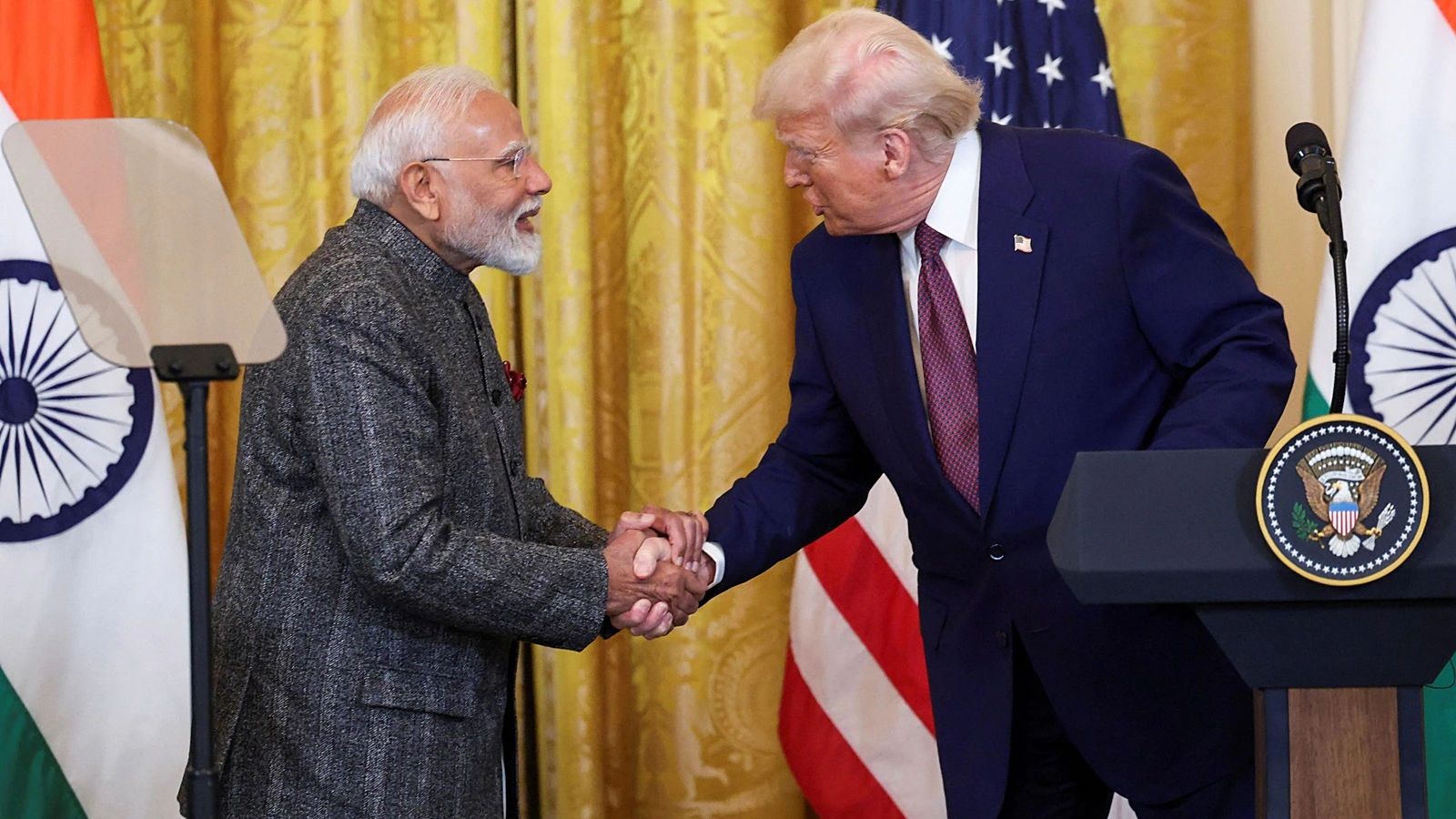
A day after he paused for five days his threat of striking Iran’s energy sites and announced initiation of talks behind the scenes with Tehran, US President Donald Trump called up Prime Minister Narendra Modi Tuesday and discussed the situation in West Asia “including the importance of keeping the Strait of Hormuz open”.
This was their first call since the start of the war on February 28 when the US and Israel launched attacks on Iran.
Modi, in a post on X, said, “Received a call from President Trump and had a useful exchange of views on the situation in West Asia. India supports de-escalation and restoration of peace at the earliest. Ensuring that the Strait of Hormuz remains open, secure and accessible is essential for the whole world. We agreed to stay in touch regarding efforts towards peace and stability.”
Received a call from President Trump and had a useful exchange of views on the situation in West Asia. India supports de-escalation and restoration of peace at the earliest. Ensuring that the Strait of Hormuz remains open, secure and accessible is essential for the whole world.…
— Narendra Modi (@narendramodi) March 24, 2026
The news of the call was first disclosed by Sergio Gor, US ambassador to India, who, in a post on X, said, “President Donald Trump just spoke with Prime Minister Modi. They discussed the ongoing situation in the Middle East, including the importance of keeping the Strait of Hormuz open.”
With both sides underlining the importance of the Strait of Hormuz and keeping the waterway open, it signalled the concern over disruption in global energy supply chains.
The Strait of Hormuz is the key channel through which 20 per cent of the global energy supply – and majority of gas supply from Qatar – passes in large carriers. Qatar, UAE, Kuwait have all been negatively impacted by the closure of the Strait, and that has led to a global rise in prices of oil and gas, and impacted the supply of cooking gas in India and other countries.
A day before the Trump-Modi call, External Affairs minister S Jaishankar spoke to US Secretary of State Marco Rubio, their first phone conversation since the start of the war. Following the call, Jaishankar said, “Our discussions focused on the West Asia conflict and its impact on the international economy. We particularly spoke about energy security concerns. Agreed to remain in touch.”
On Tuesday, Elbridge Colby, US Under Secretary of War for Policy, who spoke at the Ananta Aspen Centre in New Delhi, said, “The United States and India do not need to agree on everything to cooperate effectively. What matters is that our interests and objectives increasingly converge on the most fundamental issues. Differences and even disputes are fully compatible with deepening alignment and cooperation on strategic matters. The roots of our partnership are deeper than optics and more durable than superficial comity; they are, rather, thickly embedded in lasting strategic mutual self-interest.”
“Both of our countries benefit from an Indo-Pacific in which no power can dominate the region. Both benefit from open trade and national autonomy. These are the concrete, shared interests that form the foundation of our enduring strategic partnership,” he said.
“We both recognise the strategic centrality of military power for a stable balance in the region, and thus that defence cooperation should enhance real capability rather than be merely totemic or driven by inertia. In this light, one of the most encouraging developments in recent years has been the steady expansion of defence cooperation between the United States and India. As Secretary (Pete) Hegseth put it, ‘our defence ties have never been stronger’.”
Colby will meet Defence Secretary Rajesh Kumar Singh on Wednesday and chair the Defense Policy Group as they “look ahead to a critical new decade of our Major Defense Partnership”.
“Our focus must now be on advancing forward from these important agreements to serve a larger strategic purpose: strengthening the ability of both countries to contribute to a stable balance of power in this vital region,” he said.
“Because we are focused on results and reality, we are concentrated on capabilities that matter in the Indo-Pacific strategic environment. Our goals should be practical: to ensure that our forces can operate effectively together when our interests align, and in any case to see that India possesses the capabilities necessary to defend its sovereignty and contribute to a favourable regional balance of power. Following from this, the United States is committed to working with India to hasten and augment cooperation in areas including but not limited to long-range precision fires, resilient logistics, maritime domain awareness, anti-submarine warfare, and advanced technologies,” Colby said.
Stay updated with the latest - Click here to follow us on Instagram
A day after he paused for five days his threat of striking Iran’s energy sites and announced initiation of talks behind the scenes with Tehran, US President Donald Trump called up Prime Minister Narendra Modi Tuesday and discussed the situation in West Asia “including the importance of keeping the Strait of Hormuz open”.
This was their first call since the start of the war on February 28 when the US and Israel launched attacks on Iran.
Modi, in a post on X, said, “Received a call from President Trump and had a useful exchange of views on the situation in West Asia. India supports de-escalation and restoration of peace at the earliest. Ensuring that the Strait of Hormuz remains open, secure and accessible is essential for the whole world. We agreed to stay in touch regarding efforts towards peace and stability.”
Received a call from President Trump and had a useful exchange of views on the situation in West Asia. India supports de-escalation and restoration of peace at the earliest. Ensuring that the Strait of Hormuz remains open, secure and accessible is essential for the whole world.…
— Narendra Modi (@narendramodi) March 24, 2026
The news of the call was first disclosed by Sergio Gor, US ambassador to India, who, in a post on X, said, “President Donald Trump just spoke with Prime Minister Modi. They discussed the ongoing situation in the Middle East, including the importance of keeping the Strait of Hormuz open.”
With both sides underlining the importance of the Strait of Hormuz and keeping the waterway open, it signalled the concern over disruption in global energy supply chains.
The Strait of Hormuz is the key channel through which 20 per cent of the global energy supply – and majority of gas supply from Qatar – passes in large carriers. Qatar, UAE, Kuwait have all been negatively impacted by the closure of the Strait, and that has led to a global rise in prices of oil and gas, and impacted the supply of cooking gas in India and other countries.
A day before the Trump-Modi call, External Affairs minister S Jaishankar spoke to US Secretary of State Marco Rubio, their first phone conversation since the start of the war. Following the call, Jaishankar said, “Our discussions focused on the West Asia conflict and its impact on the international economy. We particularly spoke about energy security concerns. Agreed to remain in touch.”
On Tuesday, Elbridge Colby, US Under Secretary of War for Policy, who spoke at the Ananta Aspen Centre in New Delhi, said, “The United States and India do not need to agree on everything to cooperate effectively. What matters is that our interests and objectives increasingly converge on the most fundamental issues. Differences and even disputes are fully compatible with deepening alignment and cooperation on strategic matters. The roots of our partnership are deeper than optics and more durable than superficial comity; they are, rather, thickly embedded in lasting strategic mutual self-interest.”
“Both of our countries benefit from an Indo-Pacific in which no power can dominate the region. Both benefit from open trade and national autonomy. These are the concrete, shared interests that form the foundation of our enduring strategic partnership,” he said.
“We both recognise the strategic centrality of military power for a stable balance in the region, and thus that defence cooperation should enhance real capability rather than be merely totemic or driven by inertia. In this light, one of the most encouraging developments in recent years has been the steady expansion of defence cooperation between the United States and India. As Secretary (Pete) Hegseth put it, ‘our defence ties have never been stronger’.”
Colby will meet Defence Secretary Rajesh Kumar Singh on Wednesday and chair the Defense Policy Group as they “look ahead to a critical new decade of our Major Defense Partnership”.
“Our focus must now be on advancing forward from these important agreements to serve a larger strategic purpose: strengthening the ability of both countries to contribute to a stable balance of power in this vital region,” he said.
“Because we are focused on results and reality, we are concentrated on capabilities that matter in the Indo-Pacific strategic environment. Our goals should be practical: to ensure that our forces can operate effectively together when our interests align, and in any case to see that India possesses the capabilities necessary to defend its sovereignty and contribute to a favourable regional balance of power. Following from this, the United States is committed to working with India to hasten and augment cooperation in areas including but not limited to long-range precision fires, resilient logistics, maritime domain awareness, anti-submarine warfare, and advanced technologies,” Colby said.