

On Operation Sindoor anniversary, India describes how it called Pakistan’s bluff with long-range weapons
On the anniversary of Operation Sindoor, India’s armed forces detailed how India called Pakistan’s bluff and crushed its attempts at blackmailing with threats of a nuclear attack. Indian Navy’s Vice-Admiral AN Pramod said: “By striking the terror hubs in the heart of Pakistan using long-range precision weapons, India effectively called the bluff on Pakistan’s nuclear […]
On the anniversary of Operation Sindoor, India’s armed forces detailed how India called Pakistan’s bluff and crushed its attempts at blackmailing with threats of a nuclear attack. Indian Navy’s Vice-Admiral AN Pramod said: “By striking the terror hubs in the heart of Pakistan using long-range precision weapons, India effectively called the bluff on Pakistan’s nuclear blackmail.”
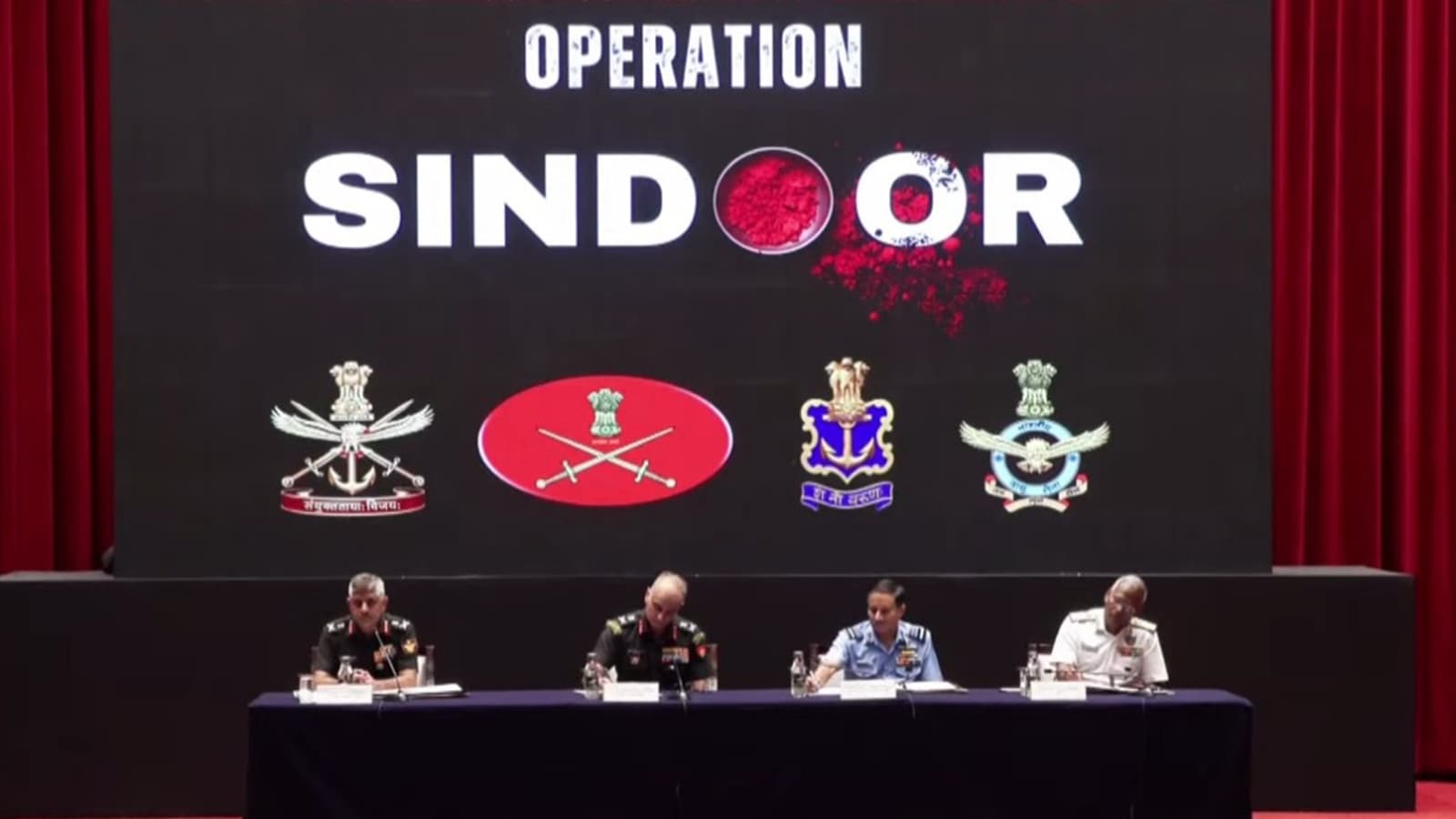
India also warned that no terror hub in Pakistan is safe. Addressing a joint press conference in Jaipur on Thursday, Air Force, Navy and the Indian Army officials said that Operation Sindoor, executed with “precision, proportionality, and clarity of purpose”, was a “statement of resolve and responsibility, and strategic restraint by our nation”.
In response to the Pahalgam terror attack on April 22, last year, in which 26 people, mostly tourists, were killed, India launched Operation Sindoor on May 7, carrying out airstrikes on nine terror infrastructures in Pakistan and Pakistan occupied Kashmir.
“With precision, proportionality and a clarity of purpose, it [Operation Sindoor] was a statement of resolve, responsibility and strategic restraint by a nation. From the outset, the government gave us two clear directions, clear political-military objectives and the operational flexibility to achieve these,” Lieutenant-General Rajiv Ghai, who had played a key role in executing the operation as the Army’s Director General of Military Operations (DGMO), told the media.
“Operation Sindoor was not an end and it was just the beginning,” he said, affirming that India’s fight against terror would continue. “A year on, we remember not just the operation but also the principle behind it. India will defend its sovereignty, its security, and its people decisively, professionally and with the utmost responsibility,” Ghai said.
He added that the operation led India to step beyond its traditional methods to target terror infrastructure across the Line of Control (LoC), and the international Boundary with Pakistan.
“Operation Sindoor was also a joint tri-service effort. It integrated land, air and maritime capabilities with shared situational awareness, common operation and intelligence pictures and real time decision making. Standoff Precision strikes, nine in all, seven executed by the Indian army and two by the Indian Air Force, were timed to perfection, achieved total surprise and inflicted maximum damage in each established hub deep in Pakistan-occupied Jammu and Kashmir and heartland Pakistan, signalling that no sanctuary is safe…,” Ghai told the press in Jaipur.
Hailing the indigenous capabilities of Indian security forces, Ghai said that the Operation was planned, executed and concluded a complex multi-domain operation in a remarkably compressed timeframe. “The BrahMos, Akash and many other homegrown platforms and weapons played decisive role in the operation,” he added.
Meanwhile, Air Marshal Awadhesh Kumar Bharti, the then Director General of Air Operations, hailed the primacy of air power during the operation.
Clearing the air on the reasons behind the agreement to stop the operations, Bharti said, “I fully understand the angst of our people, especially the younger generation, given our experience with Pakistan. But allow me to clarify here. Our fight was with the terrorists and their support infrastructure. And that is what we hit, ensuring no collateral damage. We had achieved our objectives, and our mission was complete.”
He also claimed that the military acted in India’s defence when Pakistan made our attacks against terror their “own fight.” “We had no choice but to respond in kind. It was about self-defence, much beyond a counter-terror operation. When we responded, it was lethal and ruthless. After taking the beating, sense kicked in in the adversary, and they asked for a cessation of hostilities. We paused when the request came. We stepped back but we didn’t blink. We had delivered the message, and the message was very clear, that is- misadventure will not go unanswered, and acts of terror will carry consequences…,” the Air Marshal said.
Elaborating on the damages caused on each side the border, Bharti said that Pakistan wasn’t able to inflict “any major damage on our side.” “Whatever they may say, remember narratives and rhetoric do not give you victory. Victory is measured by hard facts…,” he asserted.
Meanwhile, boasting India’s military might in Pakistan, the Air Marshal told the reporters, “We struck and decimated their 9 terrorist camps on 7th May. The proof is there for everybody to see. We struck 11 of their airfields. We destroyed 13 of their aircraft either on the ground or in the air…”
Ghai, meanwhile, advised Pakistan to invest in their battle-fighting abilities, rather than focusing on narrative-building.
“They (Pakistan) lost more than 100 soldiers. 100 terrorists were killed in those nine terrorist camps…” the Lt Gen said.
“Inadvertently, their honours and awards list, which was out on the internet, told us that so many of those awards were given posthumously. The numbers that they suffered on the line of control in the exchanges that followed, they lost more than 100 soldiers… At the end of the day, if Pakistanis were to make the same amount of investment in their battle-fighting ability as they do in the narrative. I think they would have fared much better. That’s the advice that they could take,” he concluded.
Stay updated with the latest - Click here to follow us on Instagram
On the anniversary of Operation Sindoor, India’s armed forces detailed how India called Pakistan’s bluff and crushed its attempts at blackmailing with threats of a nuclear attack. Indian Navy’s Vice-Admiral AN Pramod said: “By striking the terror hubs in the heart of Pakistan using long-range precision weapons, India effectively called the bluff on Pakistan’s nuclear blackmail.”
India also warned that no terror hub in Pakistan is safe. Addressing a joint press conference in Jaipur on Thursday, Air Force, Navy and the Indian Army officials said that Operation Sindoor, executed with “precision, proportionality, and clarity of purpose”, was a “statement of resolve and responsibility, and strategic restraint by our nation”.
In response to the Pahalgam terror attack on April 22, last year, in which 26 people, mostly tourists, were killed, India launched Operation Sindoor on May 7, carrying out airstrikes on nine terror infrastructures in Pakistan and Pakistan occupied Kashmir.
“With precision, proportionality and a clarity of purpose, it [Operation Sindoor] was a statement of resolve, responsibility and strategic restraint by a nation. From the outset, the government gave us two clear directions, clear political-military objectives and the operational flexibility to achieve these,” Lieutenant-General Rajiv Ghai, who had played a key role in executing the operation as the Army’s Director General of Military Operations (DGMO), told the media.
“Operation Sindoor was not an end and it was just the beginning,” he said, affirming that India’s fight against terror would continue. “A year on, we remember not just the operation but also the principle behind it. India will defend its sovereignty, its security, and its people decisively, professionally and with the utmost responsibility,” Ghai said.
He added that the operation led India to step beyond its traditional methods to target terror infrastructure across the Line of Control (LoC), and the international Boundary with Pakistan.
“Operation Sindoor was also a joint tri-service effort. It integrated land, air and maritime capabilities with shared situational awareness, common operation and intelligence pictures and real time decision making. Standoff Precision strikes, nine in all, seven executed by the Indian army and two by the Indian Air Force, were timed to perfection, achieved total surprise and inflicted maximum damage in each established hub deep in Pakistan-occupied Jammu and Kashmir and heartland Pakistan, signalling that no sanctuary is safe…,” Ghai told the press in Jaipur.
Hailing the indigenous capabilities of Indian security forces, Ghai said that the Operation was planned, executed and concluded a complex multi-domain operation in a remarkably compressed timeframe. “The BrahMos, Akash and many other homegrown platforms and weapons played decisive role in the operation,” he added.
Meanwhile, Air Marshal Awadhesh Kumar Bharti, the then Director General of Air Operations, hailed the primacy of air power during the operation.
Clearing the air on the reasons behind the agreement to stop the operations, Bharti said, “I fully understand the angst of our people, especially the younger generation, given our experience with Pakistan. But allow me to clarify here. Our fight was with the terrorists and their support infrastructure. And that is what we hit, ensuring no collateral damage. We had achieved our objectives, and our mission was complete.”
He also claimed that the military acted in India’s defence when Pakistan made our attacks against terror their “own fight.” “We had no choice but to respond in kind. It was about self-defence, much beyond a counter-terror operation. When we responded, it was lethal and ruthless. After taking the beating, sense kicked in in the adversary, and they asked for a cessation of hostilities. We paused when the request came. We stepped back but we didn’t blink. We had delivered the message, and the message was very clear, that is- misadventure will not go unanswered, and acts of terror will carry consequences…,” the Air Marshal said.
Elaborating on the damages caused on each side the border, Bharti said that Pakistan wasn’t able to inflict “any major damage on our side.” “Whatever they may say, remember narratives and rhetoric do not give you victory. Victory is measured by hard facts…,” he asserted.
Meanwhile, boasting India’s military might in Pakistan, the Air Marshal told the reporters, “We struck and decimated their 9 terrorist camps on 7th May. The proof is there for everybody to see. We struck 11 of their airfields. We destroyed 13 of their aircraft either on the ground or in the air…”
Ghai, meanwhile, advised Pakistan to invest in their battle-fighting abilities, rather than focusing on narrative-building.
“They (Pakistan) lost more than 100 soldiers. 100 terrorists were killed in those nine terrorist camps…” the Lt Gen said.
“Inadvertently, their honours and awards list, which was out on the internet, told us that so many of those awards were given posthumously. The numbers that they suffered on the line of control in the exchanges that followed, they lost more than 100 soldiers… At the end of the day, if Pakistanis were to make the same amount of investment in their battle-fighting ability as they do in the narrative. I think they would have fared much better. That’s the advice that they could take,” he concluded.