

Activist moves Supreme Court green panel over alleged illegal construction in Kaziranga wildlife corridors
Kaziranga National Park's field director said they are examining the issue and will "verify if these structures fall in the area delineated for the corridors.”
An environmental activist has filed a complaint, citing three instances, to the Supreme Court-mandated Central Empowered Committee (CEC) regarding alleged illegal construction within identified wildlife corridors that help wildlife disperse from Kaziranga National Park to the Karbi Anglong Hills in Assam.
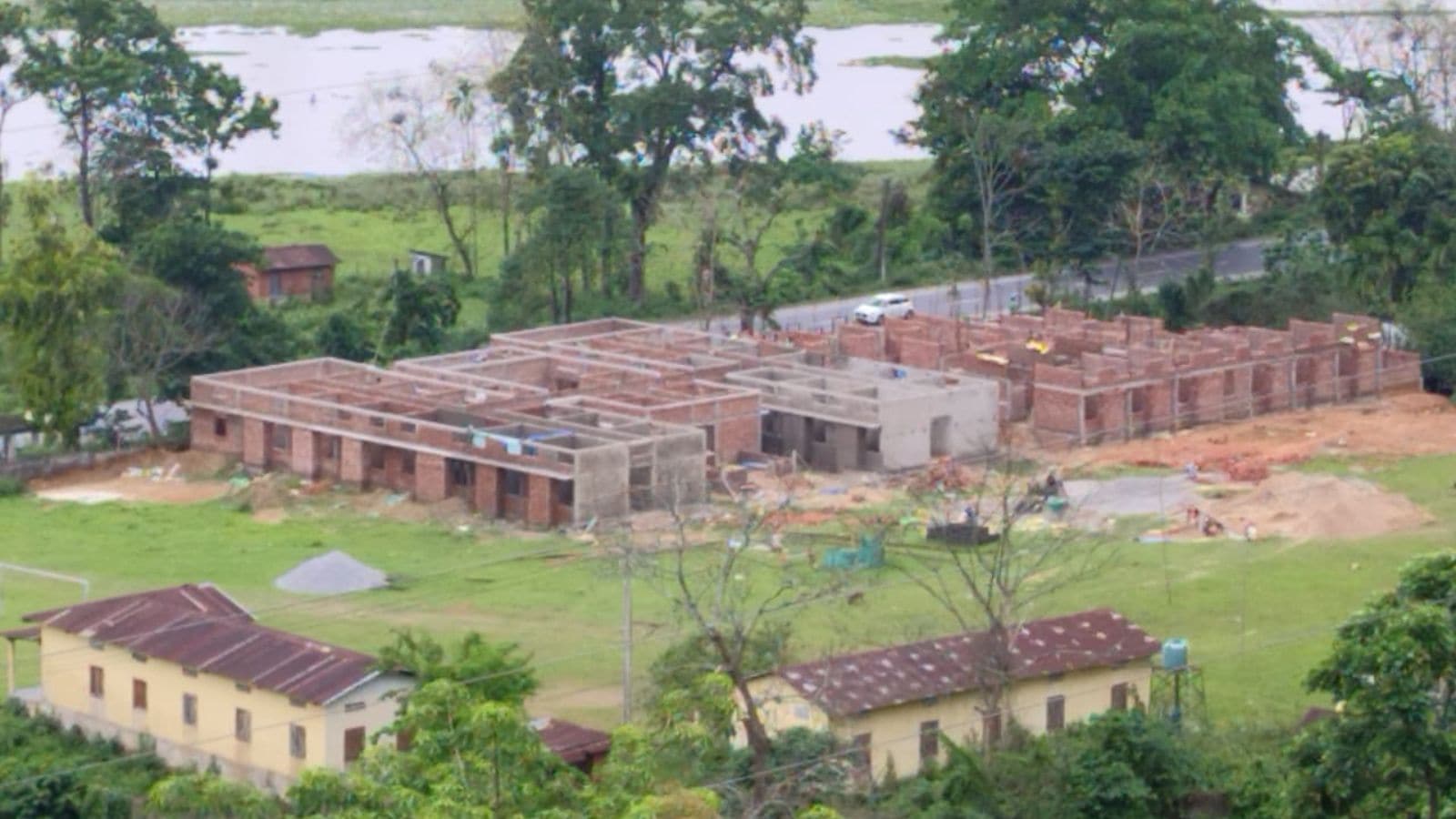
In a letter sent to the Committee in Delhi on May 11, Rohit Choudhury, based in Bokakhat in Golaghat district, has alleged that construction was underway for a school and a residential building on the Haldhibari and Panbari wildlife corridors, respectively, in violation of a 2019 Supreme Court order.
The CEC advises the apex court on writ petitions related to environment and forest matters, and assists in compliance with landmark orders, such as T N Godavarman on forest conservation.
In an order dated April 12, 2019, the Supreme Court had directed that all mining and related activities along “the aforesaid Kaziranga National Park area in the entire catchment area of river/streams and rivulets originating in Karbi Anglong Hill ranges and flowing into Kaziranga National Park, including the Tiger Reserve, are restrained.”
Crucially, the court had also ruled that “no new construction shall be permitted on private lands which form part of the nine identified animal corridors.” The court ordered protection of these corridors, as they are used by animals, including elephants, rhinos, tigers, wild buffalo, and swamp deer, to seek refuge on elevated land during floods by crossing the National Highway – 37.
The Karbi-Anglong Hills were once contiguous on the southern side of the national park, but the NH-37 fragments the Kaziranga landscape into two regions.
‘Blatant disregard’
In his complaint, Choudhury has pointed out that construction was underway for a “new school building” beside National Highway-37, on the Haldibari wildlife corridor adjacent to the park boundary. “The massive construction on the wildlife corridor, which is visible from the National Highway-37, shows the blatant disregard of the Government of Assam for the Hon’ble Supreme Court,” Choudhury has alleged in his complaint.
The Haldhibari corridor spans 8.10 sq km.
Further, the activist cited the construction of a “residential building besides the National Highway-37 on Panbari wildlife corridor”, while another instance cited in the complaint was of “earth filling near the Singjuri water channel.
Choudhury urged CEC to stop all ongoing construction on the nine identified corridors and requested that a list of all violations of the Supreme Court’s 2019 order be prepared.
Responding to a query by The Indian Express regarding the complaint, Sonali Ghosh, Field Director, Kaziranga National Park, said, “We are examining the issue and we will verify if these structures fall in the area delineated for the corridors.”
The Supreme Court’s 2019 order was based on a complaint by Choudhury, originally filed with CEC, regarding illegal constructions in wildlife corridors. Based on the top court’s order, the Assam government delineated nine animal corridors – Amguri, Panbari, Haldhibari, Bagori, Harmati, Kanchanjuri, Hatidandi, Deosur, and Chirang on April 1, 2022.
A committee formed by the Assam Government had considered human-wildlife conflict data over three years, the animal mortality rate on NH-37, camera-trap images, field visits, and interactions with locals before recommending the delineation of these animal corridors.
The Haldhibari corridor has various commercial establishments and parking lots on its western side, as per the committee’s report. In its report, the committee classified corridors into two types: functional and structural.
Functional ones refer to areas where species movement was documented, while structural ones are strips of forested areas with varied forest cover and habitat quality that structurally connect the fragmented blocks of the landscape.
Stay updated with the latest - Click here to follow us on Instagram
An environmental activist has filed a complaint, citing three instances, to the Supreme Court-mandated Central Empowered Committee (CEC) regarding alleged illegal construction within identified wildlife corridors that help wildlife disperse from Kaziranga National Park to the Karbi Anglong Hills in Assam.
In a letter sent to the Committee in Delhi on May 11, Rohit Choudhury, based in Bokakhat in Golaghat district, has alleged that construction was underway for a school and a residential building on the Haldhibari and Panbari wildlife corridors, respectively, in violation of a 2019 Supreme Court order.
The CEC advises the apex court on writ petitions related to environment and forest matters, and assists in compliance with landmark orders, such as T N Godavarman on forest conservation.
In an order dated April 12, 2019, the Supreme Court had directed that all mining and related activities along “the aforesaid Kaziranga National Park area in the entire catchment area of river/streams and rivulets originating in Karbi Anglong Hill ranges and flowing into Kaziranga National Park, including the Tiger Reserve, are restrained.”
Crucially, the court had also ruled that “no new construction shall be permitted on private lands which form part of the nine identified animal corridors.” The court ordered protection of these corridors, as they are used by animals, including elephants, rhinos, tigers, wild buffalo, and swamp deer, to seek refuge on elevated land during floods by crossing the National Highway – 37.
The Karbi-Anglong Hills were once contiguous on the southern side of the national park, but the NH-37 fragments the Kaziranga landscape into two regions.
‘Blatant disregard’
In his complaint, Choudhury has pointed out that construction was underway for a “new school building” beside National Highway-37, on the Haldibari wildlife corridor adjacent to the park boundary. “The massive construction on the wildlife corridor, which is visible from the National Highway-37, shows the blatant disregard of the Government of Assam for the Hon’ble Supreme Court,” Choudhury has alleged in his complaint.
The Haldhibari corridor spans 8.10 sq km.
Further, the activist cited the construction of a “residential building besides the National Highway-37 on Panbari wildlife corridor”, while another instance cited in the complaint was of “earth filling near the Singjuri water channel.
Choudhury urged CEC to stop all ongoing construction on the nine identified corridors and requested that a list of all violations of the Supreme Court’s 2019 order be prepared.
Responding to a query by The Indian Express regarding the complaint, Sonali Ghosh, Field Director, Kaziranga National Park, said, “We are examining the issue and we will verify if these structures fall in the area delineated for the corridors.”
The Supreme Court’s 2019 order was based on a complaint by Choudhury, originally filed with CEC, regarding illegal constructions in wildlife corridors. Based on the top court’s order, the Assam government delineated nine animal corridors – Amguri, Panbari, Haldhibari, Bagori, Harmati, Kanchanjuri, Hatidandi, Deosur, and Chirang on April 1, 2022.
A committee formed by the Assam Government had considered human-wildlife conflict data over three years, the animal mortality rate on NH-37, camera-trap images, field visits, and interactions with locals before recommending the delineation of these animal corridors.
The Haldhibari corridor has various commercial establishments and parking lots on its western side, as per the committee’s report. In its report, the committee classified corridors into two types: functional and structural.
Functional ones refer to areas where species movement was documented, while structural ones are strips of forested areas with varied forest cover and habitat quality that structurally connect the fragmented blocks of the landscape.