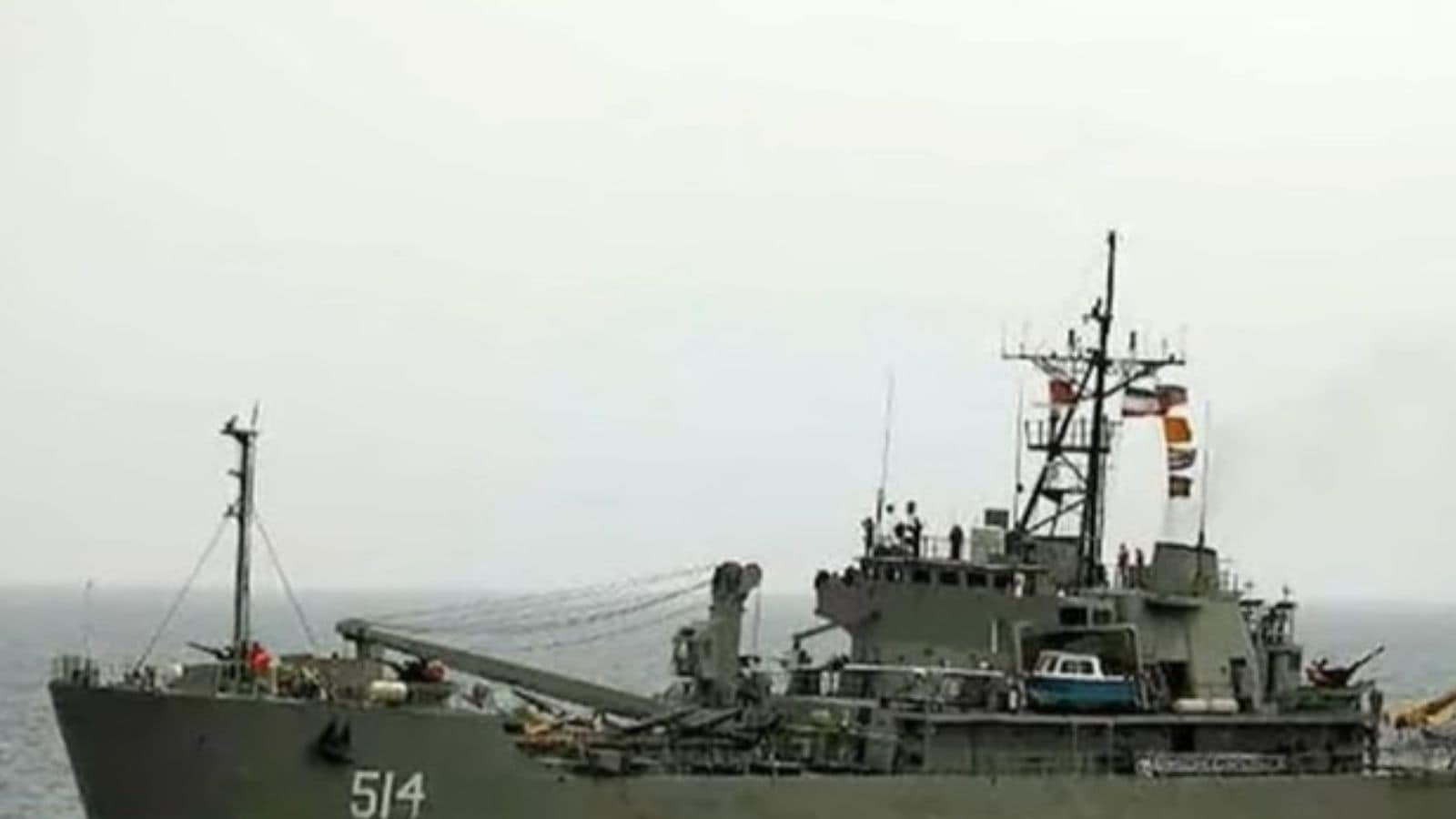


‘It was the humane thing to do’: S Jaishankar confirms India allowed Iranian ship to dock in Kochi
Iran approached India to take in IRIS Lavan on February 28, indicating that a docking at Kochi was urgent as the vessel had developed technical issues.
In first official comments, External Affairs Minister S Jaishankar on Saturday confirmed that India has allowed an Iranian ship, IRIS Lavan, to dock in Kochi. This comes three days after IRIS Dena was torpedoed by a US submarine in the international waters of the Indian Ocean.
Jaishankar, who was speaking at the Raisina Dialogue on Saturday, said, “You had these ships, and we got a message from the Iranian side that one of the ships, which presumably was closest to us… to our waters at that point of time… wanted to come into our port. They were reporting that they were having problems. And so, my recollection is this was on the 28th (February); and on the 1st (March), we said, ‘okay, you can come in.’”
“It took them a few days to sail in, and then they docked in Kochi. And the ship is there. And obviously, the people on the ship, a lot of them were young cadets — that is my understanding. They have disembarked; they are, you know, in a nearby facility… When they set out and came here, the situation was totally different. They were coming in for a fleet review, and then they got, in a way, caught on the wrong side of events. So for us, when this ship wanted to come in, and that too in difficulties, I think it was the humane thing to do. And I think we were guided by that principle,” he said.
“And in a sense, of the other ships, one obviously had a similar situation in Sri Lanka, and they took the decision which they did, and one unfortunately didn’t make it. So, I think we really approached it from the point of view of, in a sense, of humanity, other than, you know, whatever the legal issues were. And I think we did the right thing,” the minister said.
On March 7, The Indian Express had reported that even IRIS Dena, the torpedoed Iranian frigate, was offered shelter by India at one of its ports. The safe harbour offer was said to have been made in view of the rising tensions between the US and Iran, the report said.
Days before the IRIS Dena incident south of Sri Lanka, India was approached by Iran to take in the Iranian ship IRIS Lavan, which was also in the region for the International Fleet Review.
This request was received on February 28, indicating that a docking at Kochi was urgent as the vessel had developed technical issues. Approval was accorded for the docking on March 1. IRIS Lavan has docked at Kochi since March 4 and its crew of 183 are currently accommodated at naval facilities in Kochi.
Sri Lankan Foreign Minister Vijitha Herath, while responding to a question at the Raisina Dialogue in New Delhi on Saturday, said, “Sri Lanka will act in accordance with the United Nations Convention on the Law of the Sea (UNCLOS) and international law” regarding the possible repatriation of Iranian sailors rescued off the island’s southern coast.
Herath said Sri Lanka would follow established international legal frameworks. “Sri Lanka does not intend to support any side in this incident and will continue to handle the matter within the framework of international legal obligations,” he said.
At the Raisina Dialogue, Jaishankar also flagged the issue of safety of merchant ships currently operating in waters that have come within the range of the ongoing West Asia conflict and the dangers faced by Indian seafarers.
“Indians are a large segment of people who man merchant ships. Every time there is an attack on a vessel carrying goods, it is very likely that a part of the vessel is manned by Indians… We should give a lot of weight to this because we have had fatalities in the last few days… There has got to be adequate recognition in the country about the interest of our people, the merchant mariners and what we could be doing to safeguard them.”
“Our approach to the crisis is driven by the fact that we have 9-10 million people living in the Gulf. Their well-being is a factor just as much as that of merchant shipping has to be… Countries have their own interests, their economic or energy concerns, and, naturally, our policies will take all of that into account. I felt the merchant marine part has not got (much) prominence,” he said.
Three Indian nationals were killed in Iranian attacks on two merchant vessels in the waters off the coast of Oman this week.
Stay updated with the latest - Click here to follow us on Instagram
In first official comments, External Affairs Minister S Jaishankar on Saturday confirmed that India has allowed an Iranian ship, IRIS Lavan, to dock in Kochi. This comes three days after IRIS Dena was torpedoed by a US submarine in the international waters of the Indian Ocean.
Jaishankar, who was speaking at the Raisina Dialogue on Saturday, said, “You had these ships, and we got a message from the Iranian side that one of the ships, which presumably was closest to us… to our waters at that point of time… wanted to come into our port. They were reporting that they were having problems. And so, my recollection is this was on the 28th (February); and on the 1st (March), we said, ‘okay, you can come in.’”
“It took them a few days to sail in, and then they docked in Kochi. And the ship is there. And obviously, the people on the ship, a lot of them were young cadets — that is my understanding. They have disembarked; they are, you know, in a nearby facility… When they set out and came here, the situation was totally different. They were coming in for a fleet review, and then they got, in a way, caught on the wrong side of events. So for us, when this ship wanted to come in, and that too in difficulties, I think it was the humane thing to do. And I think we were guided by that principle,” he said.
“And in a sense, of the other ships, one obviously had a similar situation in Sri Lanka, and they took the decision which they did, and one unfortunately didn’t make it. So, I think we really approached it from the point of view of, in a sense, of humanity, other than, you know, whatever the legal issues were. And I think we did the right thing,” the minister said.
On March 7, The Indian Express had reported that even IRIS Dena, the torpedoed Iranian frigate, was offered shelter by India at one of its ports. The safe harbour offer was said to have been made in view of the rising tensions between the US and Iran, the report said.
Days before the IRIS Dena incident south of Sri Lanka, India was approached by Iran to take in the Iranian ship IRIS Lavan, which was also in the region for the International Fleet Review.
This request was received on February 28, indicating that a docking at Kochi was urgent as the vessel had developed technical issues. Approval was accorded for the docking on March 1. IRIS Lavan has docked at Kochi since March 4 and its crew of 183 are currently accommodated at naval facilities in Kochi.
Sri Lankan Foreign Minister Vijitha Herath, while responding to a question at the Raisina Dialogue in New Delhi on Saturday, said, “Sri Lanka will act in accordance with the United Nations Convention on the Law of the Sea (UNCLOS) and international law” regarding the possible repatriation of Iranian sailors rescued off the island’s southern coast.
Herath said Sri Lanka would follow established international legal frameworks. “Sri Lanka does not intend to support any side in this incident and will continue to handle the matter within the framework of international legal obligations,” he said.
At the Raisina Dialogue, Jaishankar also flagged the issue of safety of merchant ships currently operating in waters that have come within the range of the ongoing West Asia conflict and the dangers faced by Indian seafarers.
“Indians are a large segment of people who man merchant ships. Every time there is an attack on a vessel carrying goods, it is very likely that a part of the vessel is manned by Indians… We should give a lot of weight to this because we have had fatalities in the last few days… There has got to be adequate recognition in the country about the interest of our people, the merchant mariners and what we could be doing to safeguard them.”
“Our approach to the crisis is driven by the fact that we have 9-10 million people living in the Gulf. Their well-being is a factor just as much as that of merchant shipping has to be… Countries have their own interests, their economic or energy concerns, and, naturally, our policies will take all of that into account. I felt the merchant marine part has not got (much) prominence,” he said.
Three Indian nationals were killed in Iranian attacks on two merchant vessels in the waters off the coast of Oman this week.