

Where personal lives spill onto the stage: Inside Superqueens, India’s first drag musical
Lush Monsoon, Betta Naan Stop, Hash Brownie, Whacker Cracker, and Sickk take you into the world of drag, its highs and lows, of belonging and not belonging.
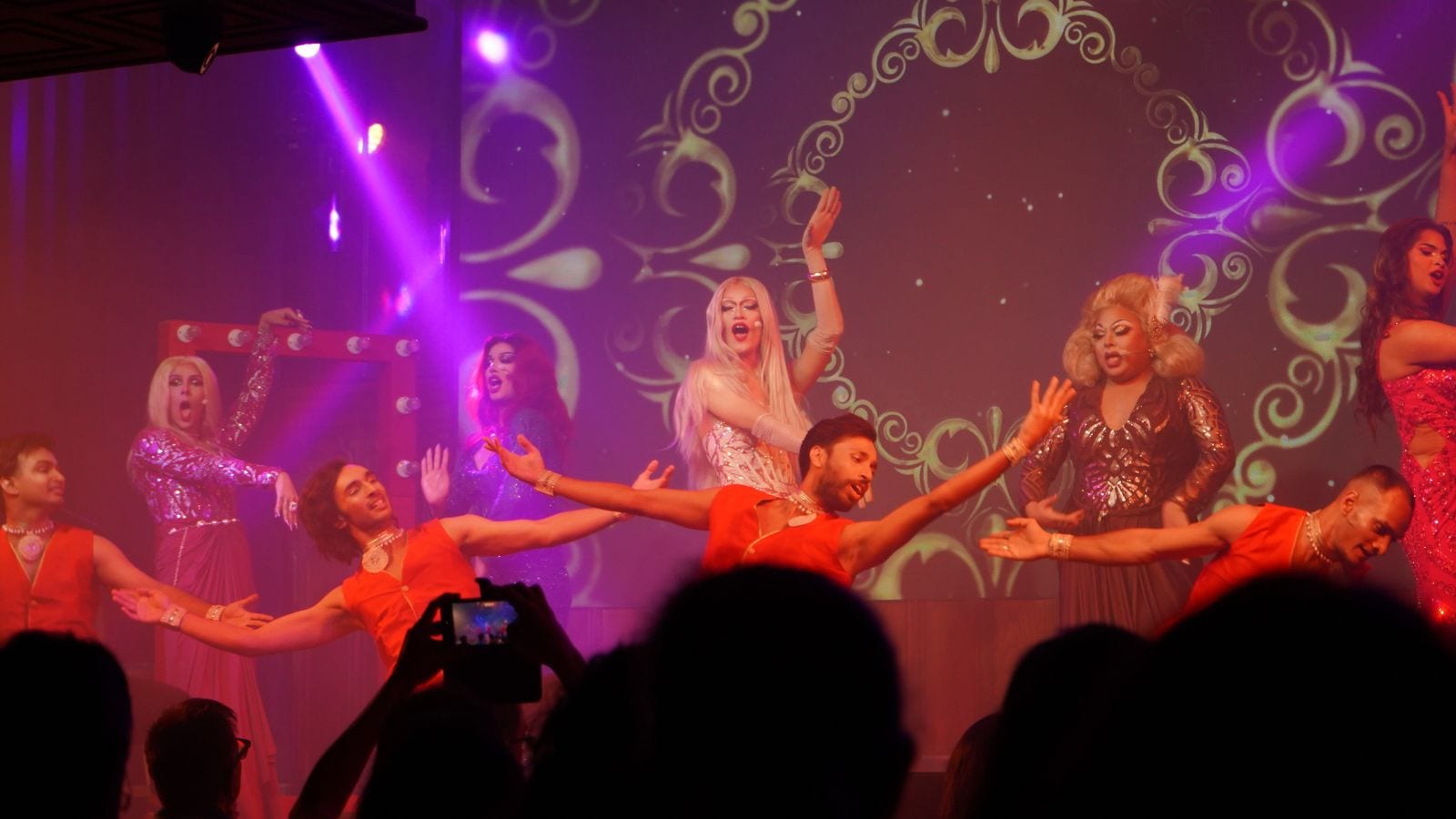
Beneath the shimmer of sequins and the dazzle of stage lights, five drag queens — Lush Monsoon, Betta Naan Stop, Hash Brownie, Whacker Cracker, and Sickk — grapple with the fallout of a cancelled club performance.
Their story unfolds in five chapters, each centering on one queen as they deliver a pre-recorded monologue on what drag means to them. And what emerges is a deeply personal exploration of art, identity, and resilience.
This is Superqueens, India’s first drag musical, which debuted in Delhi last year — and it’s more about than just drag. It is perhaps about anyone in Delhi who dreams of making it big, and what those dreams can cost.
The musical is as dazzling as it is disarmingly honest. It’s funny, campy, and unafraid to bare its heart. While most of its music numbers unfold “on stage,” where the queens flaunt their fashion and lip-syncing prowess, the real story takes place behind the curtains, in the green room.
Its emotional core lies in this duality: the world sees them as desirable, spunky, and exotic, but behind that facade are real struggles of hormone treatments, unpaid rent, and cancelled shows.
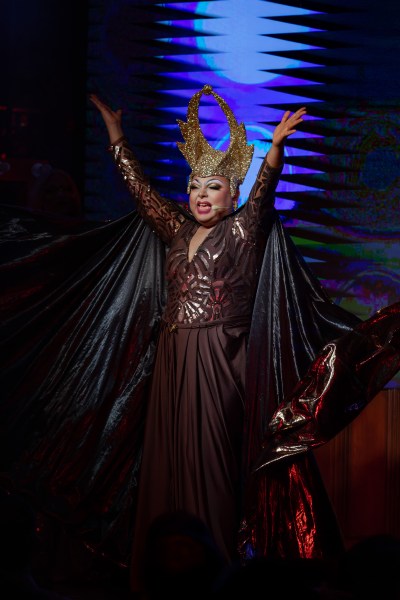
In the play, as the five try to save their cancelled show, they encounter a range of characters who trivialise their art, sexualise them, or worse, attempt to prostitute them.
“These characters are based on people we have met. We have prototyped them,” says Aishwarya Ayushmaan, who performs as Lush Monsoon. “These are people who don’t see the art. They just see us as something that can grab eyeballs or attract business… deep down you know how they really see you.”
One sequence captures this tension vividly. When the girls are seemingly contacted by a fashion photographer, they are excited. Perhaps this could be their big break. However, as the photographer tells them to pose more and more provocatively, and as the girls’ discomfort peaks, they ask when the photos will be published.
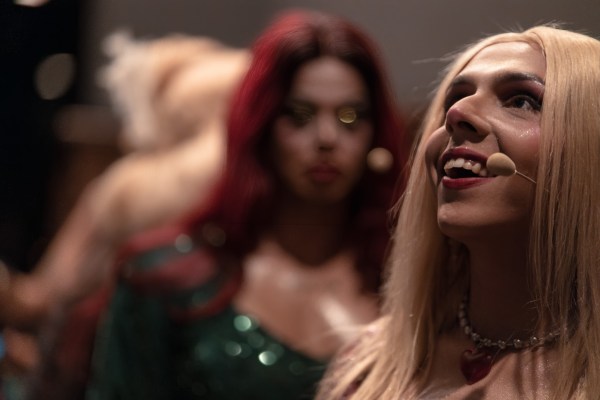
The man scoffs and says, “Who would like to see a drag queen on a fashion cover? This is for personal use.”
Even in spaces that claim inclusivity, the musical shows how an invisible line persists between being seen and unseen.
“Betta and I have posed for Vogue, but such things are rarely done,” says Ayushmaan. “Even then, what ‘fits’ in fashion is gatekept.”
Prateek Sachdeva, better known as Betta Naan Stop, adds, “There are problems when you approach venues outside Pride Month. They aren’t direct, but they’ll definitely make you understand why they’re refusing the space.”
The musical captures this sense of limbo — of belonging and not belonging — in a single striking line: “The world doesn’t see you as woman enough, and the allies don’t see you as trans enough.”
And yet, Superqueens never loses its sense of humour. Between the heartbreaks and hard truths, it remains buoyant and self-aware. “Drag teaches you to not take life too seriously,” says Betta.
The project has been years in the making. Since 2018, Betta and Lush had dreamt of creating a full-length drag musical. They approached choreographer Shohini Dutta, with whom they had previously collaborated for Kitty Su performances. Dutta loved the idea but she knew the transition wouldn’t be easy.
“This was different from a five-minute act at Kitty Su,” she explains. “This was a full play with dialogues to memorise and ensemble numbers to perform. They were used to working solo.”
While Lush and Betta assembled the cast, Dutta brought in a director. “We spent six to eight months just workshopping and writing the script. The cast had to get to know each other, their temperaments, their learning styles, even their postures,” she says.
The entire idea behind Superqueens was to burst forth into mainstream culture. “Drag is still quite niche despite being performed at one of the biggest hotels. What RuPaul did in the West was make drag art and culture mainstream… Betta and I have been mulling over this, about how we can make drag more accessible, especially to younger queens,” says Lush.
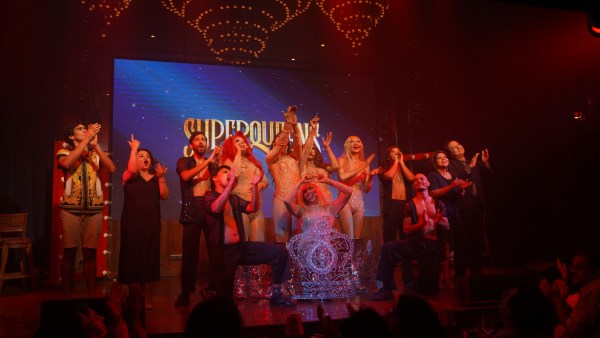
Both performers drew from their own journeys to shape the show’s emotional landscape.
Lush, who hails from Ranchi, knows what it’s like to hide and suppress desire, to grow up feeling not quite “normal”.
“I was always interested but too scared to try it out. I think I tried drag for the first time in college after watching RuPaul’s Drag Race. I looked terrible! I couldn’t see my photos for the longest time,” they laugh.
“But it also revealed something to me about myself… it felt like magic. It felt like I had the capability to make my dreams come true. All those fantasies I had were happening.”
Betta’s journey, too, was shaped by finding a home in performance. “I felt lost in school, but after school I discovered dance and movement and I knew that’s what I wanted to do. The stage is what I wanted to pursue,” Betta says.
Despite support from their family, discrimination followed. “I started teaching dance to kids, but when the parents found out, most of them dropped out… I felt helpless and angry, but I can’t change the world overnight,” they say.
The queens don’t believe they’ll face any political reproach. Drag, they say, has always been a part of Indian culture in one form or another. In classical traditions such as Kuchipudi, Kathakali, Yakshagana, Therukoothu, and Kutiyattam, cross-dressing was the norm. These were exclusively male traditions where men underwent rigorous training to embody both masculine and feminine roles with profound emotional and physical nuance.
In the northern Hindi belt, Nautanki and Swang traditions frequently relied on men playing female characters; sometimes due to the necessary exclusion of women from the stage, but also as a highly developed aesthetic of gender mimicry. Such performances were immensely popular among rural audiences and were rarely questioned on moral or gendered grounds.
Besides, drag isn’t female or male impersonation anymore. As Lush puts it, it’s all about the art of transformation.
Stay updated with the latest - Click here to follow us on Instagram
Beneath the shimmer of sequins and the dazzle of stage lights, five drag queens — Lush Monsoon, Betta Naan Stop, Hash Brownie, Whacker Cracker, and Sickk — grapple with the fallout of a cancelled club performance.
Their story unfolds in five chapters, each centering on one queen as they deliver a pre-recorded monologue on what drag means to them. And what emerges is a deeply personal exploration of art, identity, and resilience.
This is Superqueens, India’s first drag musical, which debuted in Delhi last year — and it’s more about than just drag. It is perhaps about anyone in Delhi who dreams of making it big, and what those dreams can cost.
The musical is as dazzling as it is disarmingly honest. It’s funny, campy, and unafraid to bare its heart. While most of its music numbers unfold “on stage,” where the queens flaunt their fashion and lip-syncing prowess, the real story takes place behind the curtains, in the green room.
Its emotional core lies in this duality: the world sees them as desirable, spunky, and exotic, but behind that facade are real struggles of hormone treatments, unpaid rent, and cancelled shows.
In the play, as the five try to save their cancelled show, they encounter a range of characters who trivialise their art, sexualise them, or worse, attempt to prostitute them.
“These characters are based on people we have met. We have prototyped them,” says Aishwarya Ayushmaan, who performs as Lush Monsoon. “These are people who don’t see the art. They just see us as something that can grab eyeballs or attract business… deep down you know how they really see you.”
One sequence captures this tension vividly. When the girls are seemingly contacted by a fashion photographer, they are excited. Perhaps this could be their big break. However, as the photographer tells them to pose more and more provocatively, and as the girls’ discomfort peaks, they ask when the photos will be published.
The man scoffs and says, “Who would like to see a drag queen on a fashion cover? This is for personal use.”
Even in spaces that claim inclusivity, the musical shows how an invisible line persists between being seen and unseen.
“Betta and I have posed for Vogue, but such things are rarely done,” says Ayushmaan. “Even then, what ‘fits’ in fashion is gatekept.”
Prateek Sachdeva, better known as Betta Naan Stop, adds, “There are problems when you approach venues outside Pride Month. They aren’t direct, but they’ll definitely make you understand why they’re refusing the space.”
The musical captures this sense of limbo — of belonging and not belonging — in a single striking line: “The world doesn’t see you as woman enough, and the allies don’t see you as trans enough.”
And yet, Superqueens never loses its sense of humour. Between the heartbreaks and hard truths, it remains buoyant and self-aware. “Drag teaches you to not take life too seriously,” says Betta.
The project has been years in the making. Since 2018, Betta and Lush had dreamt of creating a full-length drag musical. They approached choreographer Shohini Dutta, with whom they had previously collaborated for Kitty Su performances. Dutta loved the idea but she knew the transition wouldn’t be easy.
“This was different from a five-minute act at Kitty Su,” she explains. “This was a full play with dialogues to memorise and ensemble numbers to perform. They were used to working solo.”
While Lush and Betta assembled the cast, Dutta brought in a director. “We spent six to eight months just workshopping and writing the script. The cast had to get to know each other, their temperaments, their learning styles, even their postures,” she says.
The entire idea behind Superqueens was to burst forth into mainstream culture. “Drag is still quite niche despite being performed at one of the biggest hotels. What RuPaul did in the West was make drag art and culture mainstream… Betta and I have been mulling over this, about how we can make drag more accessible, especially to younger queens,” says Lush.
Both performers drew from their own journeys to shape the show’s emotional landscape.
Lush, who hails from Ranchi, knows what it’s like to hide and suppress desire, to grow up feeling not quite “normal”.
“I was always interested but too scared to try it out. I think I tried drag for the first time in college after watching RuPaul’s Drag Race. I looked terrible! I couldn’t see my photos for the longest time,” they laugh.
“But it also revealed something to me about myself… it felt like magic. It felt like I had the capability to make my dreams come true. All those fantasies I had were happening.”
Betta’s journey, too, was shaped by finding a home in performance. “I felt lost in school, but after school I discovered dance and movement and I knew that’s what I wanted to do. The stage is what I wanted to pursue,” Betta says.
Despite support from their family, discrimination followed. “I started teaching dance to kids, but when the parents found out, most of them dropped out… I felt helpless and angry, but I can’t change the world overnight,” they say.
The queens don’t believe they’ll face any political reproach. Drag, they say, has always been a part of Indian culture in one form or another. In classical traditions such as Kuchipudi, Kathakali, Yakshagana, Therukoothu, and Kutiyattam, cross-dressing was the norm. These were exclusively male traditions where men underwent rigorous training to embody both masculine and feminine roles with profound emotional and physical nuance.
In the northern Hindi belt, Nautanki and Swang traditions frequently relied on men playing female characters; sometimes due to the necessary exclusion of women from the stage, but also as a highly developed aesthetic of gender mimicry. Such performances were immensely popular among rural audiences and were rarely questioned on moral or gendered grounds.
Besides, drag isn’t female or male impersonation anymore. As Lush puts it, it’s all about the art of transformation.