

Third ship hit by US near Oman, all 20 Indians rescued, safe
The Shipping Ministry said more than 18,000 Indian seafarers are in the Gulf region.
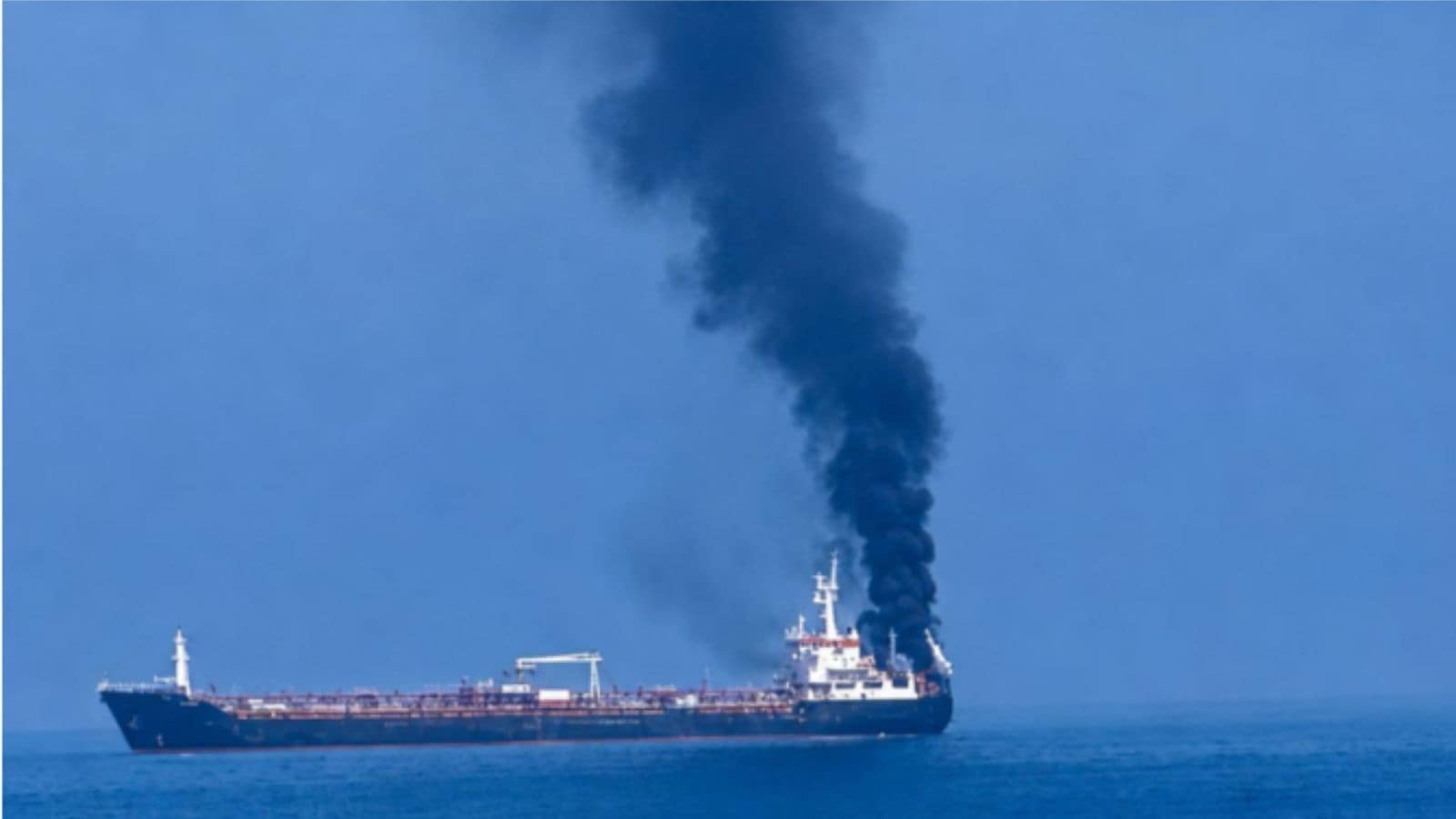
Fears for the safety of Indian seafarers on board ships trying to transit the Strait of Hormuz heightened Thursday when the US military attacked MT Jalveer, a Guinea-Bissau-flagged tanker, near the Oman coast, the third such incident in the area in four days. All 20 Indian seafarers on board were safely evacuated after the missile strike.
The attack on the tanker took place on the day Sarbananda Sonowal, Union Minister for Ports, Shipping and Waterways, confirmed the death of three Indian seafarers, reported missing a day earlier from MT Settebello after it was attacked — of the 24 Indians on board, 21 had been rescued.
The Indian Embassy in Muscat said the evacuation of the MT Jalveer crew to Shinas port was coordinated with assistance from the Royal Navy of Oman and all 20 Indians on board had been safely brought to shore.
Claiming that MT Jalveer “attempted to transport oil from Iran through the Gulf of Oman”, the US Central Command said, “A US aircraft fired two Hellfire missiles into the ship’s engine room after the crew repeatedly failed to comply with directions from US forces.”
It said the tanker was “disabled” in the Gulf of Oman “after the vessel violated the blockade against Iran by attempting to transport Iranian oil, marking the third commercial ship disabled by American forces this week”.
“Earlier this week, US aircraft disabled Palau-flagged vessels MT Marivex and MT Settebello on Monday and Tuesday, respectively. Marivex violated the blockade by attempting to sail to an Iranian port and Settebello attempted to transport Iranian oil,” the CENTCOM said.
It is learnt that MT Jalveer had already been fired at by an American aircraft last month. On May 15, it received warning shots approximately 30 nautical miles off the Oman coast and was directed to turn back toward the Gulf of Oman.
The attacks on commercial vessels, the resumption of military strikes by US and Iran and the issue of maritime security frame both diplomatic and economic challenges for G7 leaders meeting next week at Evian-les-Bains in eastern France — Prime Minister Narendra Modi and President Donald Trump will be among world leaders at the meeting.
Modi is undertaking an official visit to France — June 13-14 (Nice), June 16-18 (Evian and Paris) — and Slovakia from June 14-16.
Late Wednesday night, the Ministry of External Affairs had summoned the US charge d’affaires in New Delhi and lodged a protest after the attack on MT Settebello.
“We had summoned the US CDA (Jason Meeks) to register a protest on the attack that happened on this commercial vessel off the coast of Oman. Three Indian nationals have died in that incident,” MEA spokesperson Randhir Jaiswal said.
“We have conveyed our deepest concerns on these incidents and the string of attacks happening. And we hope and expect that these would end, these would come to an immediate halt,” he said, underlining “our deep concerns regarding targeting of commercial ships, of marine personnel, as also civilian infrastructure”.
Officials indicated that the issue of maritime security and safety of seafarers will be part of the conversation at the G7 meeting.
Sibi George, Secretary (West) in the MEA, said, “We have stated our position on the Strait of Hormuz. We would like, we want, and we have urged that there be unimpeded and safe navigation through the Strait of Hormuz, in keeping with international law. So that is our position. This is a topic which will come up for discussion, and we will put our points across. Also the concerns that we have, arising out of the West Asia situation and developments there.” Officials said that about 3.2 lakh Indian seafarers form the second-largest cohort of seafarers across the world, as part of the shipping industry.
Shipping Ministry’s Additional Secretary Mukesh Mangal said sanctions-related guidelines issued for Indian seafarers are only with respect to vessels under United Nations sanctions, and not based on unilateral sanctions by any country.
“Tomorrow some X country might say that I will also issue a sanctions list. So that can’t be controlled… We have already issued guidelines for UN-sanctioned vessels,” Mangal said, adding that he cannot comment on why a large number of Indian seafarers seem to be working specifically on vessels under US sanctions.
Fears for the safety of Indian seafarers on board ships trying to transit the Strait of Hormuz heightened Thursday when the US military attacked MT Jalveer, a Guinea-Bissau-flagged tanker, near the Oman coast, the third such incident in the area in four days. All 20 Indian seafarers on board were safely evacuated after the missile strike.
The attack on the tanker took place on the day Sarbananda Sonowal, Union Minister for Ports, Shipping and Waterways, confirmed the death of three Indian seafarers, reported missing a day earlier from MT Settebello after it was attacked — of the 24 Indians on board, 21 had been rescued.
The Indian Embassy in Muscat said the evacuation of the MT Jalveer crew to Shinas port was coordinated with assistance from the Royal Navy of Oman and all 20 Indians on board had been safely brought to shore.
Claiming that MT Jalveer “attempted to transport oil from Iran through the Gulf of Oman”, the US Central Command said, “A US aircraft fired two Hellfire missiles into the ship’s engine room after the crew repeatedly failed to comply with directions from US forces.”
It said the tanker was “disabled” in the Gulf of Oman “after the vessel violated the blockade against Iran by attempting to transport Iranian oil, marking the third commercial ship disabled by American forces this week”.
“Earlier this week, US aircraft disabled Palau-flagged vessels MT Marivex and MT Settebello on Monday and Tuesday, respectively. Marivex violated the blockade by attempting to sail to an Iranian port and Settebello attempted to transport Iranian oil,” the CENTCOM said.
It is learnt that MT Jalveer had already been fired at by an American aircraft last month. On May 15, it received warning shots approximately 30 nautical miles off the Oman coast and was directed to turn back toward the Gulf of Oman.
The attacks on commercial vessels, the resumption of military strikes by US and Iran and the issue of maritime security frame both diplomatic and economic challenges for G7 leaders meeting next week at Evian-les-Bains in eastern France — Prime Minister Narendra Modi and President Donald Trump will be among world leaders at the meeting.
Modi is undertaking an official visit to France — June 13-14 (Nice), June 16-18 (Evian and Paris) — and Slovakia from June 14-16.
Late Wednesday night, the Ministry of External Affairs had summoned the US charge d’affaires in New Delhi and lodged a protest after the attack on MT Settebello.
“We had summoned the US CDA (Jason Meeks) to register a protest on the attack that happened on this commercial vessel off the coast of Oman. Three Indian nationals have died in that incident,” MEA spokesperson Randhir Jaiswal said.
“We have conveyed our deepest concerns on these incidents and the string of attacks happening. And we hope and expect that these would end, these would come to an immediate halt,” he said, underlining “our deep concerns regarding targeting of commercial ships, of marine personnel, as also civilian infrastructure”.
Officials indicated that the issue of maritime security and safety of seafarers will be part of the conversation at the G7 meeting.
Sibi George, Secretary (West) in the MEA, said, “We have stated our position on the Strait of Hormuz. We would like, we want, and we have urged that there be unimpeded and safe navigation through the Strait of Hormuz, in keeping with international law. So that is our position. This is a topic which will come up for discussion, and we will put our points across. Also the concerns that we have, arising out of the West Asia situation and developments there.” Officials said that about 3.2 lakh Indian seafarers form the second-largest cohort of seafarers across the world, as part of the shipping industry.
Shipping Ministry’s Additional Secretary Mukesh Mangal said sanctions-related guidelines issued for Indian seafarers are only with respect to vessels under United Nations sanctions, and not based on unilateral sanctions by any country.
“Tomorrow some X country might say that I will also issue a sanctions list. So that can’t be controlled… We have already issued guidelines for UN-sanctioned vessels,” Mangal said, adding that he cannot comment on why a large number of Indian seafarers seem to be working specifically on vessels under US sanctions.