

Weeks after 300 stranded mid-air, J&K orders probe into Gulmarg gondola glitch
A five-member committee has been given 10 days to investigate potential negligence and review safety protocols after a major mid-air crisis suspended the popular cable car service.
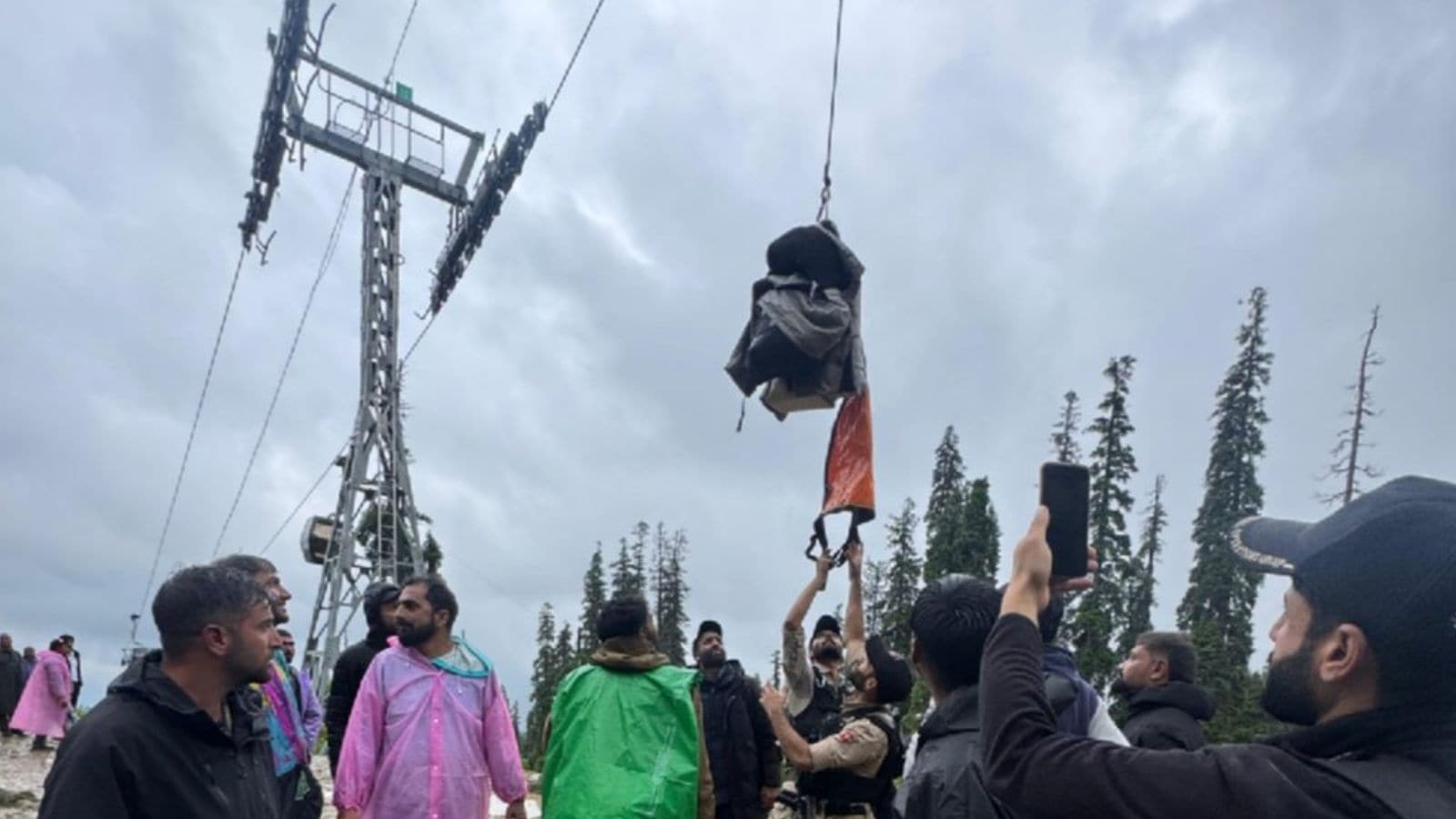
The Jammu & Kashmir government has constituted a committee to probe lapses in the Gulmarg gondola incident, in which a technical glitch in the cable car led to over 300 passengers being stuck several meters above the ground.
Officials of the Indian Army, J&K Police, and SDRF were pressed into service to rescue all passengers stuck in 65 cabins of the gondola on May 25. Cable car services have since remained suspended.
On Wednesday, the government said a five-member committee headed by Managing Director, Kashmir Power Distribution Corporation Ltd, Mehmood Shah, and including Director Tourism Vikas Gupta and Chief Executive Officer, Gulmarg Development Authority, Tariq Hussain, will conduct the probe.
The committee will ascertain and establish the complete sequence of events leading to the malfunctioning/technical failure of the cable car/gondola system, including the circumstances “immediately preceding, during, and subsequent to the incident”, the statement said.
On May 25, Gulmarg Gondola, the cable car service that takes tourists to the upper reaches of the tourist destination, developed a technical snag amid inclement weather, leaving 320 people stranded mid-air for hours before they were rescued.
The cable car runs in two phases, from the base to approximately 14,000 feet at Apharwat Peak.
Officials will also examine all relevant facts, records, reports, communications, and operational details necessary for arriving at a clear understanding of the incident. They will, additionally, conduct a detailed technical examination of the malfunction and investigate the nature, cause, and extent of the failure, including examination of the mechanical, electrical, electronic, braking, communication, control, and safety systems associated with the operation of the cable car/gondola system.
Existing operational procedures, standard operating procedures (SOPs), of the functioning of the gondola will also be reviewed, and “operational lapse, negligence, procedural deficiency, communication gap, supervisory failure, human error, or administrative shortcoming” that contributed directly or indirectly to the occurrence of the incident will also be probed by the committee.
The committee is expected to submit its report within 10 days along with recommendations for “immediate corrective measures” required for ensuring safe operation and restoration of the cable car, as well as long-term technical, operational, administrative, and safety-related measures necessary to prevent recurrence of similar incidents in future.
The Jammu & Kashmir government has constituted a committee to probe lapses in the Gulmarg gondola incident, in which a technical glitch in the cable car led to over 300 passengers being stuck several meters above the ground.
Officials of the Indian Army, J&K Police, and SDRF were pressed into service to rescue all passengers stuck in 65 cabins of the gondola on May 25. Cable car services have since remained suspended.
On Wednesday, the government said a five-member committee headed by Managing Director, Kashmir Power Distribution Corporation Ltd, Mehmood Shah, and including Director Tourism Vikas Gupta and Chief Executive Officer, Gulmarg Development Authority, Tariq Hussain, will conduct the probe.
The committee will ascertain and establish the complete sequence of events leading to the malfunctioning/technical failure of the cable car/gondola system, including the circumstances “immediately preceding, during, and subsequent to the incident”, the statement said.
On May 25, Gulmarg Gondola, the cable car service that takes tourists to the upper reaches of the tourist destination, developed a technical snag amid inclement weather, leaving 320 people stranded mid-air for hours before they were rescued.
The cable car runs in two phases, from the base to approximately 14,000 feet at Apharwat Peak.
Officials will also examine all relevant facts, records, reports, communications, and operational details necessary for arriving at a clear understanding of the incident. They will, additionally, conduct a detailed technical examination of the malfunction and investigate the nature, cause, and extent of the failure, including examination of the mechanical, electrical, electronic, braking, communication, control, and safety systems associated with the operation of the cable car/gondola system.
Existing operational procedures, standard operating procedures (SOPs), of the functioning of the gondola will also be reviewed, and “operational lapse, negligence, procedural deficiency, communication gap, supervisory failure, human error, or administrative shortcoming” that contributed directly or indirectly to the occurrence of the incident will also be probed by the committee.
The committee is expected to submit its report within 10 days along with recommendations for “immediate corrective measures” required for ensuring safe operation and restoration of the cable car, as well as long-term technical, operational, administrative, and safety-related measures necessary to prevent recurrence of similar incidents in future.