

Electoral roll revision: EC announces Phase 3 of SIR in 16 states, 3 UTs starting May 30
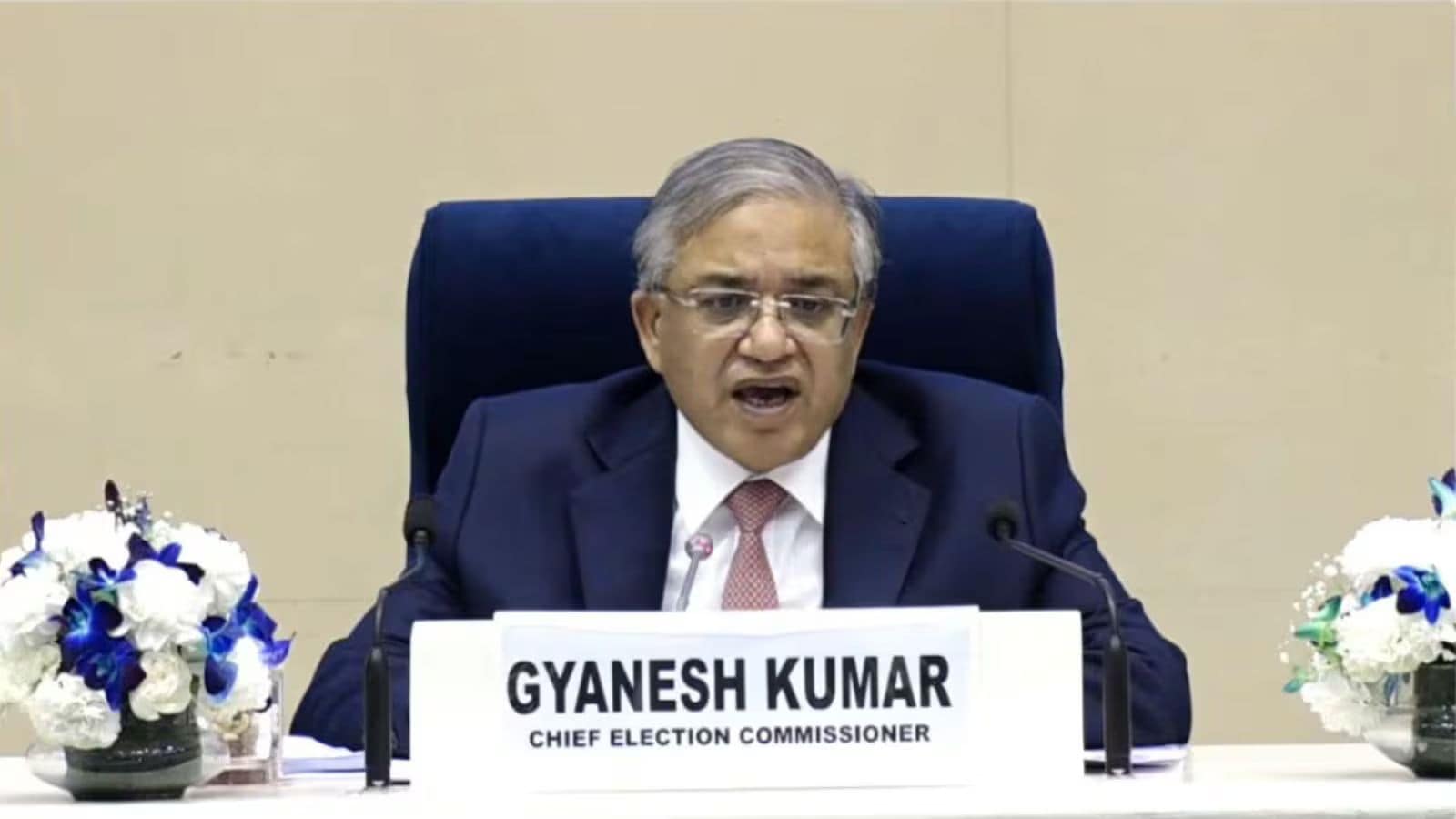
The Election Commission of India has announced that SIR exercise will take place in 16 states and three Union Territories. Himachal Pradesh, Jammu and Kashmir, and Ladakh have been left out in this phase.
The Election Commission on Thursday announced the schedule for the third phase of the Special Intensive Revision (SIR), covering 16 states and three Union Territories. The new phase of the SIR starts from May 30 in Odisha, Mizoram, Sikkim and Manipur.
“The schedule of SIR Phase-III has been fixed keeping in view the common field machinery with the ongoing house listing of Census. With this, the SIR of Electoral Rolls will cover the entire country in Phase-III except Himachal Pradesh, Jammu & Kashmir and Ladakh. After considering the completion of Phase-II of the Census in these three State/UTs and due consideration of the weather in the upper reaches/ snow bound areas, SIR schedule for these three State/UTs will be announced later,” the EC said in a statement.
ALSO READ | SIR-deleted can’t avail govt schemes, says Bengal govt; Bihar CM talks of ‘cancelling bank passbooks’
The one-month house-to-house visits by the Booth Level Officers (BLOs) will start from May 30 in Odisha, Mizoram, Sikkim and Manipur; from June 4 in Dadra and Nagar Haveli and Daman and Diu; June 8 in Uttarakhand; June 15 in Andhra Pradesh, Arunachal Pradesh, Haryana and Chandigarh; June 25 in Telangana and Punjab; June 30 in Karnataka, Meghalaya, Maharashtra, Jharkhand and Delhi; August 16 in Nagaland; and September 15 in Tripura.
The final electoral rolls will be published between September 6 and December 23.
“During SIR Phase-III over 3.94 lakh BLOs will go house-to-house to 36.73 crore electors assisted by 3.42 lakh Booth Level Agents (BLAs) appointed by political parties during the Enumeration Phase…ECI requests all political parties to appoint BLAs for each polling booth…so that SIR is conducted with complete transparency and full participation of political parties,” the EC said.
Like in the Phase-II of the SIR, all electors will be required to submit an enumeration form, with proof of either their name or that of a “relative” in the electoral roll from the last time an intensive revision happened in their state. For these states and UTs in Phase-III, the last intensive revision was carried out between 2002 and 2006. As per the instructions issued by the EC on Thursday, electors don’t have to give any documents during the enumeration phase.
After publication of draft electoral rolls, notices will be issued to those persons who could not be linked to anyone in the previous electoral rolls, the instructions say.
Those issued notices would then have to provide documents from a list of 12 accepted documents. While Aadhaar Card is mentioned at the end of the list, it can only serve as a proof of identity.
The EC had on June 24, 2025, ordered the SIR of electoral rolls, starting with Bihar before the Assembly elections in the state. Following that, on October 27 last year, the SIR was announced in another nine states and three UTs.
As opposed to the annual Special Summary Revision of electoral rolls, in which the rolls are updated with additions and deletions, the intensive revision involves fresh preparation of the electorate. The EC had not conducted an intensive revision since the early 2000s, when electoral rolls were digitised. The EC had cited rapid urbanisation and migration as reasons for conducting the SIR.
The process followed in the SIR has been unprecedented as all electors are required to submit enumeration forms within a one-month enumeration phase and provide documents to prove their eligibility, including citizenship.
The EC’s June 24 order has been challenged in the Supreme Court and criticised by the Opposition as a “backdoor attempt” to prepare a National Register of Citizens.
A total of 5.58 crore electors, or 9.55 per cent of the electoral rolls, in Bihar, Rajasthan, Goa, Lakshadweep, Puducherry, Gujarat, Chhattisgarh, the Andaman and Nicobar Islands, Kerala, Madhya Pradesh, Tamil Nadu, West Bengal and Uttar Pradesh have been deleted so far.
The Election Commission on Thursday announced the schedule for the third phase of the Special Intensive Revision (SIR), covering 16 states and three Union Territories. The new phase of the SIR starts from May 30 in Odisha, Mizoram, Sikkim and Manipur.
“The schedule of SIR Phase-III has been fixed keeping in view the common field machinery with the ongoing house listing of Census. With this, the SIR of Electoral Rolls will cover the entire country in Phase-III except Himachal Pradesh, Jammu & Kashmir and Ladakh. After considering the completion of Phase-II of the Census in these three State/UTs and due consideration of the weather in the upper reaches/ snow bound areas, SIR schedule for these three State/UTs will be announced later,” the EC said in a statement.
ALSO READ | SIR-deleted can’t avail govt schemes, says Bengal govt; Bihar CM talks of ‘cancelling bank passbooks’
The one-month house-to-house visits by the Booth Level Officers (BLOs) will start from May 30 in Odisha, Mizoram, Sikkim and Manipur; from June 4 in Dadra and Nagar Haveli and Daman and Diu; June 8 in Uttarakhand; June 15 in Andhra Pradesh, Arunachal Pradesh, Haryana and Chandigarh; June 25 in Telangana and Punjab; June 30 in Karnataka, Meghalaya, Maharashtra, Jharkhand and Delhi; August 16 in Nagaland; and September 15 in Tripura.
The final electoral rolls will be published between September 6 and December 23.
“During SIR Phase-III over 3.94 lakh BLOs will go house-to-house to 36.73 crore electors assisted by 3.42 lakh Booth Level Agents (BLAs) appointed by political parties during the Enumeration Phase…ECI requests all political parties to appoint BLAs for each polling booth…so that SIR is conducted with complete transparency and full participation of political parties,” the EC said.
Like in the Phase-II of the SIR, all electors will be required to submit an enumeration form, with proof of either their name or that of a “relative” in the electoral roll from the last time an intensive revision happened in their state. For these states and UTs in Phase-III, the last intensive revision was carried out between 2002 and 2006. As per the instructions issued by the EC on Thursday, electors don’t have to give any documents during the enumeration phase.
After publication of draft electoral rolls, notices will be issued to those persons who could not be linked to anyone in the previous electoral rolls, the instructions say.
Those issued notices would then have to provide documents from a list of 12 accepted documents. While Aadhaar Card is mentioned at the end of the list, it can only serve as a proof of identity.
The EC had on June 24, 2025, ordered the SIR of electoral rolls, starting with Bihar before the Assembly elections in the state. Following that, on October 27 last year, the SIR was announced in another nine states and three UTs.
As opposed to the annual Special Summary Revision of electoral rolls, in which the rolls are updated with additions and deletions, the intensive revision involves fresh preparation of the electorate. The EC had not conducted an intensive revision since the early 2000s, when electoral rolls were digitised. The EC had cited rapid urbanisation and migration as reasons for conducting the SIR.
The process followed in the SIR has been unprecedented as all electors are required to submit enumeration forms within a one-month enumeration phase and provide documents to prove their eligibility, including citizenship.
The EC’s June 24 order has been challenged in the Supreme Court and criticised by the Opposition as a “backdoor attempt” to prepare a National Register of Citizens.
A total of 5.58 crore electors, or 9.55 per cent of the electoral rolls, in Bihar, Rajasthan, Goa, Lakshadweep, Puducherry, Gujarat, Chhattisgarh, the Andaman and Nicobar Islands, Kerala, Madhya Pradesh, Tamil Nadu, West Bengal and Uttar Pradesh have been deleted so far.