

100-year-old trees felled, 166 accused, a clash with officials: Behind tensions in a Chhattisgarh village
Forest officials claim residents of a village near Udanti Sitanadi Tiger Reserve (USTR) have encroached into the reserve and cut thousands of trees; villagers, however, have claimed the land is theirs and that there is no evidence the trees were cut by them
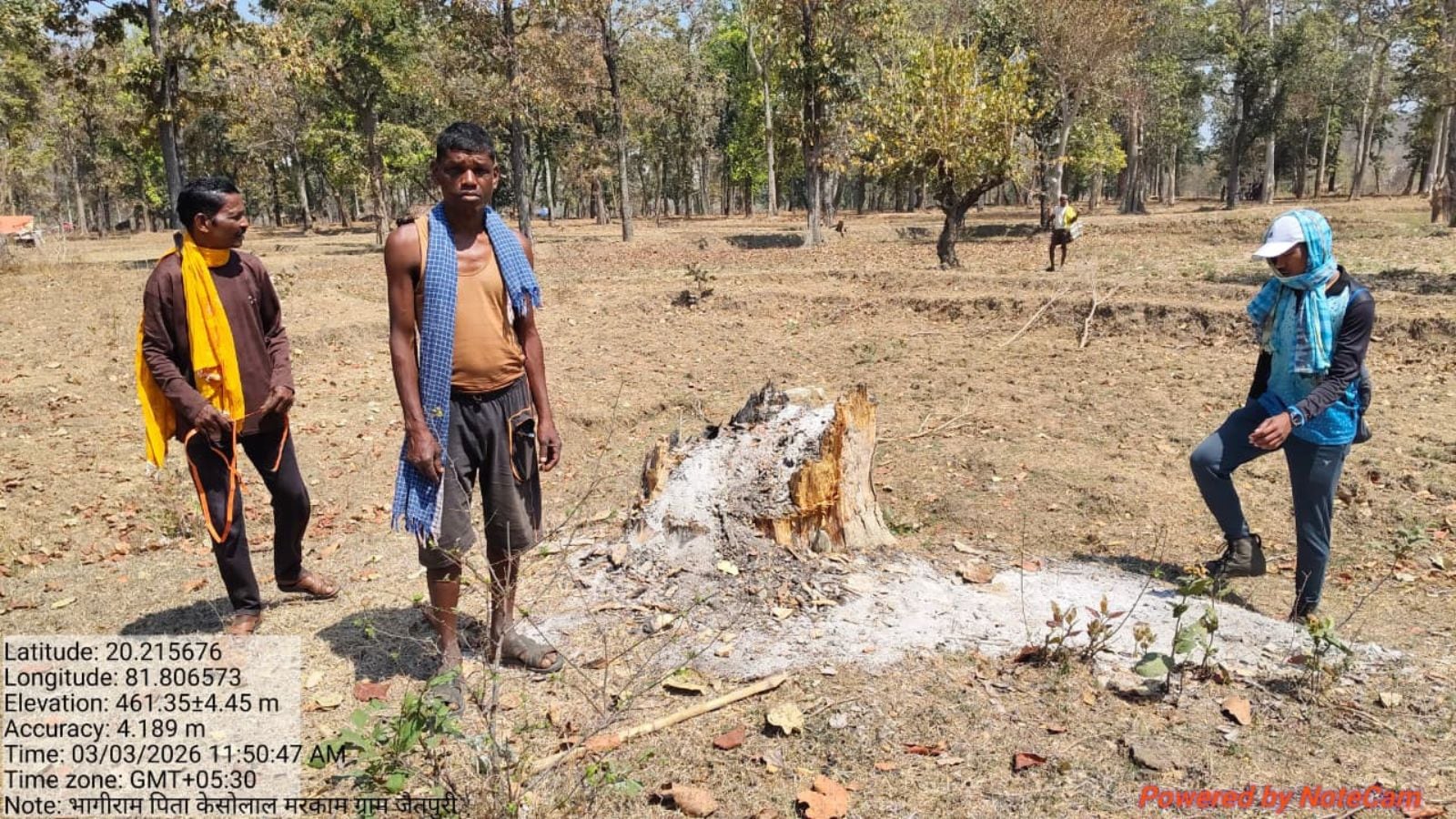
The felling of thousands of trees over a period of 17 years in the Udanti Sitanadi Tiger Reserve (USTR) in Chhattisgarh has recently led to a case against 166 residents of a nearby village and a clash earlier this month between forest personnel and local residents.
Forest and wildlife officials claim that residents of Jaitpuri village, which borders USTR, encroached on 106 hectares of land inside the reserve. The lawyer representing the villagers, however, questioned why authorities were taking action now, after so many years, and also suggested that there was no evidence that the trees were cut by his clients.
The USTR was notified in 2009 and is spread across 1,842.54 sq km. In the last four years, 956 hectares (nearly 10 sq km) of USTR were cleared of encroachment, with over 700 encroachers being moved out, while another 250 hectares of land inside the reserve remains encroached, and efforts are on to clear it, officials said.
Deputy Director of Udanti Sitanadi Tiger Reserve, Gariaband, Varun Jain said satellite and drone imagery over the years showed a major loss of tree cover in the “encroached” areas. “We have compared the ISRO CARTOSAT satellite images from 2008, 2010 and 2012 with Google Earth images from 2018, 2020 and 2022, as well as the high-resolution drone imagery (from February 2026). This indicates continuous forest cover loss since 2011-2026.”
“The tree density of the adjacent forest is 1,500-2,000 trees per hectare, while the drone imagery shows only 25-50 trees per hectare now available. The previous records in our Working Plan document also describe the area as ‘dense forest’, which means canopy density above 70%,” Jain said.
Since 2008, about 12.06 sq km, or 0.65% of the entire USTR area, has been encroached upon, according to officials. Several thousand Sal trees (Shorea robusta), Chhattisgarh’s state tree, that were between 100 and 200 years old, were felled to make way for agricultural land. According to officials, by 2021-2022, about 12.06 sq km of the tiger reserve was encroached.
Officials allege that people from Jaitpuri village cut trees from 10 hectares of the forest in 2008, and by 2011, this encroachment of the area for agricultural purposes extended to 45 hectares, where trees were felled.
Several villagers were arrested in both 2008 and 2011, but were later acquitted.
In March this year, an FIR was registered against 166 villagers under sections 27 (trespassing), 29 (destruction in core area), 30 (fire-burning of stumps, logs), and 31 (entering a sanctuary with weapon) of the Wildlife Protection Act, 1972, and other Acts. In May, a sessions court in Dhamtari district rejected their anticipatory bail plea, and the forest department served them three notices seeking their reply. Officials claimed that no response was received for these notifications and that the villagers did not produce any proof of ownership of the “encroached” land.
On May 18, residents of Jaitpuri village clashed with forest officials when the latter went to arrest them. Four local residents were arrested, and the situation became violent when officials tried to arrest more people. Subsequently, on May 25, 36 village residents surrendered and were arrested, while the remaining accused said they would also surrender.
A forest official said that the villagers had originally claimed the “encroached” land was their ancestral property, “but on realising the satellite images indicate trees were cut post 2010, they retracted their claim”.
Speaking on behalf of the villagers, their lawyer Suresh Kumar Sahu said they were being falsely implicated, and there is no evidence that the trees were cut by them.
“There was no need to harass the villagers on May 18, as they had informed the authorities that they were busy in a wedding celebration and promised to surrender on May 20. Also, what evidence does the government have that it is my clients who cut the trees and not anyone else? Also, why has no action been taken for years against those who cut the trees, and where have the trees gone?”
A forest official said an internal inquiry has been initiated to find out why action was not taken against tree-cutting post 2015, adding that the Naxal issue in the district had led to poor patrolling by forest officials.
On the impact the “encroachment” had on the wildlife, USTR’s Jain said, “The affected area falls under the core area of USTR and is 5 km from the Mahanadi’s origin. This forest forms an important Mahanadi catchment. The area also lies in the elephant corridor, where elephants pass from USTR to Dhamtari and then Kanker (North Bastar). The encroachment and massive felling of trees have destroyed this corridor to an extent. The area is the habitat of the wild buffalo and the Indian giant squirrel, which was an indicator of a healthy forest.” Jain added that the value of one hectare of forest land in the tiger reserve’s net present value is around Rs 60 lakh if diverted for non-forest activity.
From next month, forest officials will begin undertaking forest restoration measures, with efforts to regenerate around 30,000 to 40,000 trees that still have their roots. New trees will also be planted, and contour trenches for water harvesting will be made. Fencing will be made to ensure encroachment is not repeated. Further, a tower with an AI-enabled long-range camera will be installed, which will alert officials about any kind of intrusion through a text message on their phone.
At present, the USTR’s manpower is only 33%, but with the recruitment process underway, there will be better patrolling in the future, officials said.
Stay updated with the latest - Click here to follow us on Instagram
The felling of thousands of trees over a period of 17 years in the Udanti Sitanadi Tiger Reserve (USTR) in Chhattisgarh has recently led to a case against 166 residents of a nearby village and a clash earlier this month between forest personnel and local residents.
Forest and wildlife officials claim that residents of Jaitpuri village, which borders USTR, encroached on 106 hectares of land inside the reserve. The lawyer representing the villagers, however, questioned why authorities were taking action now, after so many years, and also suggested that there was no evidence that the trees were cut by his clients.
The USTR was notified in 2009 and is spread across 1,842.54 sq km. In the last four years, 956 hectares (nearly 10 sq km) of USTR were cleared of encroachment, with over 700 encroachers being moved out, while another 250 hectares of land inside the reserve remains encroached, and efforts are on to clear it, officials said.
Deputy Director of Udanti Sitanadi Tiger Reserve, Gariaband, Varun Jain said satellite and drone imagery over the years showed a major loss of tree cover in the “encroached” areas. “We have compared the ISRO CARTOSAT satellite images from 2008, 2010 and 2012 with Google Earth images from 2018, 2020 and 2022, as well as the high-resolution drone imagery (from February 2026). This indicates continuous forest cover loss since 2011-2026.”
“The tree density of the adjacent forest is 1,500-2,000 trees per hectare, while the drone imagery shows only 25-50 trees per hectare now available. The previous records in our Working Plan document also describe the area as ‘dense forest’, which means canopy density above 70%,” Jain said.
Since 2008, about 12.06 sq km, or 0.65% of the entire USTR area, has been encroached upon, according to officials. Several thousand Sal trees (Shorea robusta), Chhattisgarh’s state tree, that were between 100 and 200 years old, were felled to make way for agricultural land. According to officials, by 2021-2022, about 12.06 sq km of the tiger reserve was encroached.
Officials allege that people from Jaitpuri village cut trees from 10 hectares of the forest in 2008, and by 2011, this encroachment of the area for agricultural purposes extended to 45 hectares, where trees were felled.
Several villagers were arrested in both 2008 and 2011, but were later acquitted.
In March this year, an FIR was registered against 166 villagers under sections 27 (trespassing), 29 (destruction in core area), 30 (fire-burning of stumps, logs), and 31 (entering a sanctuary with weapon) of the Wildlife Protection Act, 1972, and other Acts. In May, a sessions court in Dhamtari district rejected their anticipatory bail plea, and the forest department served them three notices seeking their reply. Officials claimed that no response was received for these notifications and that the villagers did not produce any proof of ownership of the “encroached” land.
On May 18, residents of Jaitpuri village clashed with forest officials when the latter went to arrest them. Four local residents were arrested, and the situation became violent when officials tried to arrest more people. Subsequently, on May 25, 36 village residents surrendered and were arrested, while the remaining accused said they would also surrender.
A forest official said that the villagers had originally claimed the “encroached” land was their ancestral property, “but on realising the satellite images indicate trees were cut post 2010, they retracted their claim”.
Speaking on behalf of the villagers, their lawyer Suresh Kumar Sahu said they were being falsely implicated, and there is no evidence that the trees were cut by them.
“There was no need to harass the villagers on May 18, as they had informed the authorities that they were busy in a wedding celebration and promised to surrender on May 20. Also, what evidence does the government have that it is my clients who cut the trees and not anyone else? Also, why has no action been taken for years against those who cut the trees, and where have the trees gone?”
A forest official said an internal inquiry has been initiated to find out why action was not taken against tree-cutting post 2015, adding that the Naxal issue in the district had led to poor patrolling by forest officials.
On the impact the “encroachment” had on the wildlife, USTR’s Jain said, “The affected area falls under the core area of USTR and is 5 km from the Mahanadi’s origin. This forest forms an important Mahanadi catchment. The area also lies in the elephant corridor, where elephants pass from USTR to Dhamtari and then Kanker (North Bastar). The encroachment and massive felling of trees have destroyed this corridor to an extent. The area is the habitat of the wild buffalo and the Indian giant squirrel, which was an indicator of a healthy forest.” Jain added that the value of one hectare of forest land in the tiger reserve’s net present value is around Rs 60 lakh if diverted for non-forest activity.
From next month, forest officials will begin undertaking forest restoration measures, with efforts to regenerate around 30,000 to 40,000 trees that still have their roots. New trees will also be planted, and contour trenches for water harvesting will be made. Fencing will be made to ensure encroachment is not repeated. Further, a tower with an AI-enabled long-range camera will be installed, which will alert officials about any kind of intrusion through a text message on their phone.
At present, the USTR’s manpower is only 33%, but with the recruitment process underway, there will be better patrolling in the future, officials said.