

As Congress awaits verdict in Rajya Sabha case, 3 BJP men make the cut
Tarun Chugh, Rajneesh Agrawal and Mahesh Kewat elected unopposed to Upper House of Parliament.
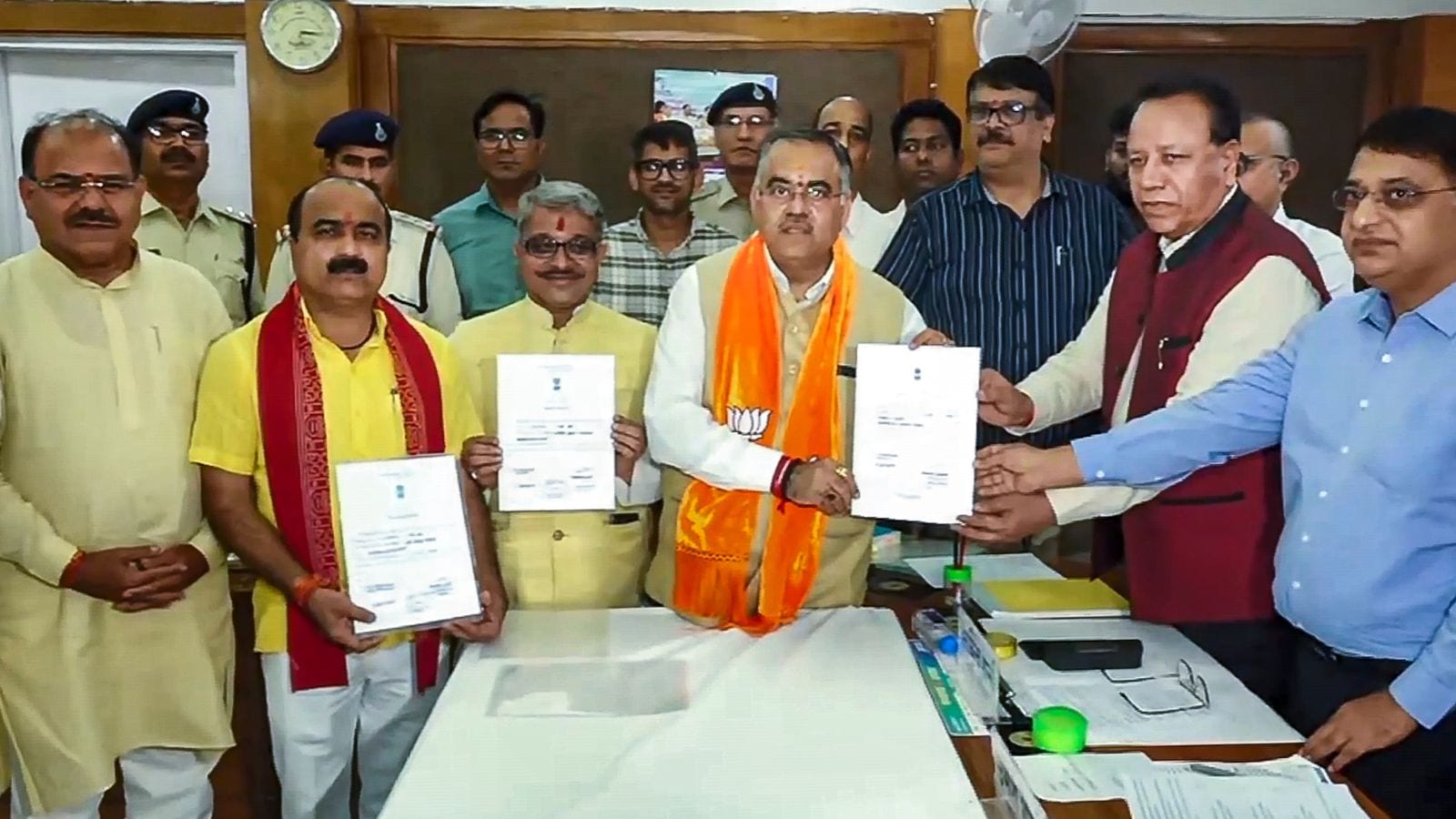
BJP candidates Tarun Chugh, Rajneesh Agrawal and Mahesh Kewat were on Wednesday declared elected unopposed to the Rajya Sabha from Madhya Pradesh, formally ending a bitter contest in which Congress candidate Meenakshi Natarajan’s nomination was rejected.
Natarajan’s nomination was rejected by the Returning Officer for allegedly not disclosing a pending court case. The Supreme Court will on Friday hear the Congress leader’s plea challenging the rejection.
“We all have been elected unopposed. All three candidates have collected their certificates,” Rajneesh Agrawal told The Indian Express.
The BJP had sprung a surprise when it fielded Mahesh Kewat to take on Natarajan, hoping to split Congress votes. The Congress subsequently decided to fly its 66 MLAs to Karnataka in an attempt to resist any efforts by the BJP to reach out to the legislators for support. However, this was eventually in vain as the Congress candidate’s nomination was rejected.
Mahesh Kewat’s elevation to the Rajya Sabha marks the culmination of a four-decade journey through the Sangh Parivar and BJP organisational structure. A native of Orchha in Niwari district, Kewat first became associated with the Rashtriya Swayamsevak Sangh (RSS) in 1984 and later worked with the Akhil Bharatiya Vidyarthi Parishad (ABVP) as a student activist.
He served as a chief instructor at the RSS shakha in Orchha and was also associated with the Vishwa Hindu Parishad before formally entering BJP politics in the mid-1990s.
Unlike many Rajya Sabha nominees who emerge from electoral politics or government, Kewat built his career through local organisation work. He became active in the BJP in 1995, served on district-level committees, rose through the ranks as district minister and district vice-president, and later became a member of the party’s state executive.
He was elected as a councillor in Orchha in 2000 and subsequently served as vice-chairman of the Orchha Nagar Parishad. Party leaders credit him with handling organisational assignments in several elections, including the Shahdol Lok Sabha bypoll and the Chitrakoot, Mungawali and Prithvipur Assembly by-elections.
His political significance, however, extends beyond his organisational résumé. He hails from the Kewat community, one of several riverine and fishing communities that include Nishad, Mallah, Bind, Kashyap and Dhimar groups across central and northern India.
As chairman of the Madhya Pradesh Fishermen Welfare Board, a post carrying minister of state rank, he emerged as one of the BJP’s most visible faces among the fishing communities in the state.
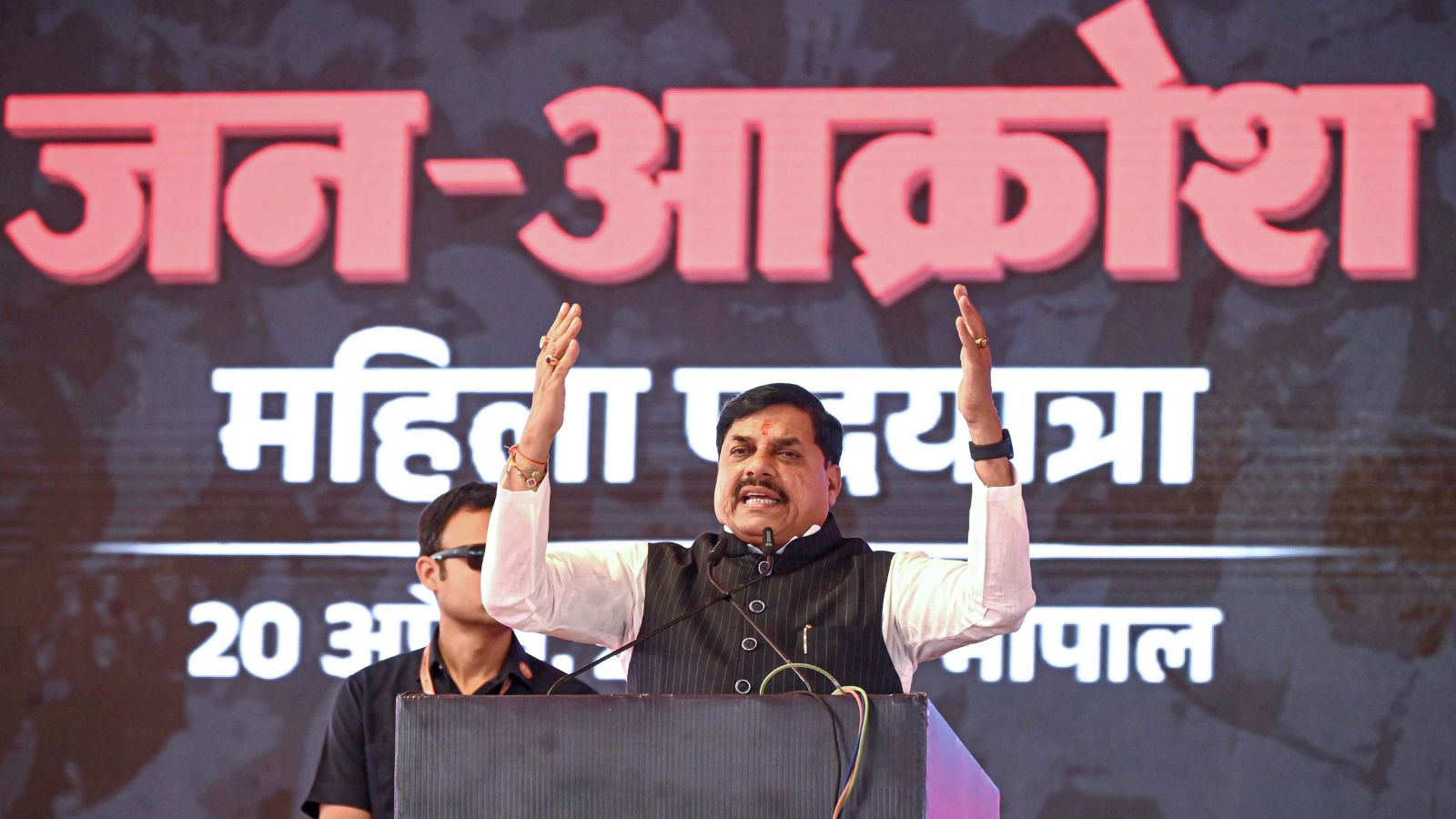
BJP leaders have framed his nomination as both a social justice and an ideological statement. Chief Minister Mohan Yadav invoked the Ramayana while backing his candidature, comparing the party’s decision to Lord Ram’s embrace of Nishadraj.
BJP legislators similarly portrayed Kewat as a grassroots worker whose rise reflected the party’s commitment to rewarding long-serving cadre rather than political dynasts.
His roots in Orchha also carry symbolic value. Kewat comes from a family associated with the historic Hardaul Mahal shrine, a site of deep religious significance across Bundelkhand.
Members of his family have traditionally served as priests at the shrine, and local BJP leaders frequently cite that connection while projecting him as a figure who combines religious, social and political legitimacy within the region.
Party strategists privately acknowledge that the nomination has implications far beyond a single Rajya Sabha seat. The Kewat-Nishad-Mallah social bloc has a significant presence across Bundelkhand and the riverine belts of Madhya Pradesh and neighbouring Uttar Pradesh.
By elevating Kewat to Parliament, the BJP is sending a signal to a cluster of Extremely Backward Class communities that have become increasingly important in the party’s electoral calculations.
Within BJP circles, Kewat’s nomination is being projected as the story of a booth-level worker who rose from shakha politics and local government to the Upper House of Parliament, a narrative the party is eager to showcase as it prepares for future electoral contests in both Madhya Pradesh and Uttar Pradesh.
Of the three new RS MPs, Tarun Chugh is the highest-profile entrant. A national general secretary of the BJP and one of the party’s most trusted organisational strategists, Chugh has spent nearly four decades in the Sangh Parivar and BJP ecosystem.
A native of Amritsar, he began his political journey through the ABVP before rising through the BJP’s youth wing and later the party’s Punjab organisation.
Over the years, he has served as a legislator in Punjab and emerged as one of the BJP’s principal political troubleshooters in politically sensitive states.
Today, he is part of the BJP’s core organisational leadership and has handled key responsibilities in Jammu and Kashmir, Telangana, Andhra Pradesh and several election-bound states.
If Chugh represents the BJP’s national face, Rajneesh Agrawal embodies its organisational spine in Madhya Pradesh.
The Sagar-based leader is widely regarded within BJP circles as one of the party’s most effective backroom managers. Agrawal’s political journey began in the Bundelkhand region and he steadily rose through the organisational hierarchy rather than electoral politics.
Party leaders frequently describe him as an “organisation man” whose strength lies in cadre management, election planning and building the BJP’s booth-level structure.
Over the years, he has handled multiple organisational assignments and played a significant role in strengthening the BJP’s presence across Bundelkhand.
BJP candidates Tarun Chugh, Rajneesh Agrawal and Mahesh Kewat were on Wednesday declared elected unopposed to the Rajya Sabha from Madhya Pradesh, formally ending a bitter contest in which Congress candidate Meenakshi Natarajan’s nomination was rejected.
Natarajan’s nomination was rejected by the Returning Officer for allegedly not disclosing a pending court case. The Supreme Court will on Friday hear the Congress leader’s plea challenging the rejection.
“We all have been elected unopposed. All three candidates have collected their certificates,” Rajneesh Agrawal told The Indian Express.
The BJP had sprung a surprise when it fielded Mahesh Kewat to take on Natarajan, hoping to split Congress votes. The Congress subsequently decided to fly its 66 MLAs to Karnataka in an attempt to resist any efforts by the BJP to reach out to the legislators for support. However, this was eventually in vain as the Congress candidate’s nomination was rejected.
Mahesh Kewat’s elevation to the Rajya Sabha marks the culmination of a four-decade journey through the Sangh Parivar and BJP organisational structure. A native of Orchha in Niwari district, Kewat first became associated with the Rashtriya Swayamsevak Sangh (RSS) in 1984 and later worked with the Akhil Bharatiya Vidyarthi Parishad (ABVP) as a student activist.
He served as a chief instructor at the RSS shakha in Orchha and was also associated with the Vishwa Hindu Parishad before formally entering BJP politics in the mid-1990s.
Unlike many Rajya Sabha nominees who emerge from electoral politics or government, Kewat built his career through local organisation work. He became active in the BJP in 1995, served on district-level committees, rose through the ranks as district minister and district vice-president, and later became a member of the party’s state executive.
He was elected as a councillor in Orchha in 2000 and subsequently served as vice-chairman of the Orchha Nagar Parishad. Party leaders credit him with handling organisational assignments in several elections, including the Shahdol Lok Sabha bypoll and the Chitrakoot, Mungawali and Prithvipur Assembly by-elections.
His political significance, however, extends beyond his organisational résumé. He hails from the Kewat community, one of several riverine and fishing communities that include Nishad, Mallah, Bind, Kashyap and Dhimar groups across central and northern India.
As chairman of the Madhya Pradesh Fishermen Welfare Board, a post carrying minister of state rank, he emerged as one of the BJP’s most visible faces among the fishing communities in the state.
BJP leaders have framed his nomination as both a social justice and an ideological statement. Chief Minister Mohan Yadav invoked the Ramayana while backing his candidature, comparing the party’s decision to Lord Ram’s embrace of Nishadraj.
BJP legislators similarly portrayed Kewat as a grassroots worker whose rise reflected the party’s commitment to rewarding long-serving cadre rather than political dynasts.
His roots in Orchha also carry symbolic value. Kewat comes from a family associated with the historic Hardaul Mahal shrine, a site of deep religious significance across Bundelkhand.
Members of his family have traditionally served as priests at the shrine, and local BJP leaders frequently cite that connection while projecting him as a figure who combines religious, social and political legitimacy within the region.
Party strategists privately acknowledge that the nomination has implications far beyond a single Rajya Sabha seat. The Kewat-Nishad-Mallah social bloc has a significant presence across Bundelkhand and the riverine belts of Madhya Pradesh and neighbouring Uttar Pradesh.
By elevating Kewat to Parliament, the BJP is sending a signal to a cluster of Extremely Backward Class communities that have become increasingly important in the party’s electoral calculations.
Within BJP circles, Kewat’s nomination is being projected as the story of a booth-level worker who rose from shakha politics and local government to the Upper House of Parliament, a narrative the party is eager to showcase as it prepares for future electoral contests in both Madhya Pradesh and Uttar Pradesh.
Of the three new RS MPs, Tarun Chugh is the highest-profile entrant. A national general secretary of the BJP and one of the party’s most trusted organisational strategists, Chugh has spent nearly four decades in the Sangh Parivar and BJP ecosystem.
A native of Amritsar, he began his political journey through the ABVP before rising through the BJP’s youth wing and later the party’s Punjab organisation.
Over the years, he has served as a legislator in Punjab and emerged as one of the BJP’s principal political troubleshooters in politically sensitive states.
Today, he is part of the BJP’s core organisational leadership and has handled key responsibilities in Jammu and Kashmir, Telangana, Andhra Pradesh and several election-bound states.
If Chugh represents the BJP’s national face, Rajneesh Agrawal embodies its organisational spine in Madhya Pradesh.
The Sagar-based leader is widely regarded within BJP circles as one of the party’s most effective backroom managers. Agrawal’s political journey began in the Bundelkhand region and he steadily rose through the organisational hierarchy rather than electoral politics.
Party leaders frequently describe him as an “organisation man” whose strength lies in cadre management, election planning and building the BJP’s booth-level structure.
Over the years, he has handled multiple organisational assignments and played a significant role in strengthening the BJP’s presence across Bundelkhand.