

Postmortem twist in Bandhavgarh tiger death: Struck by tranquiliser ‘after death’, suffered ‘prolonged physical deterioration’
Tiger died this week after twice entering a house and attacking several people, leading to the death of a tribal woman.
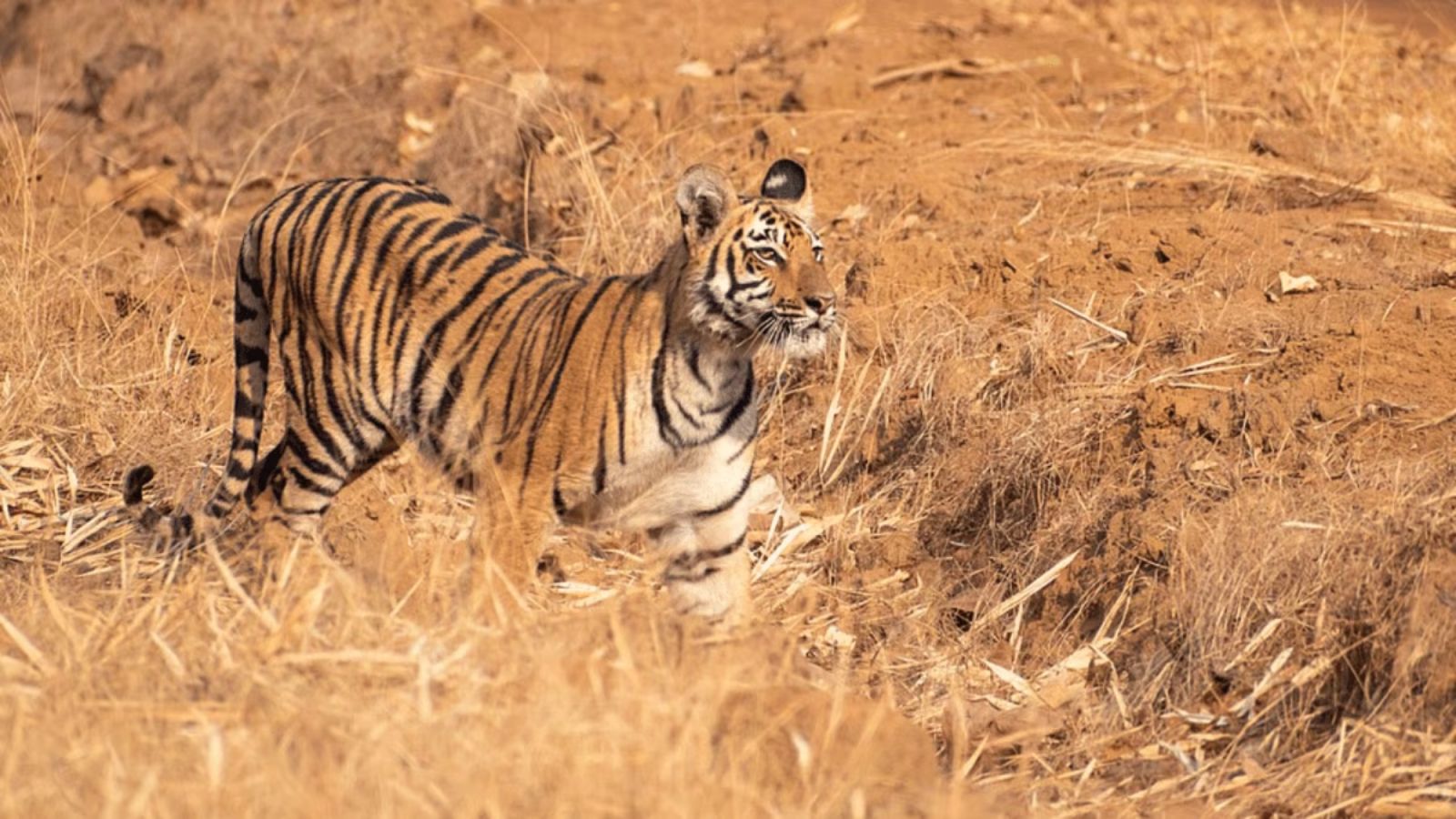
The death of a male tiger, which was at the centre of a deadly human-wildlife conflict incident in the Bandhavgarh Tiger Reserve that led to the killing of a tribal woman this week, was likely due to cardio-respiratory failure following “prolonged physical deterioration”, according to a postmortem examination, which also found that the animal was struck by a tranquiliser dart after its death.
The tiger, which twice entered the same house in the Panpatha buffer area of Bandhavgarh on May 24, attacked and injured several people and killed one woman. It was claimed that the tiger later died in a rescue operation mounted by wildlife officials after it was shot with a tranquiliser dart.
On May 25, the tiger’s postmortem was conducted by a panel of three wildlife veterinarians in the presence of two invited experts, National Tiger Conservation Authority (NTCA) representatives, senior officials of Bandhavgarh Tiger Reserve and officers from the State Wildlife Forensic Headquarters (SWFH), Jabalpur. Authorities said the entire procedure was documented through photography and videography.
The panel of veterinarians found that a tranquiliser dart “recovered from the tiger’s right shoulder had caused no bleeding at the point of impact”. The postmortem report concluded that the “dart had struck the animal after death”, ruling out any possibility that the tranquilisation effort contributed to its death.
Veterinary experts found the tiger to be in a “severely weakened state”. The postmortem report describes the animal’s muscles as “pale and dry, while its skin was found to be rough and lifeless”. The tiger’s “digestive system was reported to be largely non-functional, indicating prolonged physical deterioration before death”.
The findings, released by the Madhya Pradesh government on Thursday, shed fresh light on the circumstances surrounding the death of the tiger that allegedly killed 34-year-old Phool Bai and injured several others in Khaira Tola village. According to forest officials, the tiger attacked members of the Pal family who were sleeping in the courtyard of their home.
Stay updated with the latest - Click here to follow us on Instagram
The death of a male tiger, which was at the centre of a deadly human-wildlife conflict incident in the Bandhavgarh Tiger Reserve that led to the killing of a tribal woman this week, was likely due to cardio-respiratory failure following “prolonged physical deterioration”, according to a postmortem examination, which also found that the animal was struck by a tranquiliser dart after its death.
The tiger, which twice entered the same house in the Panpatha buffer area of Bandhavgarh on May 24, attacked and injured several people and killed one woman. It was claimed that the tiger later died in a rescue operation mounted by wildlife officials after it was shot with a tranquiliser dart.
On May 25, the tiger’s postmortem was conducted by a panel of three wildlife veterinarians in the presence of two invited experts, National Tiger Conservation Authority (NTCA) representatives, senior officials of Bandhavgarh Tiger Reserve and officers from the State Wildlife Forensic Headquarters (SWFH), Jabalpur. Authorities said the entire procedure was documented through photography and videography.
The panel of veterinarians found that a tranquiliser dart “recovered from the tiger’s right shoulder had caused no bleeding at the point of impact”. The postmortem report concluded that the “dart had struck the animal after death”, ruling out any possibility that the tranquilisation effort contributed to its death.
Veterinary experts found the tiger to be in a “severely weakened state”. The postmortem report describes the animal’s muscles as “pale and dry, while its skin was found to be rough and lifeless”. The tiger’s “digestive system was reported to be largely non-functional, indicating prolonged physical deterioration before death”.
The findings, released by the Madhya Pradesh government on Thursday, shed fresh light on the circumstances surrounding the death of the tiger that allegedly killed 34-year-old Phool Bai and injured several others in Khaira Tola village. According to forest officials, the tiger attacked members of the Pal family who were sleeping in the courtyard of their home.