

‘Not even our grandfathers saw this’: Upper Assam reels as floods wash away entire villages
In Lower Assam, flooding is practically a season. It arrives every year, sometimes forgiving, sometimes merciless. But Upper Assam doesn’t know that rhythm. So, when heavy rains in the Naga Hills broke over the region on July 19, it caught everyone completely off guard.
Written by Swati Mishra & Rajat Sain
“The 19th is cursed for Assam,” sighs cab driver Sumu on the way from Dibrugarh to Sivasagar. “Zubeen Da (singer Zubeen Garg) left us on the 19th… and then, on the 19th, came this flood that swept everything away.”
In Lower Assam, flooding is practically a season. It arrives every year, sometimes forgiving, sometimes merciless. But Upper Assam doesn’t know that rhythm. So, when heavy rains in the Naga Hills broke over the region on July 19, it caught everyone completely off guard.
The official death toll in the flood-ravaged state this year stands at 78. At its height, the number of people affected by these floods was over 7 lakh, but as the floodwaters gradually receded, it came down to around 3 lakh. Thousands have been displaced — at its peak, over 1.15 lakh were taking shelter in relief camps, which has now come down to 16,556.
For his part, Assam Chief Minister Himanta Biswa Sarma has sought a Central relief and rehabilitation package after the Inter-Ministerial Central Team (IMCT) concluded its four-day assessment of the flood-hit districts on Wednesday. “Our Double Engine Govt will mitigate sufferings of our people,” Sarma said in a post on X.
On the ground, those affected can only hope the assurances translate into something concrete. In Nepalikhuti village in Sivasagar’s Nazira block, right along the Assam-Nagaland border, Hari Sarma stands under a banyan tree some 200 metres from the Dikhow River, knee-deep in mud and wearing nothing but a pair of shorts. He’s lost everything: his tin-roofed house, his clothes, furniture, documents and 15 of his cattle.
“Over 1,200 cows and calves were swept away in an instant across the village,” Sarma, a resident of Nepalikhuti, in the revenue village Garhmurmiri, tells The Indian Express. He looks down at his shorts. “This is all I have left.”
With the India Meteorological Department issuing an Orange Alert forecasting heavy to very heavy rainfall across parts of the Northeast for the next three days, residents are an anxious lot. “Not even our grandfathers have witnessed a flood this catastrophic,” one resident of Nepalikhuti says.
Nepalikhuti, on the banks of the Dikhow River, which flows from Nagaland into Assam before joining the Brahmaputra near Dikhowmukh, bears witness to the devastation of the floods. On July 19, the river that was its lifeline engulfed this village of at least 500, sweeping into homes, breaking down walls and tearing through lives, its surging current taking away everything — clothes, beds, utensils, and cattle.
Residents, many of whom are dairy farmers, say they had little time to think. Many scrambled to rooftops, but even those were swept away.
That’s how Krishna Karmakar died. “He scrambled to the rooftop, but water reached that height too,” says his cousin Kiran Karmakar. “He was trying to save his son but got swept away.”
Several are still missing. But it was when the water receded that the village confronted its biggest challenge: accounting for what it had lost and picking up the pieces.
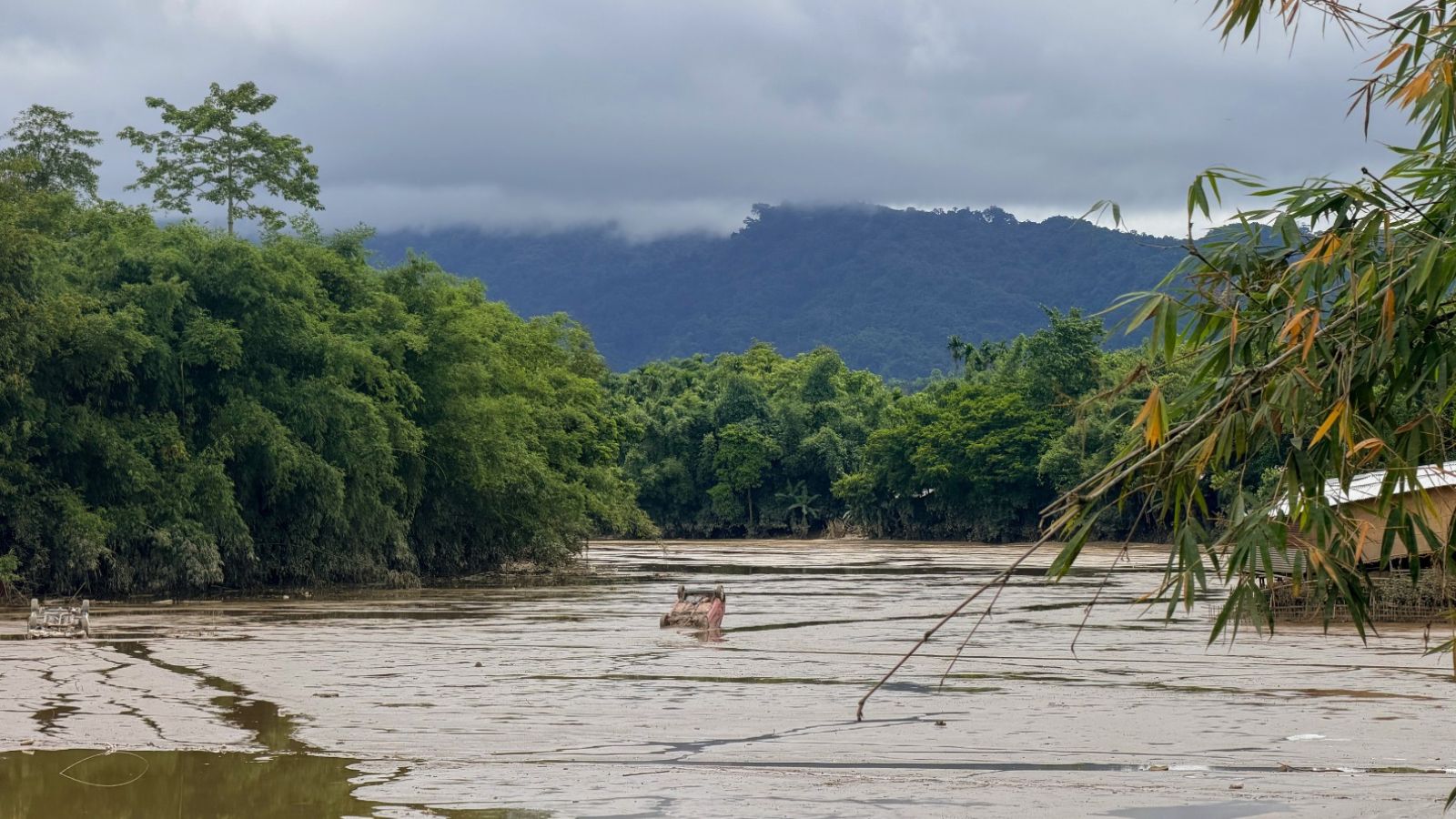
A suffocating blanket of mud and debris covers the village, and a heavy stench of decay hangs in the air. Roads and houses are coated with quicksand-like sludge.
Those with concrete roofs huddle there for safety. Those without are forced to stay beneath the open skies, furious and unpredictable in this monsoon season.
“No one knows what lies beneath the mud around them: decaying livestock or human remains,” says Hari Sarma, gesturing towards a mound of sludge.
For many, their entire existence has shrunk into one exhausting, hopeless battle: digging mud out of their homes, bucket by bucket.
That’s what Anupal Baruah and his family are now doing. Baruah has two houses by the main road: an old one where the family lives, and a new one, finished only a month ago.
Both houses have now turned to sludge. In the new house — a long-cherished family dream — two feet of heavy mud now coats the floor, and high up on the wall, a dark water stain marks the place where the river peaked at six-and-a-half feet.
“Our new home… it’s completely ruined,” Baruah’s wife, Bonti, says as she desperately cleans the floor. “Not everyone’s tragedy looks the same. But every story here carries its own deep scar.”
As the floodwaters recede, help pours in: social workers are arriving to distribute aid, and the state government is sending relief supplies — sacks of rice, lentils, potatoes, biscuits, and old clothes.
The Assam government has announced an ex gratia of Rs 9 lakh for the next of kin of those who have lost their lives in the floods; and an interim amount of Rs 15,000 for families severely affected in the four worst-hit districts of Sivasagar, Charaideo, Jorhat and Golaghat. It has also announced a monetary grant of Rs 1,000 for buying books for higher secondary students, Rs 3,000 for undergraduate students and Rs 5,000 for postgraduate students in Sivasagar and Charaideo.
But for residents, their grief goes beyond these handouts: it seeks understanding.
Some metres away from the Baruah household, Asha Devi sits motionless on a heap of rubble beneath a coconut tree. In her hand, she holds a care kit handed out by one of the several non-profits that have poured in: two packets of ORS, a packet of biscuits, a few mosquito coils, four candles, and a kilo of raw semolina.
She stares at the kit with quiet despair. “What am I supposed to do with raw semolina?” she asks. “I don’t have a single pot left, nor a stove to cook it on. What I need is a tarpaulin. Just a plastic sheet to shield us.”
— With inputs from Sukrita Baruah, Assam
Written by Swati Mishra & Rajat Sain
“The 19th is cursed for Assam,” sighs cab driver Sumu on the way from Dibrugarh to Sivasagar. “Zubeen Da (singer Zubeen Garg) left us on the 19th… and then, on the 19th, came this flood that swept everything away.”
In Lower Assam, flooding is practically a season. It arrives every year, sometimes forgiving, sometimes merciless. But Upper Assam doesn’t know that rhythm. So, when heavy rains in the Naga Hills broke over the region on July 19, it caught everyone completely off guard.
The official death toll in the flood-ravaged state this year stands at 78. At its height, the number of people affected by these floods was over 7 lakh, but as the floodwaters gradually receded, it came down to around 3 lakh. Thousands have been displaced — at its peak, over 1.15 lakh were taking shelter in relief camps, which has now come down to 16,556.
For his part, Assam Chief Minister Himanta Biswa Sarma has sought a Central relief and rehabilitation package after the Inter-Ministerial Central Team (IMCT) concluded its four-day assessment of the flood-hit districts on Wednesday. “Our Double Engine Govt will mitigate sufferings of our people,” Sarma said in a post on X.
On the ground, those affected can only hope the assurances translate into something concrete. In Nepalikhuti village in Sivasagar’s Nazira block, right along the Assam-Nagaland border, Hari Sarma stands under a banyan tree some 200 metres from the Dikhow River, knee-deep in mud and wearing nothing but a pair of shorts. He’s lost everything: his tin-roofed house, his clothes, furniture, documents and 15 of his cattle.
“Over 1,200 cows and calves were swept away in an instant across the village,” Sarma, a resident of Nepalikhuti, in the revenue village Garhmurmiri, tells The Indian Express. He looks down at his shorts. “This is all I have left.”
With the India Meteorological Department issuing an Orange Alert forecasting heavy to very heavy rainfall across parts of the Northeast for the next three days, residents are an anxious lot. “Not even our grandfathers have witnessed a flood this catastrophic,” one resident of Nepalikhuti says.
Nepalikhuti, on the banks of the Dikhow River, which flows from Nagaland into Assam before joining the Brahmaputra near Dikhowmukh, bears witness to the devastation of the floods. On July 19, the river that was its lifeline engulfed this village of at least 500, sweeping into homes, breaking down walls and tearing through lives, its surging current taking away everything — clothes, beds, utensils, and cattle.
Residents, many of whom are dairy farmers, say they had little time to think. Many scrambled to rooftops, but even those were swept away.
That’s how Krishna Karmakar died. “He scrambled to the rooftop, but water reached that height too,” says his cousin Kiran Karmakar. “He was trying to save his son but got swept away.”
Several are still missing. But it was when the water receded that the village confronted its biggest challenge: accounting for what it had lost and picking up the pieces.
A suffocating blanket of mud and debris covers the village, and a heavy stench of decay hangs in the air. Roads and houses are coated with quicksand-like sludge.
Those with concrete roofs huddle there for safety. Those without are forced to stay beneath the open skies, furious and unpredictable in this monsoon season.
“No one knows what lies beneath the mud around them: decaying livestock or human remains,” says Hari Sarma, gesturing towards a mound of sludge.
For many, their entire existence has shrunk into one exhausting, hopeless battle: digging mud out of their homes, bucket by bucket.
That’s what Anupal Baruah and his family are now doing. Baruah has two houses by the main road: an old one where the family lives, and a new one, finished only a month ago.
Both houses have now turned to sludge. In the new house — a long-cherished family dream — two feet of heavy mud now coats the floor, and high up on the wall, a dark water stain marks the place where the river peaked at six-and-a-half feet.
“Our new home… it’s completely ruined,” Baruah’s wife, Bonti, says as she desperately cleans the floor. “Not everyone’s tragedy looks the same. But every story here carries its own deep scar.”
As the floodwaters recede, help pours in: social workers are arriving to distribute aid, and the state government is sending relief supplies — sacks of rice, lentils, potatoes, biscuits, and old clothes.
The Assam government has announced an ex gratia of Rs 9 lakh for the next of kin of those who have lost their lives in the floods; and an interim amount of Rs 15,000 for families severely affected in the four worst-hit districts of Sivasagar, Charaideo, Jorhat and Golaghat. It has also announced a monetary grant of Rs 1,000 for buying books for higher secondary students, Rs 3,000 for undergraduate students and Rs 5,000 for postgraduate students in Sivasagar and Charaideo.
But for residents, their grief goes beyond these handouts: it seeks understanding.
Some metres away from the Baruah household, Asha Devi sits motionless on a heap of rubble beneath a coconut tree. In her hand, she holds a care kit handed out by one of the several non-profits that have poured in: two packets of ORS, a packet of biscuits, a few mosquito coils, four candles, and a kilo of raw semolina.
She stares at the kit with quiet despair. “What am I supposed to do with raw semolina?” she asks. “I don’t have a single pot left, nor a stove to cook it on. What I need is a tarpaulin. Just a plastic sheet to shield us.”
— With inputs from Sukrita Baruah, Assam