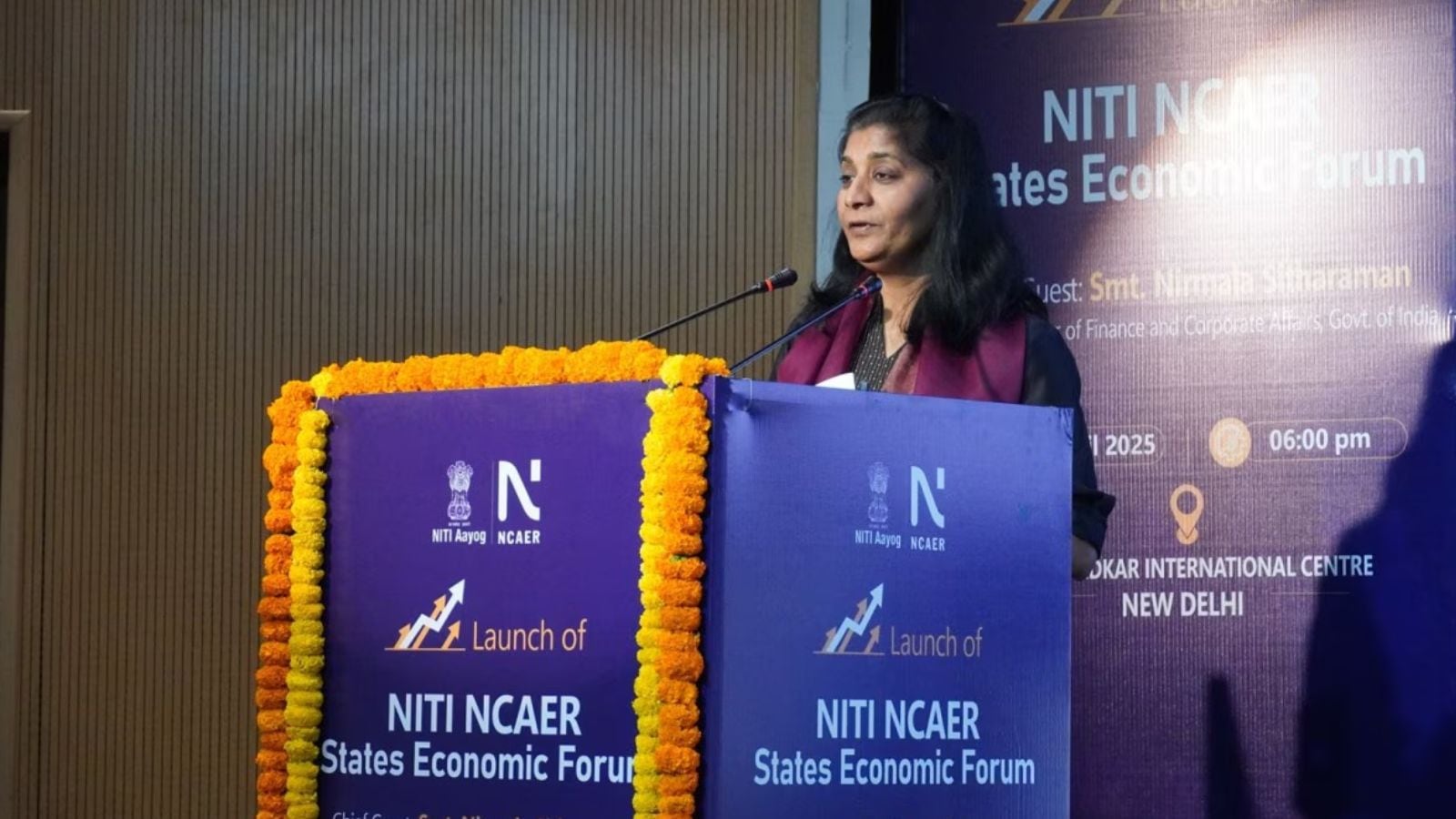


‘Not worried at all about remittances’ due to West Asia war: RBI Deputy Governor Poonam Gupta
India received $132 billion of remittances in 2024-25, with the figure standing at $108 billion in the first three quarters of 2025-26.
Dismissing concerns about the impact of the West Asia war on the flow of remittances into India, Reserve Bank of India (RBI) Deputy Governor Poonam Gupta on Friday said she is “not worried at all” and that the “numbers for March were better than before”.
Speaking at Ashoka University’s Second Annual Isaac Centre for Public Policy Growth Conference, Gupta said a variety of factors meant that remittances had become a “very, very stable form of inflows” for India.
These include the pool of Indian migrants diversifying across geographies such that the share of those in West Asia has declined to around 40%. The same migrant pool also works across a variety of sectors such as IT, hospitality, health, education, and construction and have different skill sets, so even if a couple of sectors are cyclically impacted, other sectors remain.
“…how West Asia is likely to impact remittances, the numbers for March were better than before. Some people are projecting…that perhaps it was a wealth effect that migrants who have returned brought their accumulated savings. It’s possible some of it is that,” Gupta said.
“But I would also like to believe now that the conflict is more narrowed down to a stalemate in the Strait of Hormuz and the rest of the region is not being targeted or impacted, migrants if they have not already returned or would return back sooner. And as reconstruction efforts start, they will be employed more than before.”
“One lesson is also drawn from COVID, when there was revenge spending. All of this means that I’m not worried at all about remittances continuing to do well,” the central banker added.
According to RBI data, India received $132 billion of remittances in 2024-25, with the figure standing at $108 billion in the first three quarters of 2025-26. Data for the final quarter — whose last month coincided with the start of the war — will be released by the end of June.
According to findings from the RBI’s latest survey on remittances, inflows from the Gulf countries of UAE, Saudi Arabia, Kuwait, Qatar, Oman and Bahrain had declined to 38% of the overall figure in 2023-24 from 47% in 2016-17.
Meanwhile, money being sent to India has risen from advanced countries such as the US and the UK.
Remittances are a key source of foreign exchange for India as it helps offset some part of the country’s trade deficit, which is under pressure due to a sharp rise in global energy prices and the rapid depreciation of the rupee.
While India suffers from a large trade deficit ($119 billion in 2025-26), foreign direct investment (FDI) and remittances help it to usually post a surplus in its overall Balance of Payments (BoP).
However, economists have warned that the BoP could be in negative zone for the third year in a row in 2026-27 due to the ongoing war’s energy supply shock, which has led to massive outflows from Indian markets and hurt the rupee.
On Thursday, the rupee hit a new all-time low of 95.34-per-dollar after fresh concerns about the war in West Asia propelled global crude oil prices to a four-year high. The rupee is now down more than 4% since the US and Israel attacked Iran on February 28, with Foreign Portfolio Investors (FPIs) having dumped $20.2 billion of Indian debt and stocks in the first four months of 2026 – almost double the $11.8 billion they sold in all of 2025.
However, Gupta on Friday expressed confidence about India’s BoP situation, saying it has “inherent strengths” in the form of stable and rising remittances, well-performing services exports, and FDI inflows.
“These are not cyclical strengths; these are structural strengths. Which means shocks may happen, but these strengths would be there.
“But yes, portfolio flows have been weaker than in the past, which have been countered by other parts of the Balance of Payments. So, I remain actually, for most part, quite confident that there might have been a year which seemed more challenging, but sooner or later, it will go back to the strengths it has exhibited in the past because of the structural nature of it,” Gupta said.
Dismissing concerns about the impact of the West Asia war on the flow of remittances into India, Reserve Bank of India (RBI) Deputy Governor Poonam Gupta on Friday said she is “not worried at all” and that the “numbers for March were better than before”.
Speaking at Ashoka University’s Second Annual Isaac Centre for Public Policy Growth Conference, Gupta said a variety of factors meant that remittances had become a “very, very stable form of inflows” for India.
These include the pool of Indian migrants diversifying across geographies such that the share of those in West Asia has declined to around 40%. The same migrant pool also works across a variety of sectors such as IT, hospitality, health, education, and construction and have different skill sets, so even if a couple of sectors are cyclically impacted, other sectors remain.
“…how West Asia is likely to impact remittances, the numbers for March were better than before. Some people are projecting…that perhaps it was a wealth effect that migrants who have returned brought their accumulated savings. It’s possible some of it is that,” Gupta said.
“But I would also like to believe now that the conflict is more narrowed down to a stalemate in the Strait of Hormuz and the rest of the region is not being targeted or impacted, migrants if they have not already returned or would return back sooner. And as reconstruction efforts start, they will be employed more than before.”
“One lesson is also drawn from COVID, when there was revenge spending. All of this means that I’m not worried at all about remittances continuing to do well,” the central banker added.
According to RBI data, India received $132 billion of remittances in 2024-25, with the figure standing at $108 billion in the first three quarters of 2025-26. Data for the final quarter — whose last month coincided with the start of the war — will be released by the end of June.
According to findings from the RBI’s latest survey on remittances, inflows from the Gulf countries of UAE, Saudi Arabia, Kuwait, Qatar, Oman and Bahrain had declined to 38% of the overall figure in 2023-24 from 47% in 2016-17.
Meanwhile, money being sent to India has risen from advanced countries such as the US and the UK.
Remittances are a key source of foreign exchange for India as it helps offset some part of the country’s trade deficit, which is under pressure due to a sharp rise in global energy prices and the rapid depreciation of the rupee.
While India suffers from a large trade deficit ($119 billion in 2025-26), foreign direct investment (FDI) and remittances help it to usually post a surplus in its overall Balance of Payments (BoP).
However, economists have warned that the BoP could be in negative zone for the third year in a row in 2026-27 due to the ongoing war’s energy supply shock, which has led to massive outflows from Indian markets and hurt the rupee.
On Thursday, the rupee hit a new all-time low of 95.34-per-dollar after fresh concerns about the war in West Asia propelled global crude oil prices to a four-year high. The rupee is now down more than 4% since the US and Israel attacked Iran on February 28, with Foreign Portfolio Investors (FPIs) having dumped $20.2 billion of Indian debt and stocks in the first four months of 2026 – almost double the $11.8 billion they sold in all of 2025.
However, Gupta on Friday expressed confidence about India’s BoP situation, saying it has “inherent strengths” in the form of stable and rising remittances, well-performing services exports, and FDI inflows.
“These are not cyclical strengths; these are structural strengths. Which means shocks may happen, but these strengths would be there.
“But yes, portfolio flows have been weaker than in the past, which have been countered by other parts of the Balance of Payments. So, I remain actually, for most part, quite confident that there might have been a year which seemed more challenging, but sooner or later, it will go back to the strengths it has exhibited in the past because of the structural nature of it,” Gupta said.