

Capital flow push: RBI eases foreign borrowing rules for PSUs, FCNR deposits of banks
Central bank unveils series of measures to boost inflows and stabilise rupee
In a coordinated policy push is aimed at encouraging capital inflows, supporting the rupee and bolstering India’s foreign exchange reserves, the Reserve Bank of India on Friday announced a set of measures to relax norms on overseas borrowing by public sector firms and foreign currency deposit mobilisation by banks, complementing the government’s decision to remove capital gains tax and withholding tax for foreign institutional investors.
The RBI will provide a concessional foreign exchange swap facility until September 30, 2026 to encourage external commercial borrowings (ECBs) by public sector firms. At the core, the RBI is effectively lowering the hedging and funding cost of borrowing in foreign currency by PSUs, enabling them to raise cheaper funds abroad. This move has come at a time when investment in new projects has become sluggish and growth has declined.
A swap facility allows public sector companies to convert rupee liabilities into foreign currency exposure, or vice versa, at more favourable terms than market-based hedging. By making this “concessional” and time-bound (until September 30), the central bank is explicitly nudging state-linked firms toward tapping cheaper overseas capital.
Big PSUs in sectors such as oil, power, and infrastructure have traditionally relied on ECBs. However, in recent years, many have shifted toward domestic bonds, sovereign-backed financing, or multilateral loans, as the ECB route is now viewed as riskier due to foreign exchange exposure.
The RBI said a similar facility, covering the full hedging cost, will be available to authorised dealer banks raising fresh three- to five-year FCNR(B) deposits until September 2026. The facility, covering the full hedging cost, for authorised dealer banks raising fresh three- to five-year FCNR(B) deposits until September 2026 effectively changes the economics of long-tenor foreign currency borrowing for banks. This is because hedging costs are usually one of the biggest deterrents when banks try to attract non-resident inflows.
Banks can now offer more competitive interest rates without worrying about expensive forward cover or swap costs eating into margins, and this typically results in a stronger pipeline of stable, medium-term foreign currency inflows into the banking system. The broader impact of this window until September 2026 is that it can help smoothen foreign exchange liquidity conditions and support external account stability because higher FCNR(B) inflows increase dollar availability with banks.
Banks raised just $ 946 million in FY26 under the FCNR (B) route as against $ 7 billion in FY25, according to RBI data.
In 2013, when the rupee was under pressure, banks were given a special swap window with the RBI, allowing them to raise FCNR (B) deposits from NRIs and swap those foreign currency funds (mainly US dollars) with the central bank at a predetermined rate for a fixed tenure, typically three to five years. Banks raised close to $ 30 billion through this scheme in 2013.
“The decision to provide full hedging support to authorized dealer banks for mobilizing 3–5 year FCNR(B) deposits, along with concessional forex swap facilities to incentivize ECB borrowings by PSUs, is likely to attract meaningful dollar inflows into the system,” said Shobit Gupta, Chief Investment Officer, Generali Central Life Insurance.
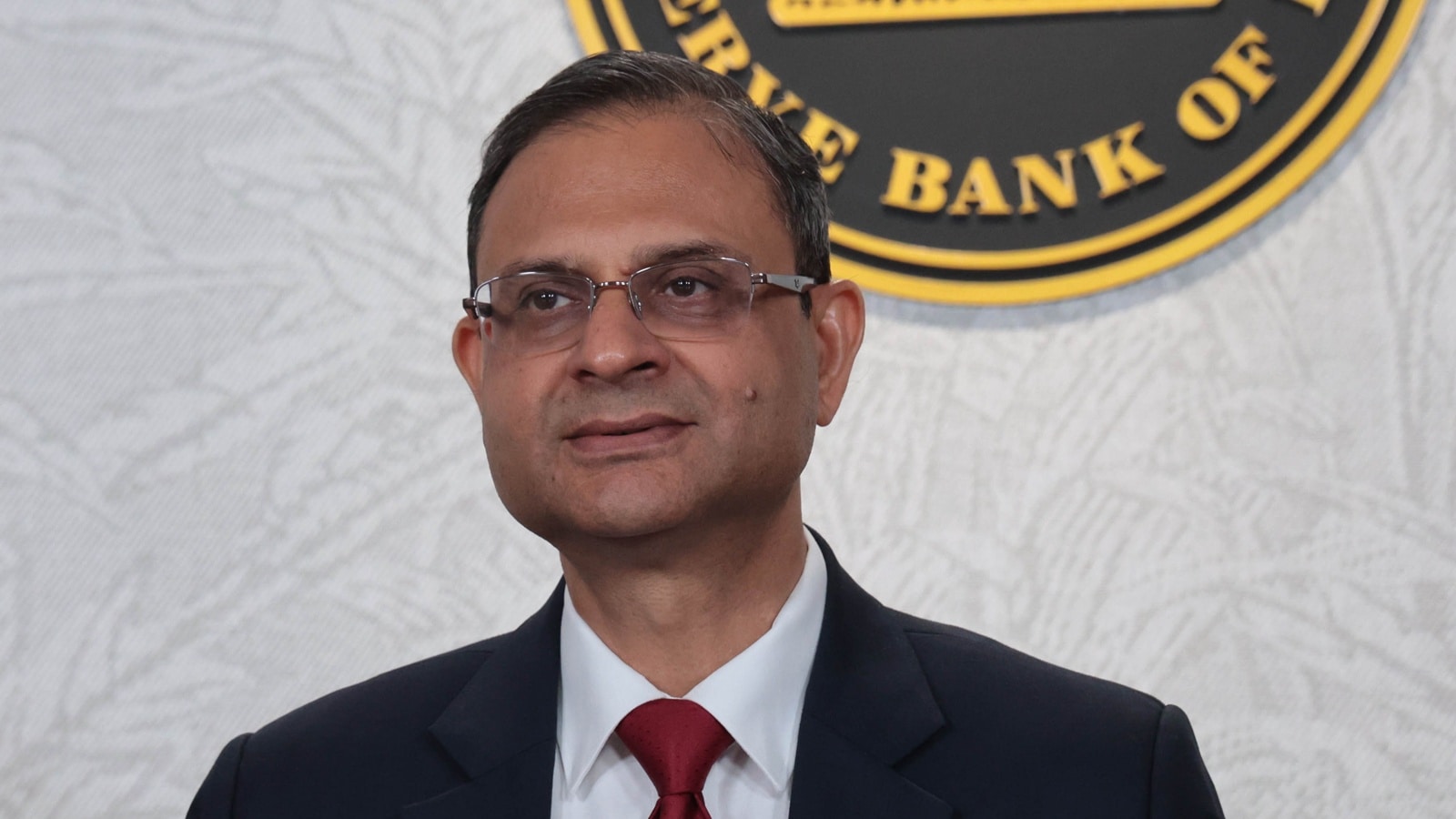
RBI Governor Sanjay Malhotra said the central bank has relaxed norms for foreign institutional investor (FII) investments in government securities (G-secs) and increased limits for investments by non-resident Indians (NRIs) and overseas citizens of India (OCIs) in equity instruments.
Under the Fully Accessible Route (FAR), the RBI has expanded the universe of specified government securities by including all new issuances of 15-, 30- and 40-year tenor bonds. It has also removed restrictions relating to short-term investments, concentration limits and individual securities for FII investments under the General Route.
Under FAR, FIIs can buy and sell designated Government of India securities freely without any quantitative limit or ceiling on investment amount.
The central bank said these measures, along with tax incentives announced by the government earlier in the day, are expected to boost foreign participation in government borrowing programmes.
The RBI has also increased investment limits for NRIs and OCIs in listed equity instruments without requiring registration with the Securities and Exchange Board of India (SEBI). The same facility has now been extended to all individual Persons Resident Outside India (PROIs).
“The expansion of the Fully Accessible Route to all new 15, 30 and 40-year G-Sec issuances, the removal of FPI concentration limits, the extension of FCNR(B) hedging support and the PSU ECB swap window, and the restoration of the export realization period to nine months together amount to the most comprehensive dollar-mobilization effort since 2013,” said Anindya Banerjee, Head of Commodity and Currency Research, Kotak Securities.
The central bank has further proposed restoring the time limit for realisation of export proceeds to nine months.
“These measures are expected to strengthen our balance of payments, and we will continue to make appropriate policy adjustments to promote exports and attract capital inflows,” Malhotra said. During April 1-June 2, 2026, net outflows from the equity and debt segments stood at $ 13.4 billion and $ 0.3 billion, respectively.
In a coordinated policy push is aimed at encouraging capital inflows, supporting the rupee and bolstering India’s foreign exchange reserves, the Reserve Bank of India on Friday announced a set of measures to relax norms on overseas borrowing by public sector firms and foreign currency deposit mobilisation by banks, complementing the government’s decision to remove capital gains tax and withholding tax for foreign institutional investors.
The RBI will provide a concessional foreign exchange swap facility until September 30, 2026 to encourage external commercial borrowings (ECBs) by public sector firms. At the core, the RBI is effectively lowering the hedging and funding cost of borrowing in foreign currency by PSUs, enabling them to raise cheaper funds abroad. This move has come at a time when investment in new projects has become sluggish and growth has declined.
A swap facility allows public sector companies to convert rupee liabilities into foreign currency exposure, or vice versa, at more favourable terms than market-based hedging. By making this “concessional” and time-bound (until September 30), the central bank is explicitly nudging state-linked firms toward tapping cheaper overseas capital.
Big PSUs in sectors such as oil, power, and infrastructure have traditionally relied on ECBs. However, in recent years, many have shifted toward domestic bonds, sovereign-backed financing, or multilateral loans, as the ECB route is now viewed as riskier due to foreign exchange exposure.
The RBI said a similar facility, covering the full hedging cost, will be available to authorised dealer banks raising fresh three- to five-year FCNR(B) deposits until September 2026. The facility, covering the full hedging cost, for authorised dealer banks raising fresh three- to five-year FCNR(B) deposits until September 2026 effectively changes the economics of long-tenor foreign currency borrowing for banks. This is because hedging costs are usually one of the biggest deterrents when banks try to attract non-resident inflows.
Banks can now offer more competitive interest rates without worrying about expensive forward cover or swap costs eating into margins, and this typically results in a stronger pipeline of stable, medium-term foreign currency inflows into the banking system. The broader impact of this window until September 2026 is that it can help smoothen foreign exchange liquidity conditions and support external account stability because higher FCNR(B) inflows increase dollar availability with banks.
Banks raised just $ 946 million in FY26 under the FCNR (B) route as against $ 7 billion in FY25, according to RBI data.
In 2013, when the rupee was under pressure, banks were given a special swap window with the RBI, allowing them to raise FCNR (B) deposits from NRIs and swap those foreign currency funds (mainly US dollars) with the central bank at a predetermined rate for a fixed tenure, typically three to five years. Banks raised close to $ 30 billion through this scheme in 2013.
“The decision to provide full hedging support to authorized dealer banks for mobilizing 3–5 year FCNR(B) deposits, along with concessional forex swap facilities to incentivize ECB borrowings by PSUs, is likely to attract meaningful dollar inflows into the system,” said Shobit Gupta, Chief Investment Officer, Generali Central Life Insurance.
RBI Governor Sanjay Malhotra said the central bank has relaxed norms for foreign institutional investor (FII) investments in government securities (G-secs) and increased limits for investments by non-resident Indians (NRIs) and overseas citizens of India (OCIs) in equity instruments.
Under the Fully Accessible Route (FAR), the RBI has expanded the universe of specified government securities by including all new issuances of 15-, 30- and 40-year tenor bonds. It has also removed restrictions relating to short-term investments, concentration limits and individual securities for FII investments under the General Route.
Under FAR, FIIs can buy and sell designated Government of India securities freely without any quantitative limit or ceiling on investment amount.
The central bank said these measures, along with tax incentives announced by the government earlier in the day, are expected to boost foreign participation in government borrowing programmes.
The RBI has also increased investment limits for NRIs and OCIs in listed equity instruments without requiring registration with the Securities and Exchange Board of India (SEBI). The same facility has now been extended to all individual Persons Resident Outside India (PROIs).
“The expansion of the Fully Accessible Route to all new 15, 30 and 40-year G-Sec issuances, the removal of FPI concentration limits, the extension of FCNR(B) hedging support and the PSU ECB swap window, and the restoration of the export realization period to nine months together amount to the most comprehensive dollar-mobilization effort since 2013,” said Anindya Banerjee, Head of Commodity and Currency Research, Kotak Securities.
The central bank has further proposed restoring the time limit for realisation of export proceeds to nine months.
“These measures are expected to strengthen our balance of payments, and we will continue to make appropriate policy adjustments to promote exports and attract capital inflows,” Malhotra said. During April 1-June 2, 2026, net outflows from the equity and debt segments stood at $ 13.4 billion and $ 0.3 billion, respectively.