

Government plans monthly indicator for service sector output using GST data
The paper comes ahead of the revision of the Index of Industrial Production (IIP) next month as part of MoSPI’s overhaul of official statistics.
The Ministry of Statistics and Programme Implementation (MoSPI) on Monday outlined its plan to measure the output of the formal services sector every month, with the Goods and Services Tax (GST) data set to be a crucial input in the indicator. Releasing an ‘approach paper’ on the same, the statistics ministry on Monday invited comments by May 5 on its plan to compile an Index of Service Production (ISP) for the economy’s formal sector with 2024-25 as the base year.
The paper comes ahead of the revision of the Index of Industrial Production (IIP) next month as part of MoSPI’s overhaul of official statistics. Currently, there is no services counterpart to the IIP, which is one of the two monthly, or high-frequency data, published by the government, with the other being the Consumer Price Index (CPI), on whose basis the headline retail inflation number of the country is calculated. Both the IIP and CPI numbers are keenly eyed by policymakers to understand the trajectory of the economy and the underlying developments. To understand how India’s services sector is performing, policymakers and economists currently refer to the S&P Global’s HSBC Purchasing Managers’ Index. However, the PMI is a survey-based sentiment index and does not measure actual output.
“The services sector is the most dynamic and rapidly expanding segment of the economy. In terms of economic significance, the services sector contributes more than half of India’s GDP, generates millions of jobs and has been a major catalyst for the country’s economic transformation in the last few decades,” MoSPI said on Monday.
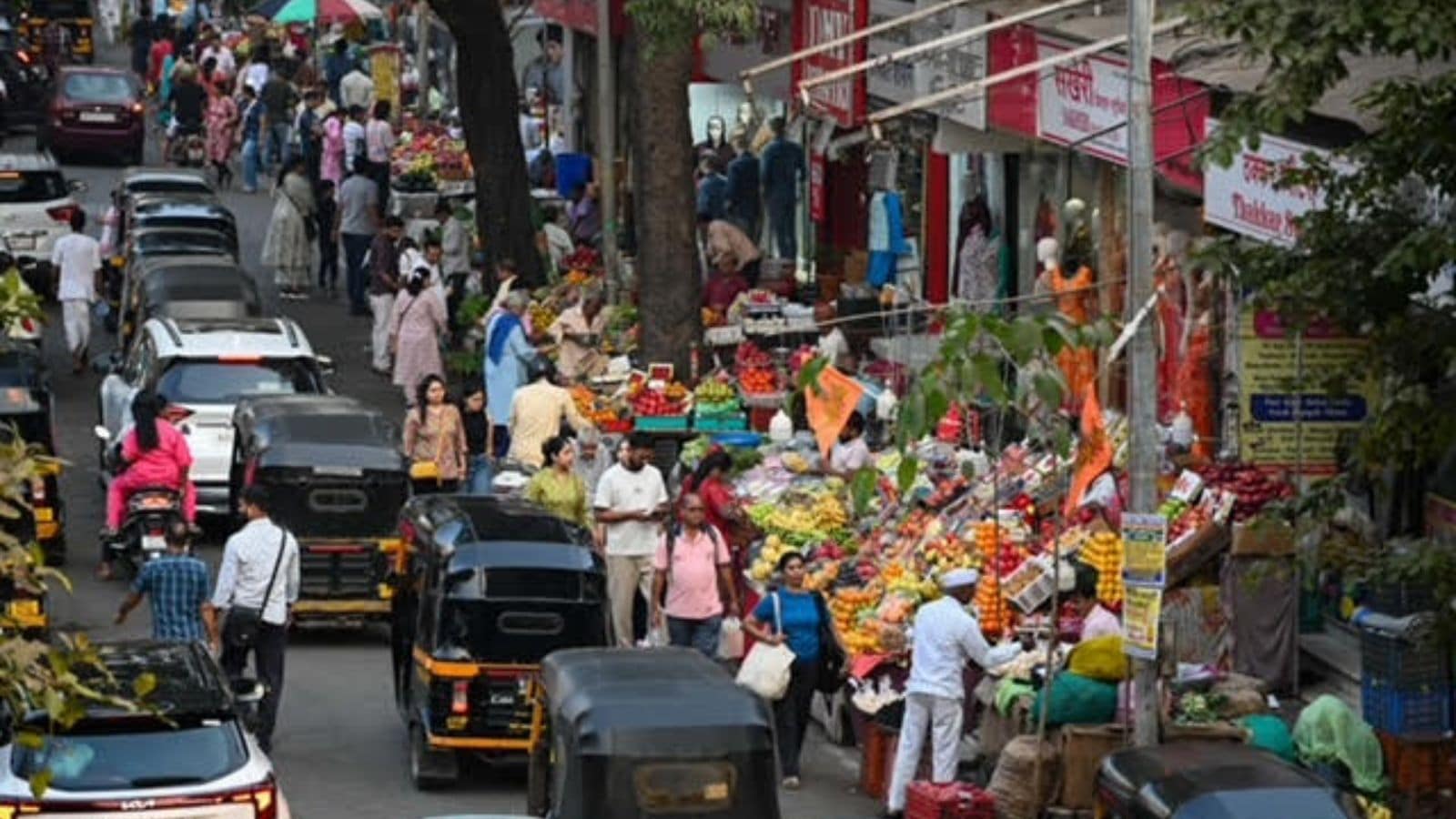
The index will cover sub-sectors such as wholesale and retail trade, transportation and storage, accommodation and food services, publishing, telecom, consultancy, computing infrastructure, finance and insurance, real estate, and arts, sports and recreation, among others.
The measurement of the service sector’s output on a monthly basis is notoriously difficult for a variety of reasons. For one, there has been no “consistent high-frequency administrative data” available for real estate, professional services, retail trade, and health, among other major segments, MoSPI said on Monday. Further, for segments where output data was available – air and rail transport, banking, insurance, etc – their contribution in overall services was under 20%. Within these, data for banking and insurance services was in value terms. As a result, the diverse nature of the services sector made standardisation of output indicators and compilation “a challenging task”.
With GST Network data providing information on production and outward supplies across different sectors, MoSPI said it plans to use it to “monitor the progress of services sector”. Since certain sectors such as health and education are exempt from GST, additional sources of data for them will have to be identified. As such, MoSPI also plans to use administrative data from specific ministries and organisations as well as its Annual Survey of Incorporated Services Sector Enterprises (ASISSE), which is currently being conducted. All these three data sources exclude the services provided by the informal sector.
“The exclusions due to lack of unavailability of data from the three sources under consideration…account for nearly 33% of the total GVA of services sector,” MoSPI said, adding that the health and education sector – which will be excluded until the ASISSE results are available – accounts for nearly 10% of the Gross Value Added of the services sector.
To adjust the output for prices, while a Producer Price Index would have been the preferred option, MoSPI plans to use a variety of measures including non-food Consumer Price Index and sub-sector specific CPI, among others.
“The Department for Promotion of Industry and Internal Trade (DPIIT)…is working towards revising the Wholesale Price Index (WPI) and developing a Producer Price Index (PPI). The Working Group constituted for the purpose has recommended methodologies for compiling PPIs for the services sub sectors like Banking, Insurance, Securities, Pensions, Air Transport, Railway (Passenger), Railway (Goods) and Telecom. The Quarterly Indices/trial indices of the above sub–sectors are likely to be available in near future,” MoSPI said.
The Ministry of Statistics and Programme Implementation (MoSPI) on Monday outlined its plan to measure the output of the formal services sector every month, with the Goods and Services Tax (GST) data set to be a crucial input in the indicator. Releasing an ‘approach paper’ on the same, the statistics ministry on Monday invited comments by May 5 on its plan to compile an Index of Service Production (ISP) for the economy’s formal sector with 2024-25 as the base year.
The paper comes ahead of the revision of the Index of Industrial Production (IIP) next month as part of MoSPI’s overhaul of official statistics. Currently, there is no services counterpart to the IIP, which is one of the two monthly, or high-frequency data, published by the government, with the other being the Consumer Price Index (CPI), on whose basis the headline retail inflation number of the country is calculated. Both the IIP and CPI numbers are keenly eyed by policymakers to understand the trajectory of the economy and the underlying developments. To understand how India’s services sector is performing, policymakers and economists currently refer to the S&P Global’s HSBC Purchasing Managers’ Index. However, the PMI is a survey-based sentiment index and does not measure actual output.
“The services sector is the most dynamic and rapidly expanding segment of the economy. In terms of economic significance, the services sector contributes more than half of India’s GDP, generates millions of jobs and has been a major catalyst for the country’s economic transformation in the last few decades,” MoSPI said on Monday.
The index will cover sub-sectors such as wholesale and retail trade, transportation and storage, accommodation and food services, publishing, telecom, consultancy, computing infrastructure, finance and insurance, real estate, and arts, sports and recreation, among others.
The measurement of the service sector’s output on a monthly basis is notoriously difficult for a variety of reasons. For one, there has been no “consistent high-frequency administrative data” available for real estate, professional services, retail trade, and health, among other major segments, MoSPI said on Monday. Further, for segments where output data was available – air and rail transport, banking, insurance, etc – their contribution in overall services was under 20%. Within these, data for banking and insurance services was in value terms. As a result, the diverse nature of the services sector made standardisation of output indicators and compilation “a challenging task”.
With GST Network data providing information on production and outward supplies across different sectors, MoSPI said it plans to use it to “monitor the progress of services sector”. Since certain sectors such as health and education are exempt from GST, additional sources of data for them will have to be identified. As such, MoSPI also plans to use administrative data from specific ministries and organisations as well as its Annual Survey of Incorporated Services Sector Enterprises (ASISSE), which is currently being conducted. All these three data sources exclude the services provided by the informal sector.
“The exclusions due to lack of unavailability of data from the three sources under consideration…account for nearly 33% of the total GVA of services sector,” MoSPI said, adding that the health and education sector – which will be excluded until the ASISSE results are available – accounts for nearly 10% of the Gross Value Added of the services sector.
To adjust the output for prices, while a Producer Price Index would have been the preferred option, MoSPI plans to use a variety of measures including non-food Consumer Price Index and sub-sector specific CPI, among others.
“The Department for Promotion of Industry and Internal Trade (DPIIT)…is working towards revising the Wholesale Price Index (WPI) and developing a Producer Price Index (PPI). The Working Group constituted for the purpose has recommended methodologies for compiling PPIs for the services sub sectors like Banking, Insurance, Securities, Pensions, Air Transport, Railway (Passenger), Railway (Goods) and Telecom. The Quarterly Indices/trial indices of the above sub–sectors are likely to be available in near future,” MoSPI said.