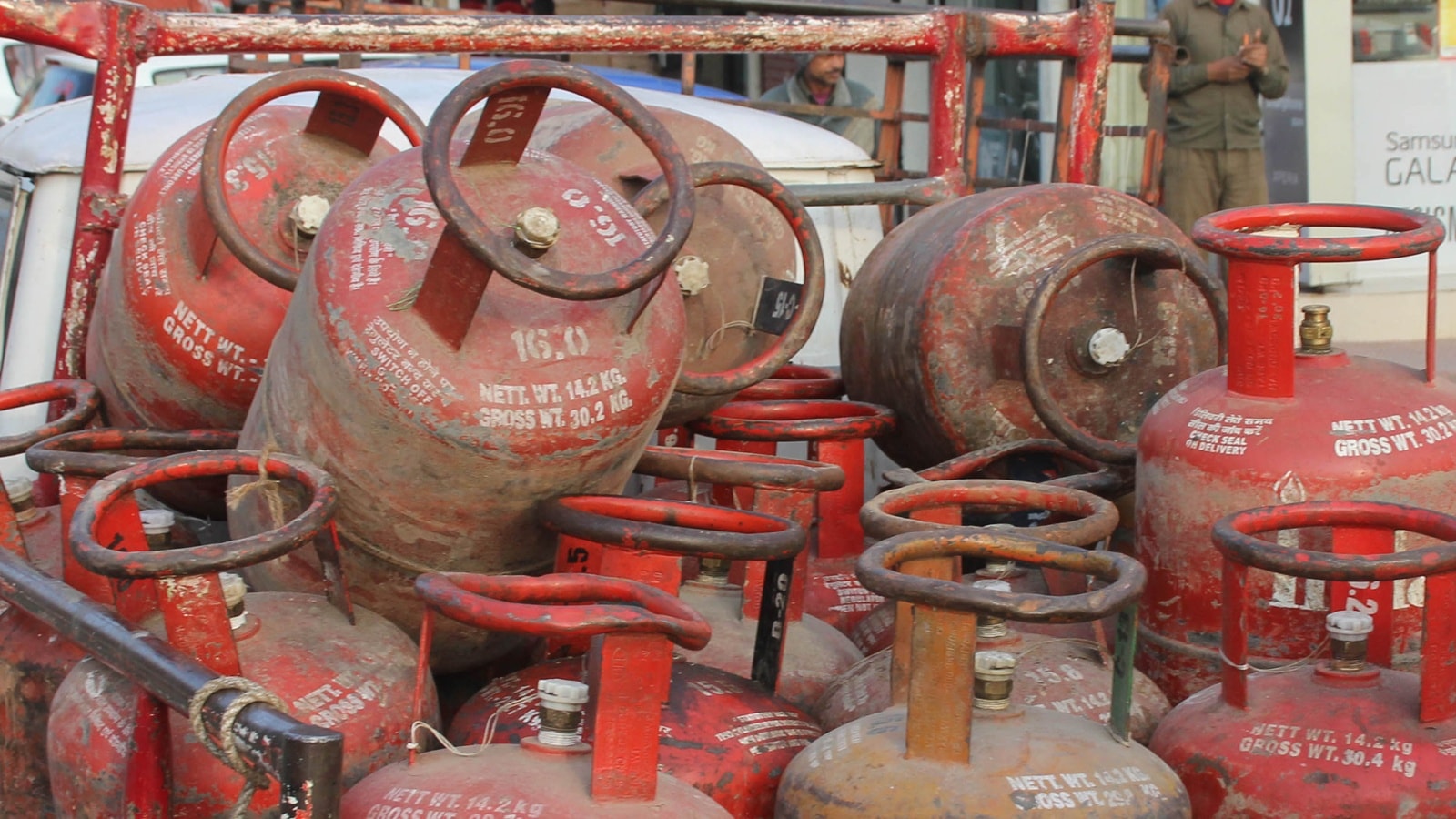


LPG price hike: Despite increase, OMCs incurring under-recovery of Rs 700/cylinder, says government
Effective Sunday, the price of domestic LPG was hiked by Rs 29 per 14.2-kg cylinder to Rs 942 in Delhi, with corresponding changes in other parts of the country. This is the second revision in LPG prices since the West Asia war began on February 28.
Despite the hike in price of liquefied petroleum gas (LPG) for households from Sunday, public sector oil marketing companies (OMCs) continue to absorb under-recoveries of about Rs 700 per 14.2-kg cylinder as the market-linked price of the fuel is over Rs 1,600 per cylinder, the Petroleum Ministry said. It also said that the price of domestic LPG in India continues to be lower than in neighbouring countries as the government and the OMCs have been shielding households from spiralling international prices amid the West Asia crisis.
Effective Sunday, the price of LPG for households, or domestic LPG, was hiked by Rs 29 per 14.2-kg cylinder to Rs 942 in Delhi, with corresponding changes in other parts of the country. This is the second revision in LPG prices since the West Asia war began on February 28. On March 7, domestic LPG prices were hiked by Rs 60 per cylinder.
The latest LPG price hike follows increases in the price of other fuels like petrol, diesel, and compressed natural gas (CNG) in recent weeks. The OMCs—Indian Oil, Bharat Petroleum, and Hindustan Petroleum—are grappling with financial strain as they have been selling consumer fuels below market price. Like in the case of domestic LPG, the companies continue to incur losses on the sales of petrol and diesel, despite the recent price hikes.
“The prices of petroleum products in India are linked to the corresponding prices in the international market. The Government, however, continues to modulate the effective price to the consumer for domestic LPG. Any household can buy as many cylinders as it needs at Rs 942. A PMUY (Pradhan Mantri Ujjwala Yojana) beneficiary will additionally receive the direct benefit transfer of Rs 300 a cylinder on the first four refills each year (down from nine a year)…and so pays an effective Rs 642 on those refills; this support is unchanged. Even a non-PMUY household would pay about Rs 700 below the market-linked cost of the cylinder,” the Petroleum Ministry said Sunday.
There are over 33 crore households with domestic LPG connections, including 10.6 crore households that avail under the PMUY, which provides an additional subsidy of Rs 300 per cylinder.
The international LPG price benchmark—Saudi Contract Price (CP)—has risen sharply through the West Asia crisis. It has gone up to $790 per tonne in June from $542.50 in February, marking an increase of about 46%. India depends on imports to meet about 60% of its LPG consumption, and 90% of those imports came via the Strait of Hormuz, where maritime traffic has been effectively halted since early March. The strait’s closure has led to a surge in international oil and fuel prices as the waterway accounted for a fifth of global crude oil and liquefied natural gas (LNG) flows.
“The commercial cylinder used by hotels and businesses is revised automatically every month, because its price is a direct pass-through of the international benchmark. The domestic cooking cylinder is not. India used to import 60 per cent of its LPG requirements, and the landed cost of that import tracks the Saudi Contract Price (CP) that Saudi Aramco sets at the start of each month. This is an external price over which the Indian consumer has no control,” the Petroleum Ministry said.
Under-recovery is the gap between the international price of LPG and the regulated retail price in the country. It is absorbed by the OMCs and compensated partly by the government. The cumulative under-recovery on LPG in 2025-26 (FY26) was Rs 60,000 crore, up from Rs 41,338 crore in FY25. In August of last year, the government approved Rs 30,000 crore in budgetary support to the OMCs to partly offset their losses on domestic LPG sales.
“The under-recovery now absorbed on each domestic cylinder is about Rs 700. The scale of this is visible in the fully market-priced commercial cylinder: the 19 kg cylinder used by hotels and restaurants sells in Delhi at ₹3,113.50, about ₹164 a kg, after five increases during the West Asia crisis. The domestic household, by contrast, pays about ₹66 a kg after the revision. Commercial gas carries a higher rate of tax and larger margins, so it sits above the household’s cost-reflective level; even so, the import-linked cost of a domestic cylinder works out to over Rs 1,600,” it added.
According to the Petroleum Ministry, domestic LPG prices in India are lower when compared to neighbouring countries like Pakistan (Rs 1,046 per cylinder), Nepal (Rs 1,207), Bangladesh (around Rs 1,225), and Sri Lanka (Rs 1,241). In the developed world, LPG prices have shot up even further—for instance about Rs 1,755 in the US, around Rs 1,765 in Australia, and about Rs 2,411 in Canada—as per the government.
The Strait of Hormuz disruption has forced India to ration LPG supplies to industrial and commercial consumers in a bid to prioritise crores of households that depend on the fuel to run their kitchens. As a demand management tool, the minimum gap between LPG refill bookings by households has also been increased. India’s LPG consumption stood at about 90,000 tonnes a day before the war. But with the disruption in flows through the Strait of Hormuz and seasonal dip in demand, LPG consumption has declined to about 72,000 tonnes a day, according to recent estimates.
Moreover, domestic refineries have been maximising domestic LPG production to partly offset the loss in imports, and refiners are scrambling for LPG cargoes from alternative geographies like the US, Australia, and Russia, among others. Through diplomatic efforts, India has also managed to get a number of its LPG tankers stuck in the Persian Gulf. Domestic LPG production currently stands at about 50,000-52,000 tonnes a day, which is meeting 70% of the domestic demand, up from 40% before the war.
Despite the hike in price of liquefied petroleum gas (LPG) for households from Sunday, public sector oil marketing companies (OMCs) continue to absorb under-recoveries of about Rs 700 per 14.2-kg cylinder as the market-linked price of the fuel is over Rs 1,600 per cylinder, the Petroleum Ministry said. It also said that the price of domestic LPG in India continues to be lower than in neighbouring countries as the government and the OMCs have been shielding households from spiralling international prices amid the West Asia crisis.
Effective Sunday, the price of LPG for households, or domestic LPG, was hiked by Rs 29 per 14.2-kg cylinder to Rs 942 in Delhi, with corresponding changes in other parts of the country. This is the second revision in LPG prices since the West Asia war began on February 28. On March 7, domestic LPG prices were hiked by Rs 60 per cylinder.
The latest LPG price hike follows increases in the price of other fuels like petrol, diesel, and compressed natural gas (CNG) in recent weeks. The OMCs—Indian Oil, Bharat Petroleum, and Hindustan Petroleum—are grappling with financial strain as they have been selling consumer fuels below market price. Like in the case of domestic LPG, the companies continue to incur losses on the sales of petrol and diesel, despite the recent price hikes.
“The prices of petroleum products in India are linked to the corresponding prices in the international market. The Government, however, continues to modulate the effective price to the consumer for domestic LPG. Any household can buy as many cylinders as it needs at Rs 942. A PMUY (Pradhan Mantri Ujjwala Yojana) beneficiary will additionally receive the direct benefit transfer of Rs 300 a cylinder on the first four refills each year (down from nine a year)…and so pays an effective Rs 642 on those refills; this support is unchanged. Even a non-PMUY household would pay about Rs 700 below the market-linked cost of the cylinder,” the Petroleum Ministry said Sunday.
There are over 33 crore households with domestic LPG connections, including 10.6 crore households that avail under the PMUY, which provides an additional subsidy of Rs 300 per cylinder.
The international LPG price benchmark—Saudi Contract Price (CP)—has risen sharply through the West Asia crisis. It has gone up to $790 per tonne in June from $542.50 in February, marking an increase of about 46%. India depends on imports to meet about 60% of its LPG consumption, and 90% of those imports came via the Strait of Hormuz, where maritime traffic has been effectively halted since early March. The strait’s closure has led to a surge in international oil and fuel prices as the waterway accounted for a fifth of global crude oil and liquefied natural gas (LNG) flows.
“The commercial cylinder used by hotels and businesses is revised automatically every month, because its price is a direct pass-through of the international benchmark. The domestic cooking cylinder is not. India used to import 60 per cent of its LPG requirements, and the landed cost of that import tracks the Saudi Contract Price (CP) that Saudi Aramco sets at the start of each month. This is an external price over which the Indian consumer has no control,” the Petroleum Ministry said.
Under-recovery is the gap between the international price of LPG and the regulated retail price in the country. It is absorbed by the OMCs and compensated partly by the government. The cumulative under-recovery on LPG in 2025-26 (FY26) was Rs 60,000 crore, up from Rs 41,338 crore in FY25. In August of last year, the government approved Rs 30,000 crore in budgetary support to the OMCs to partly offset their losses on domestic LPG sales.
“The under-recovery now absorbed on each domestic cylinder is about Rs 700. The scale of this is visible in the fully market-priced commercial cylinder: the 19 kg cylinder used by hotels and restaurants sells in Delhi at ₹3,113.50, about ₹164 a kg, after five increases during the West Asia crisis. The domestic household, by contrast, pays about ₹66 a kg after the revision. Commercial gas carries a higher rate of tax and larger margins, so it sits above the household’s cost-reflective level; even so, the import-linked cost of a domestic cylinder works out to over Rs 1,600,” it added.
According to the Petroleum Ministry, domestic LPG prices in India are lower when compared to neighbouring countries like Pakistan (Rs 1,046 per cylinder), Nepal (Rs 1,207), Bangladesh (around Rs 1,225), and Sri Lanka (Rs 1,241). In the developed world, LPG prices have shot up even further—for instance about Rs 1,755 in the US, around Rs 1,765 in Australia, and about Rs 2,411 in Canada—as per the government.
The Strait of Hormuz disruption has forced India to ration LPG supplies to industrial and commercial consumers in a bid to prioritise crores of households that depend on the fuel to run their kitchens. As a demand management tool, the minimum gap between LPG refill bookings by households has also been increased. India’s LPG consumption stood at about 90,000 tonnes a day before the war. But with the disruption in flows through the Strait of Hormuz and seasonal dip in demand, LPG consumption has declined to about 72,000 tonnes a day, according to recent estimates.
Moreover, domestic refineries have been maximising domestic LPG production to partly offset the loss in imports, and refiners are scrambling for LPG cargoes from alternative geographies like the US, Australia, and Russia, among others. Through diplomatic efforts, India has also managed to get a number of its LPG tankers stuck in the Persian Gulf. Domestic LPG production currently stands at about 50,000-52,000 tonnes a day, which is meeting 70% of the domestic demand, up from 40% before the war.