

Time to allow greater freedom to banks, raise sector’s FDI limits: Deepak Parekh
Parekh also said the government should open up FDI limits for sectors other than banking to attract foreign capital and make India an attractive investment destination.
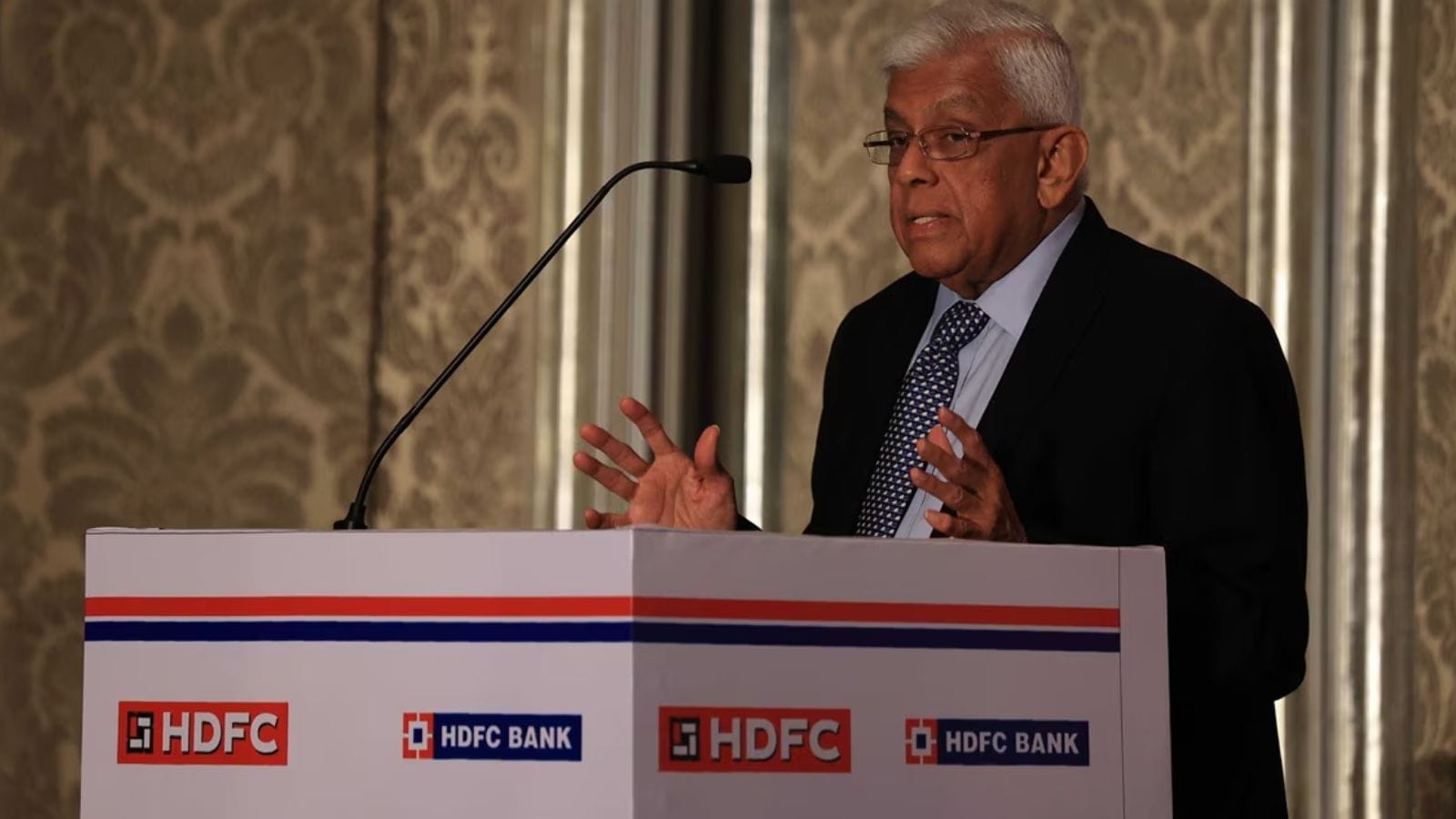
The government should allow banks greater freedom to choose where to lend and remove the limits on foreign direct investment (FDI) in the sector, Deepak Parekh, former chairman of the erstwhile Housing Development Finance Corporation (HDFC) said on Saturday. These changes, Parekh said, would help Indian banks grow in terms of asset size and make them attractive for foreign players — key for India’s economic growth.
“I think it is time to allow banks greater freedom in choosing where they lend. Priority sector rules, as they stand today, belong to an era gone by. There is merit in completely opening up the foreign direct investment limits for private sector banks, and increasing FDI limits for public-sector banks from 29% currently to 49% at least,” Parekh said at the London Business School’s India Conclave held in Mumbai.
“There are enough checks and balances through caps on voting rights and ownership limits. So, the RBI and the government should not be worried about opening up the sector,” Parekh further said, adding that this should be the next logical step after the recent regulatory changes by the Indian central bank which had allowed Japanese financial services major Sumitomo Mitsui Banking Corporation to enter the Indian banking sector.
Currently, India allows foreign shareholding of 20% for public sector banks and 74% for private banks.
According to reports, the government is mulling raising the foreign ownership limit for state-owned banks to 49%. Meanwhile, the Reserve Bank of India’s norms mandate that 40% of banks’ so-called adjusted net bank credit should go to sectors classified as priority, which includes agriculture, education, housing, and renewable energy, among others.
In recent months, Indian lenders have seen a spate of deals involving foreign companies.
In December, Shriram Finance — India’s second-largest non-bank excluding housing finance companies — approved the sale of 20% stake to Japan’s MUFG Bank for around $4.4 billion, the biggest overseas investment into the Indian financial sector. The transaction was completed earlier this month. Before that, Sumitomo Mitsui Banking Corporation bought a 24.2% stake in Yes Bank, while Mizuho Securities bought more than 60% in Avendus Capital.
Further, the UAE’s Emirates NBD Bank agreed to buy 60% in RBL Bank for around $3 billion.
“Over the next few decades, I hope India will have a few large banks rather than many small banks. As India aspires to be the third largest economy globally, one hopes to have an Indian bank at least amongst the top 20 banks globally in terms of asset size,” Parekh said on Saturday.
The Indian government wants PSBs to become globally competitive and is hoping at least 1-2 of them rank in the top-20 of the world by 2047.
Currently, at 43rd, State Bank of India is the only state-owned bank in the top-100 in the world in terms of assets. In her 2026-27 Union Budget speech, Financial Minister Nirmala Sitharaman had announced that a high-level committee on banking for Viksit Bharat would be set up to comprehensively review the financial sector and align it with India’s next phase of growth, while safeguarding financial stability, inclusion and consumer protection.
Parekh also said the government needs to open up FDI limits for sectors other than banking to attract foreign capital and make India an attractive investment destination.
“For instance, HDFC had the largest foreign holding. We had 78% of foreign holding at one stage when there was no limits on non-banks. Today, foreign holding in Indian equity has come down to 17%. And we have to increase this because we need more foreign exchange for things like crude, defence, energy. We need to open up and incentivise people.”
FDI flows into India have weakened sharply in the last couple of years.
As per latest data, January saw net FDI outflows for the sixth month in a row, while gross FDI inflows fell to an 11-month low of $5.67 billion. For the first 10 months of 2025-26 as a whole, while gross FDI inflow amounted to $79.32 billion, up 15% year-on-year, net FDI inflows were down 24% at $1.66 billion. Foreign investors have also pulled out money from Indian financial markets to the tune of $16.59 billion in 2025-26 and $6.25 billion so far in April amid global geopolitical tensions, exerting pressure on the Indian rupee, which tumbled past the 90- and 91-per-dollar mark in December amid a delay in the finalisation of a trade agreement with the US and then fell below 92-, 93-, 94-, and 95-per-dollar in quick succession in March due to risk aversion caused by the war in West Asia.
The government should allow banks greater freedom to choose where to lend and remove the limits on foreign direct investment (FDI) in the sector, Deepak Parekh, former chairman of the erstwhile Housing Development Finance Corporation (HDFC) said on Saturday. These changes, Parekh said, would help Indian banks grow in terms of asset size and make them attractive for foreign players — key for India’s economic growth.
“I think it is time to allow banks greater freedom in choosing where they lend. Priority sector rules, as they stand today, belong to an era gone by. There is merit in completely opening up the foreign direct investment limits for private sector banks, and increasing FDI limits for public-sector banks from 29% currently to 49% at least,” Parekh said at the London Business School’s India Conclave held in Mumbai.
“There are enough checks and balances through caps on voting rights and ownership limits. So, the RBI and the government should not be worried about opening up the sector,” Parekh further said, adding that this should be the next logical step after the recent regulatory changes by the Indian central bank which had allowed Japanese financial services major Sumitomo Mitsui Banking Corporation to enter the Indian banking sector.
Currently, India allows foreign shareholding of 20% for public sector banks and 74% for private banks.
According to reports, the government is mulling raising the foreign ownership limit for state-owned banks to 49%. Meanwhile, the Reserve Bank of India’s norms mandate that 40% of banks’ so-called adjusted net bank credit should go to sectors classified as priority, which includes agriculture, education, housing, and renewable energy, among others.
In recent months, Indian lenders have seen a spate of deals involving foreign companies.
In December, Shriram Finance — India’s second-largest non-bank excluding housing finance companies — approved the sale of 20% stake to Japan’s MUFG Bank for around $4.4 billion, the biggest overseas investment into the Indian financial sector. The transaction was completed earlier this month. Before that, Sumitomo Mitsui Banking Corporation bought a 24.2% stake in Yes Bank, while Mizuho Securities bought more than 60% in Avendus Capital.
Further, the UAE’s Emirates NBD Bank agreed to buy 60% in RBL Bank for around $3 billion.
“Over the next few decades, I hope India will have a few large banks rather than many small banks. As India aspires to be the third largest economy globally, one hopes to have an Indian bank at least amongst the top 20 banks globally in terms of asset size,” Parekh said on Saturday.
The Indian government wants PSBs to become globally competitive and is hoping at least 1-2 of them rank in the top-20 of the world by 2047.
Currently, at 43rd, State Bank of India is the only state-owned bank in the top-100 in the world in terms of assets. In her 2026-27 Union Budget speech, Financial Minister Nirmala Sitharaman had announced that a high-level committee on banking for Viksit Bharat would be set up to comprehensively review the financial sector and align it with India’s next phase of growth, while safeguarding financial stability, inclusion and consumer protection.
Parekh also said the government needs to open up FDI limits for sectors other than banking to attract foreign capital and make India an attractive investment destination.
“For instance, HDFC had the largest foreign holding. We had 78% of foreign holding at one stage when there was no limits on non-banks. Today, foreign holding in Indian equity has come down to 17%. And we have to increase this because we need more foreign exchange for things like crude, defence, energy. We need to open up and incentivise people.”
FDI flows into India have weakened sharply in the last couple of years.
As per latest data, January saw net FDI outflows for the sixth month in a row, while gross FDI inflows fell to an 11-month low of $5.67 billion. For the first 10 months of 2025-26 as a whole, while gross FDI inflow amounted to $79.32 billion, up 15% year-on-year, net FDI inflows were down 24% at $1.66 billion. Foreign investors have also pulled out money from Indian financial markets to the tune of $16.59 billion in 2025-26 and $6.25 billion so far in April amid global geopolitical tensions, exerting pressure on the Indian rupee, which tumbled past the 90- and 91-per-dollar mark in December amid a delay in the finalisation of a trade agreement with the US and then fell below 92-, 93-, 94-, and 95-per-dollar in quick succession in March due to risk aversion caused by the war in West Asia.