

Budget 2026: To make India a Global Critical Mineral Powerhouse
Over the last few years, the Indian government has made notable progress in introduction of forward-looking policies, acts and policy amendments.
Written by Rajib Maitra
The global transition toward industrial decarbonization, long-term sustainability, and technological advancement has made securing reliable supplies of critical minerals a strategic priority for governments and industries around the world.
This global imperative is reflected in policy responses across countries to diversify their critical-mineral supply chains beyond China, which presently controls the bulk of global mining and more than 80% of processing capacities.
For India, supply of critical minerals is a matter of strategic importance because of its growing ambitions in clean energy, electric mobility, advanced manufacturing. semiconductors, aerospace and defence applications. But, the country is largely import-dependent for these minerals, leaving it vulnerable to global supply disruptions and geopolitical risks. In addition, the midstream and downstream value chains are not well developed, thus increasing dependence on imports of value-added products such as rare earth magnets.
Over the last few years, the Indian government has made notable progress in introduction of forward-looking policies, acts and policy amendments.
The National Critical Minerals Mission, with a total envisaged outlay of Rs 34,300 crores spread over seven years, aims to address the entire supply chain, from exploration to domestic production to recycling, reflecting the government’s commitment to reduce import dependence.
The government has also rationalised and approved new royalty rates for mining of 24 critical and strategic minerals, to encourage both mining and private sector participation, according to the Press India Bureau.
The auction of onshore and offshore critical mineral blocks by the Ministry of Mines, and the move to fully exempt critical minerals from custom duties, in the 2025 Union Budget are expected to further boost the industry growth.
Broadly, there are few key themes which the Union Budget 2026 may focus on for India to emerge as a powerhouse in the production and value addition of critical minerals.
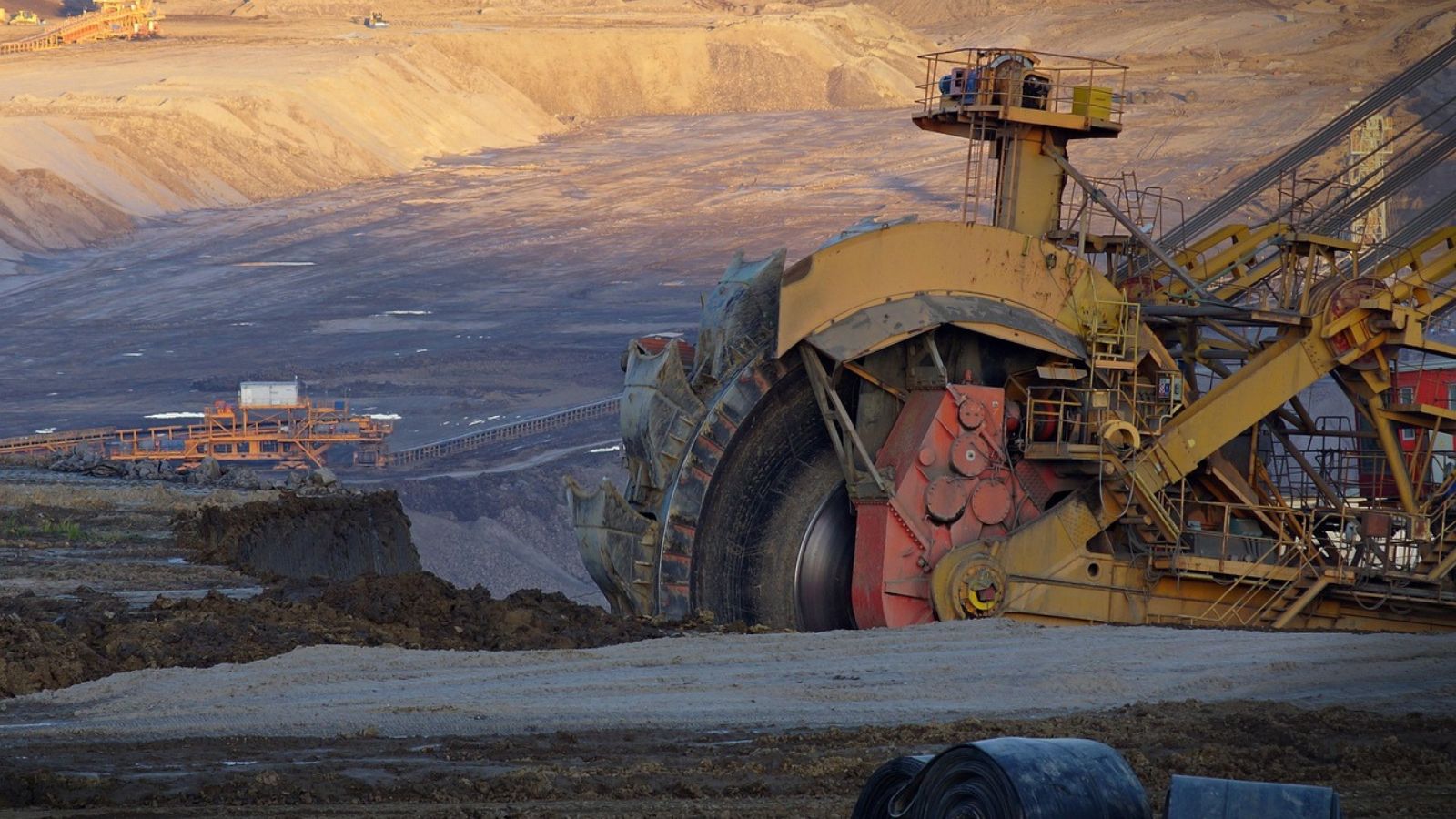
Exploration, mining and sourcing of minerals
India has significantly accelerated domestic exploration for critical minerals, through Geological Survey of India (GSI) and the National Mineral Exploration Trust (NMET) between 2021 and 2025.
Expansion of domestic exploration through enhanced funding support, augmentation of precompetitive geoscience data, and the use of artificial intelligence and machine learning tools through establishment of innovation centres can be focus areas for the Budget.
Viability Gap Funding (VGF) scheme may be introduced to enhance attractiveness of domestic critical mineral deposits with low concentrations spread over large areas, resulting in higher extraction costs.
Overseas investment in mineral assets is also in focus with allocation of Rs 5,600 crores under the NCMM to support foreign sourcing and exploration. Africa and South America have emerged as strategically important regions with potential geopolitical risks.
Introduction of innovative schemes to mobilize private capital such and government backed insurance mechanisms in Budget may significantly support Indian players to invest and secure funding for such projects.
Finally, strategic stockpiling of critical minerals may be supported through enhanced Budget allocation beyond Rs 500 Crores budgeted under NCMM.
Downstream processing and value addition
Derisking of critical minerals mining operations and downstream processing through removal of import duties for critical minerals provides an investment vs. sourcing trade-off for downstream producers.
Targeted incentives in Budget to utilize low grade ores for beneficiation and processing are required. Critical mineral processing is also highly technology intensive.
Funding for indigenous technology development and R&D, particularly in rare earths, would be beneficial in partnership with leading technology providers across geographies such as from Japan, EU, South Korea etc. Separate fund to establish rare earth demonstration facilities like that in US, may help to demonstrate and boost commercial scale integrated rare earth extraction and separation facilities in India.
Production Linked Incentive schemes covering all key value-added products of critical minerals beyond Rare Earth Permanent Magnets (REPMs) shall encourage companies to invest in downstream processing.
In addition, tax related support such as enhanced depreciation in initial years along with an investment tax credit, concessional corporate tax rates for new companies may be beneficial.
Critical minerals recycling
Fly ash, overburden, mine waste, including tailings, fly ash, red mud, and metal slags hold significant potential for the recovery of critical minerals. The recent Rs 1500 Crores Incentive Scheme introduced to boost India’s recycling capacity for critical minerals may need to include all minerals as defined eligible outputs.
There is a need to allocate enhanced funds in Budget beyond Rs 100 crores under NCMM for pilot projects focused on strengthening capabilities in metal extraction and recovery of critical minerals.
Mapping and characterising mine waste and categorising recovery zones are crucial for establishing a sustainable domestic recovery framework and a separate allocation under Budget would be useful.
Capacity building and skill development
Upskilling of existing roles in exploration, mining or processing needs attention, while a set of new roles could emerge in read of refining, metallurgical extraction or recycling.
Separate fund allocation and incentives to set up Skill Development Centres in PPP mode would be critical. Targeted incentives for capacity building and leveraging artificial intelligence tools will help draw new talent by encouraging higher education institutions to introduce or expand programs and course offerings.
India has the potential to become a global leader in critical minerals by prioritising strategic investments across the value chain to meet domestic needs and contribute significantly to the global supply chain, aligning with its long-term economic and environmental objectives.
The writer is partner, Deloitte India.