

AI, data centres could raise India’s peak power demand by 30GW
Peak demand figures, whether daily or monthly, are largely statistical reference points, reflecting the highest load recorded at any moment during a given period on a particular day, often for a brief duration.
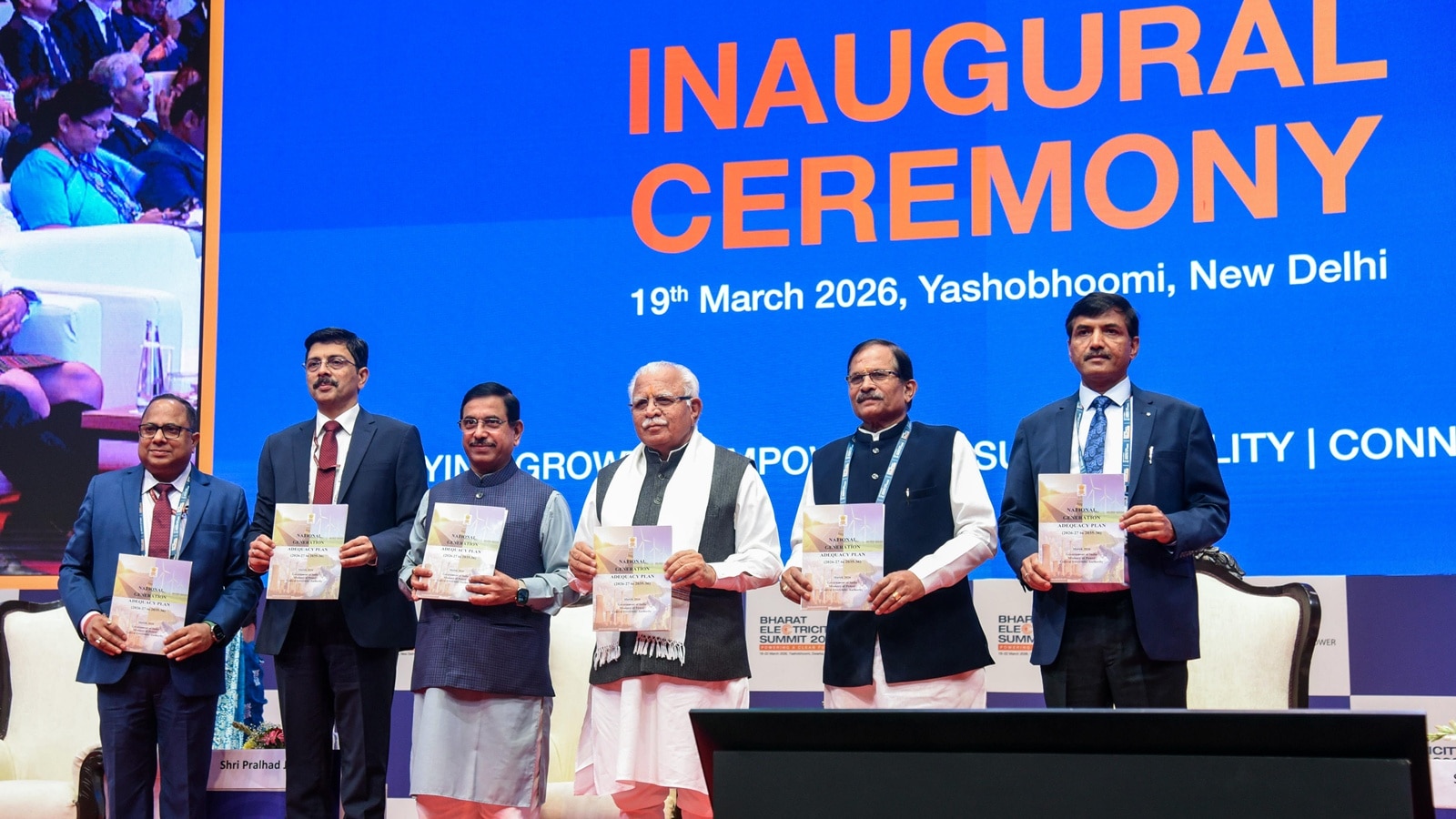
Artificial intelligence (AI), data centres and electric vehicles (EVs) will push up India’s peak power demand by an additional 30 gigawatt (GW) over the next 5-6 years, Union Power Minister Manohar Lal Khattar said at the India Electricity Summit’s inauguration ceremony Thursday.
Peak demand figures, whether daily or monthly, are largely statistical reference points, reflecting the highest load recorded at any moment during a given period on a particular day, often for a brief duration.
Khattar said the country’s peak power demand touched 250 GW in 2024-25 (FY25) and expected to rise further in the coming years.
“Our estimate for FY26 was 270 GW, and we were fully prepared to meet it. However, demand did not reach that level due to weather-related factors,” he said. The ministry remains ready to supply power if peak demand touches 270 GW this year, he added.
Looking ahead, government estimates suggest that India’s peak demand could reach 459 GW by FY36, with total energy requirements climbing to 3,365 billion units. For this, installed capacity is expected to more than double to around 1,121 GW. Out of this, about 786 GW could be from non-fossil fuels based sources.
Speaking at the inauguration, Union Minister for New and Renewable Energy Pralhad Joshi underlined the centrality of energy transition in advancing India’s ambition of becoming a global manufacturing hub, linking clean and affordable power directly with industrial competitiveness.
Joshi noted that India’s electronic production has expanded over six-fold from Rs 1.1 lakh crore to Rs 1.8 lakh crore in recent years. Exports are on the rise, but emerging global regulations such as the Carbon Border Adjustment Mechanism (CBAM) could pose challenges for carbon-intensive sectors including steel and even segments like toys, due to their embedded emissions, he said.
The minister stressed that affordable power will be critical in sustaining this growth momentum. Lower power costs directly cut manufacturing expenses and improve global competitiveness. He cautioned that competitiveness alone would not suffice unless production also aligns with low- or zero-emission standards.
Joshi argued that renewable energy (RE) offers the most viable pathway to reducing power costs over the long term. Declining costs of RE technologies — as well as battery energy storage systems (BESS) — are creating an opportunity to build a more cost-effective and cleaner power ecosystem, the minister added. While thermal power will continue to play a role in meeting baseload demand, he emphasised the need to develop workable solutions to better integrate RE into the grid.
Pankaj Aggarwal, secretary, Ministry of Power, said India’s power sector has undergone significant transformation over the past decade, with installed capacity more than doubling to 520 GW. “RE has been at the heart of this growth, particularly since 2016,” he said.
However, he underlined that much of this progress represents the “hardware” of the system — physical infrastructure such as generation capacity and transmission networks. The next phase will depend equally on strengthening the “software,” including regulatory frameworks, market design, and pricing mechanisms, as the sector moves away from traditional cost-plus models to more dynamic, market-based systems suited for a renewable-heavy grid.
“…integrating large shares of RE requires new approaches. Time-of-day tariff, demand response, flexible generation, and storage solutions will all play critical roles. While battery technologies are becoming increasingly competitive, they are not yet sufficient on their own to replace conventional sources entirely,” he said.
With electric mobility and distributed energy resources adding new layers of complexity, Aggarwal stressed the need to treat electricity as a dynamic commodity. He said this transition ahead will require an investment of $2.2 trillion over the next 20 years.
Artificial intelligence (AI), data centres and electric vehicles (EVs) will push up India’s peak power demand by an additional 30 gigawatt (GW) over the next 5-6 years, Union Power Minister Manohar Lal Khattar said at the India Electricity Summit’s inauguration ceremony Thursday.
Peak demand figures, whether daily or monthly, are largely statistical reference points, reflecting the highest load recorded at any moment during a given period on a particular day, often for a brief duration.
Khattar said the country’s peak power demand touched 250 GW in 2024-25 (FY25) and expected to rise further in the coming years.
“Our estimate for FY26 was 270 GW, and we were fully prepared to meet it. However, demand did not reach that level due to weather-related factors,” he said. The ministry remains ready to supply power if peak demand touches 270 GW this year, he added.
Looking ahead, government estimates suggest that India’s peak demand could reach 459 GW by FY36, with total energy requirements climbing to 3,365 billion units. For this, installed capacity is expected to more than double to around 1,121 GW. Out of this, about 786 GW could be from non-fossil fuels based sources.
Speaking at the inauguration, Union Minister for New and Renewable Energy Pralhad Joshi underlined the centrality of energy transition in advancing India’s ambition of becoming a global manufacturing hub, linking clean and affordable power directly with industrial competitiveness.
Joshi noted that India’s electronic production has expanded over six-fold from Rs 1.1 lakh crore to Rs 1.8 lakh crore in recent years. Exports are on the rise, but emerging global regulations such as the Carbon Border Adjustment Mechanism (CBAM) could pose challenges for carbon-intensive sectors including steel and even segments like toys, due to their embedded emissions, he said.
The minister stressed that affordable power will be critical in sustaining this growth momentum. Lower power costs directly cut manufacturing expenses and improve global competitiveness. He cautioned that competitiveness alone would not suffice unless production also aligns with low- or zero-emission standards.
Joshi argued that renewable energy (RE) offers the most viable pathway to reducing power costs over the long term. Declining costs of RE technologies — as well as battery energy storage systems (BESS) — are creating an opportunity to build a more cost-effective and cleaner power ecosystem, the minister added. While thermal power will continue to play a role in meeting baseload demand, he emphasised the need to develop workable solutions to better integrate RE into the grid.
Pankaj Aggarwal, secretary, Ministry of Power, said India’s power sector has undergone significant transformation over the past decade, with installed capacity more than doubling to 520 GW. “RE has been at the heart of this growth, particularly since 2016,” he said.
However, he underlined that much of this progress represents the “hardware” of the system — physical infrastructure such as generation capacity and transmission networks. The next phase will depend equally on strengthening the “software,” including regulatory frameworks, market design, and pricing mechanisms, as the sector moves away from traditional cost-plus models to more dynamic, market-based systems suited for a renewable-heavy grid.
“…integrating large shares of RE requires new approaches. Time-of-day tariff, demand response, flexible generation, and storage solutions will all play critical roles. While battery technologies are becoming increasingly competitive, they are not yet sufficient on their own to replace conventional sources entirely,” he said.
With electric mobility and distributed energy resources adding new layers of complexity, Aggarwal stressed the need to treat electricity as a dynamic commodity. He said this transition ahead will require an investment of $2.2 trillion over the next 20 years.